SHUTTERSPEED
This project with Shutterspeed was to record three songs - ‘Complicit’, ‘Affirmation’ and ‘Lost Child’. Shutterspeed didn’t have much of a plan for these songs, other than knowing they would release them at some point in the future. They are a 90’s-influenced Shoegaze/Alt rock four piece.
Meeting the band
I had gigged with Shutterspeed, with my band Spiderhoney, and knew them socially as friends, so approaching them about recording was really simple. They had also previously mentioned that they were interested in doing some recording with me after hearing the releases I had produced for Spiderhoney.
Schedule
It was October 2025, and we were all available to start recording straight away.
I planned to book -
One 4-hour session for all of the drums
One 3-hour session for all of the bass
A 3-hour session per song for both Sam and Danni’s guitars.
A 2-3 hour session per song for vocals
We wanted to use The Hive for the drums, but it was new, only available to book on a Thursday between 9:30 - 4:30, and only on request to the Music Tech team. This made the booking process a bit more time consuming than other studios, and sometimes took a few days to be confirmed. It took longer than I expected to get a recording session in there. Some of the other studio sessions ended up being missed because of the band cancelling due to illness, clashes in schedule, and on one occasion they forgot completely.
This was all frustrating at times, but I stayed positive and always made sure to follow up and book in a new session straight away. In the real world this wouldn't be as easy, and the time missed would still need to be paid, for studio time and my time. Despite the band not having any definite plans for their finished songs, I was still keen to try to keep to some sort of schedule, as I had other work and projects to do.
The band did also attend a few mixing sessions, which I found enjoyable. It was also good to have feedback straight away, rather than sending mixes to them remotely and waiting a few days for revisions.
Recording
Shutterspeed already had demos of the three songs on Garage Band. This made the recording process really easy, as click tracks were already set out and each band member could record their part along with the demo, achieving a better performance.
Drums
I wanted the drums to sound tight and punchy. The Hive had the best sounding room for Shutterspeed, as well as the best drum kit options. Rueven’s drumming is fast and energetic, and I felt the Gretsch kit would compliment that well. Its coated heads have a warmer tone, and the smaller drum sizes give a tighter, more focused, sound.
We chose a maple Sonor snare for its high-end crispiness and solid mid-range body.
The mic set up was:
Kick in - Beta 91A
I chose this mic as it would emphasise strong low-end, and capture the click of the beater.
Kick out - AKD D12
Snare top - Beta 57A
Snare Bottom - SM57
Overheads - BM9 ribbons (Glyn Johns configuration)
Rooms (Blumlein configuration)
(Mixing session)
Rueven recorded his drum parts very quickly, completing three tracks in the first 4-hour session.
Despite having some time left in the session, I still chose to end the day early so I could complete any drum time edits. I wanted to keep the schedule momentum going and be ready for the other recording sessions.
Bass
Mia uses a tube pre-amp pedal for her bass tone, so I chose to just capture a DI for this recording. In fact, I captured two DIs. One of the clean bass before the pre-amp pedal, and one capturing the effects post the pre-amp pedal. If I felt I did want some amp tones as well, I could use the DI to re-amp at a later date.
I used a D-Comp limiter for compression, choosing a slow attack and fast release. This gave the bass punch and evened out the dynamics.
Guitar
I chose to record the guitar in Music Labs. I felt more confident that I could achieve a good guitar sound in this studio, as it has separation between the control room and live room and monitoring is easier.
Sam - Sam provides the rhythm parts, consisting of big open distorted chords. We chose an EVH 5150 combined with a Marshal 4x12 cab. This gave a thick distorted sound that could be layered with multiple takes, building up a wall of sound which the band wanted for their Shoegaze influence. When stacking multiple tracks of distortion I made sure to use less gain on the amp than usually to preserve clarity in Sam’s guitar. Stacking too much distortion together can sometimes become muddy and cause the guitar to get lost in the mix.
I mic’d the cab with an SM57 and a MD421. The SM57 provided punchy higher and mid-range, whereas the MD421 gave a smoother low-end sound. I could then blend these together for a full range tone. I also used an Austrian Audio OC818 for the room mic to help the guitar feel less close and dry.
Mixing
I used very minimal outboard gear on this project and planned to do the whole mix in the box. This was mainly because, at the time, I hadn't had much experience using analogue gear and wasn't confident with it.
Drums
Editing
I used Logic's Flex Time function to time edit the drums. The programme sometimes introduced digital artifacts and phasing issues. I tried my best to work around these. Soon after this project, I transitioned to Pro-Tools for drum editing, as it allows cleaner edits without these issues.
I did minimal editing on the drums. I tried to keep them sounding natural, rather than completely quantized to the grid.
Compression
I compressed heavily. I wanted the drums to sound pumped, and have momentum, to drive the songs. I compressed on the kick and snare close mics to make each hit feel upfront and consistent. I also created multiple auxiliary channels for parallel compression, to provide more foundation for the drums within the track.
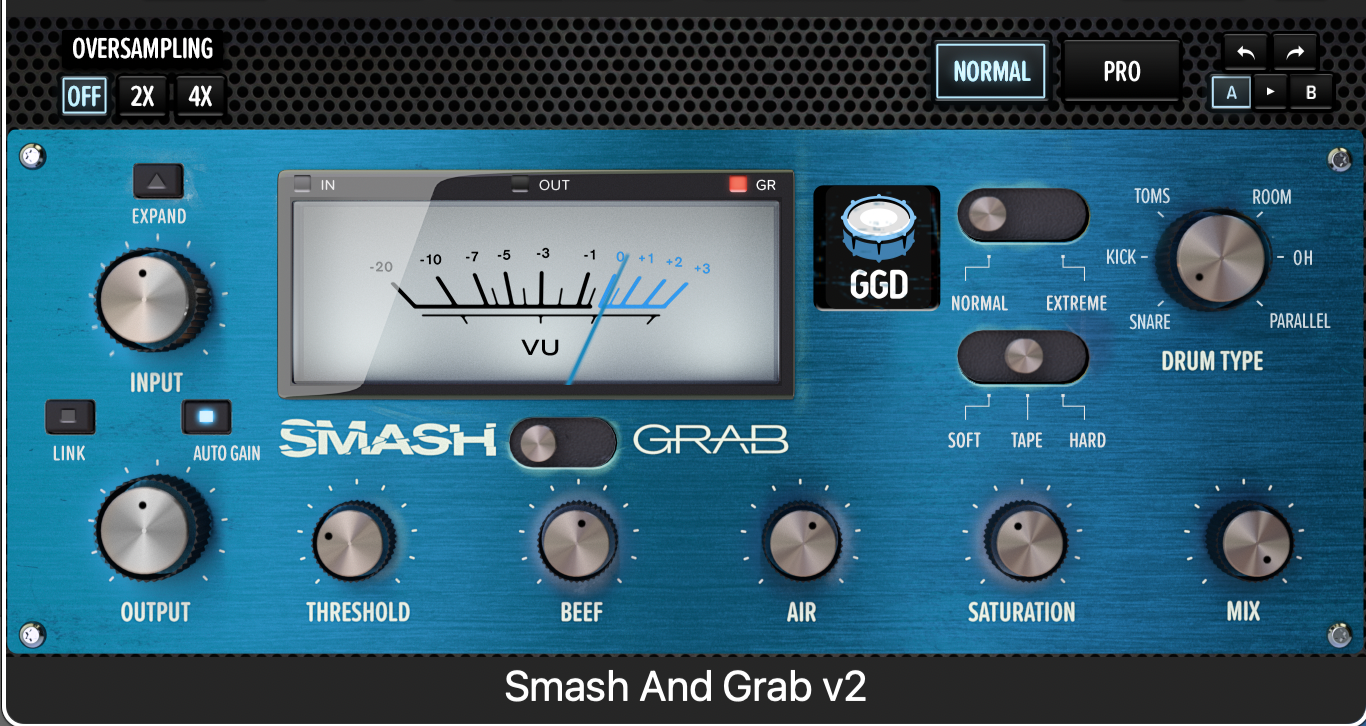
(GGD Smash and Grab parallel compression)
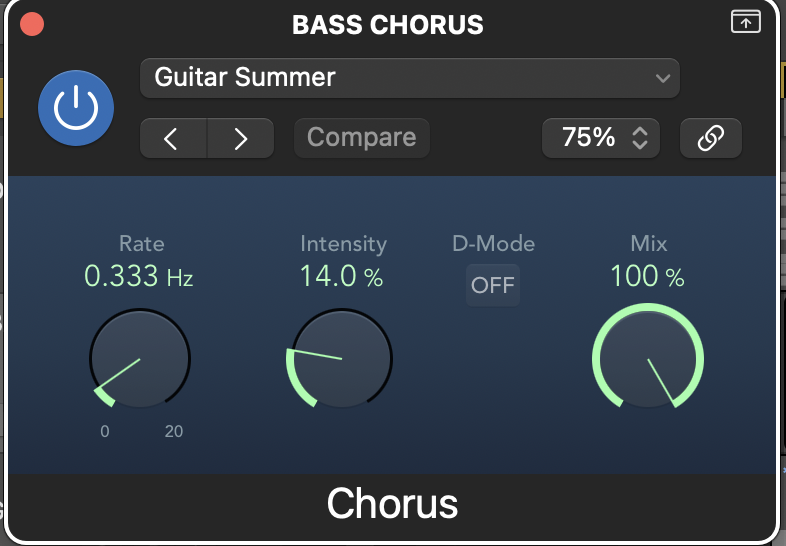
(Bass chorus)
(Guitar compression)
(Lead vocal ¼ note delay)
(Drum tracking)
(Sam’s guitar tracking)
Danni - Danni plays more lead parts, arpeggios and melody. She uses a hollow-body guitar with lots of modulation effects like chorus, vibrato and reverb. The pedals she uses for this created a lot of noise through the amp, so we recorded with no effects and would recreate them, in post, using plug-ins.
We used a Vox AC30 cab for a very mid-range focused tone. This allowed Danni’s lead parts to cut through well, especially when competing with Sam’s denser guitars. I mic'd it with an OC818 to capture an articulate and clear recording.
Vocals
For the vocals I chose an Aston Spirit condenser mic. The mic had a very crisp high-end and gave a more airy sound to the vocal; something that was prominent on the band's demos. Unfortunately the other band members couldn’t make this session, so it was just me and Danni. I would have preferred the rest of the band to be there, as they all had a better understanding of the songs and arrangements, and could have given better input on the vocals than me.
Danni sings very softly and quietly. There was no access to outboard gear, or a compressor, for tracking vocals in this studio space and I struggled to gain stage correctly.
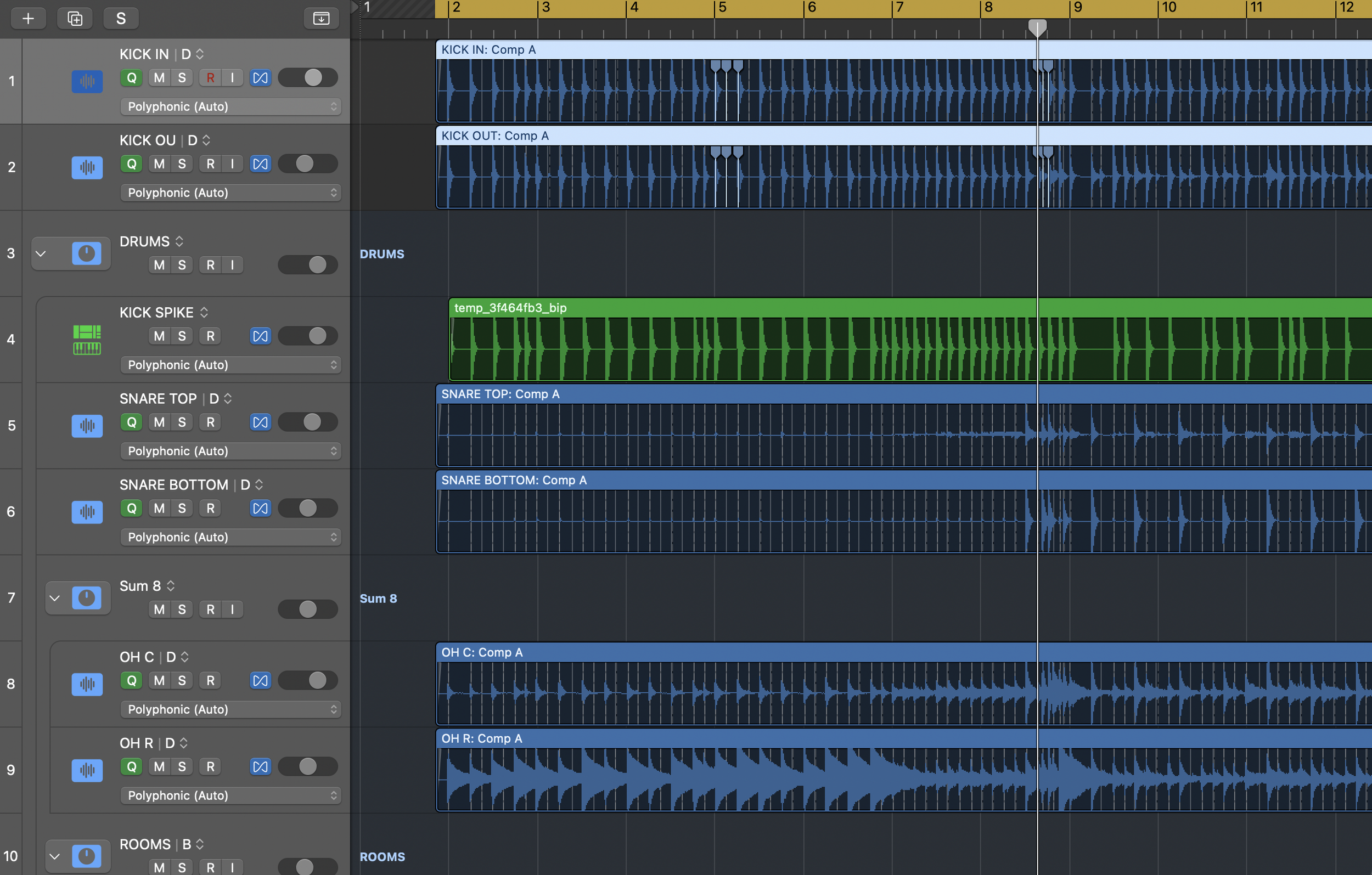
(Flex Time drums editing)
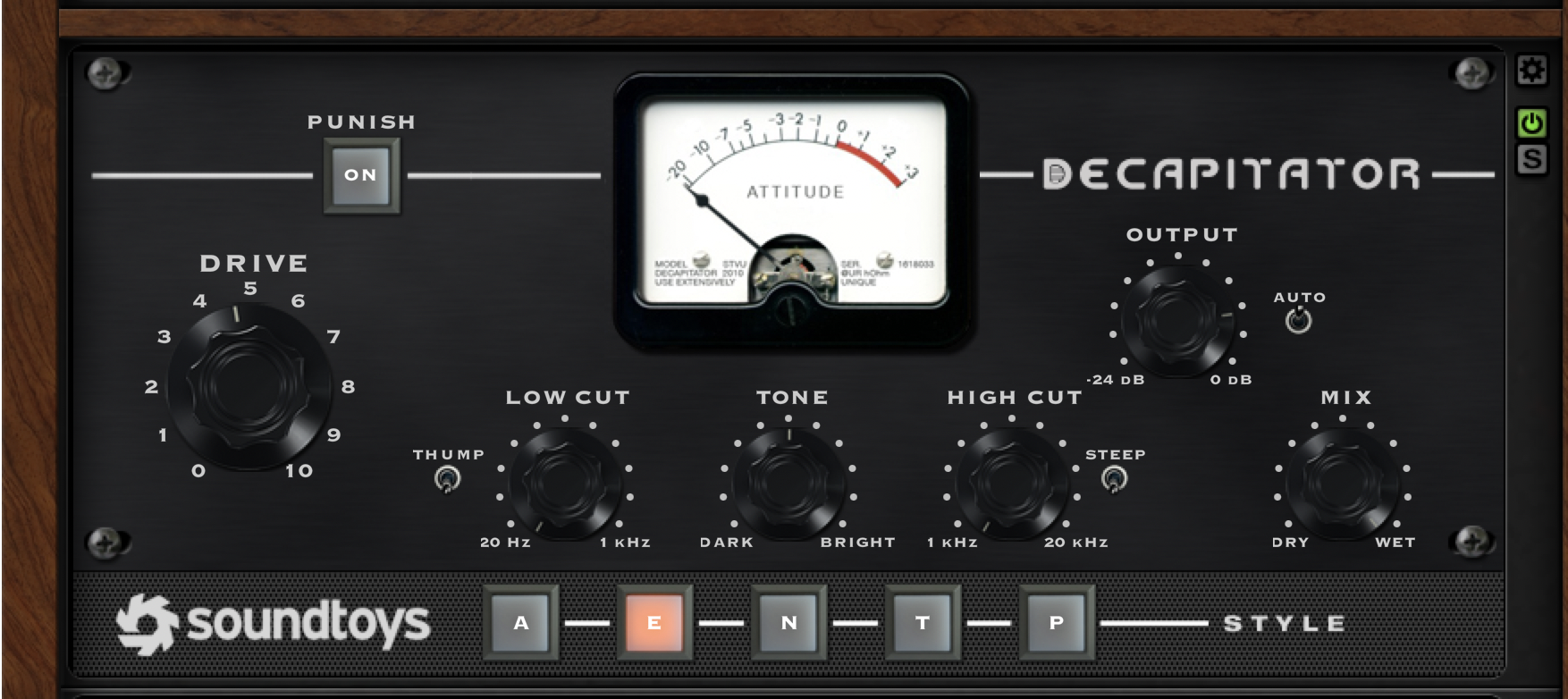
(Soundtoys Decapitator parallel compression)
Effects
On the room mics, usually in the choruses, I automated a tremolo. This created even more sense of movement.
On the snare and toms I created buses with gated reverbs. I felt this would introduce a bit of an 80-90s sound that the band are a fan of. It also gave the drums a larger sense of space, especially within the dense guitar arrangements.
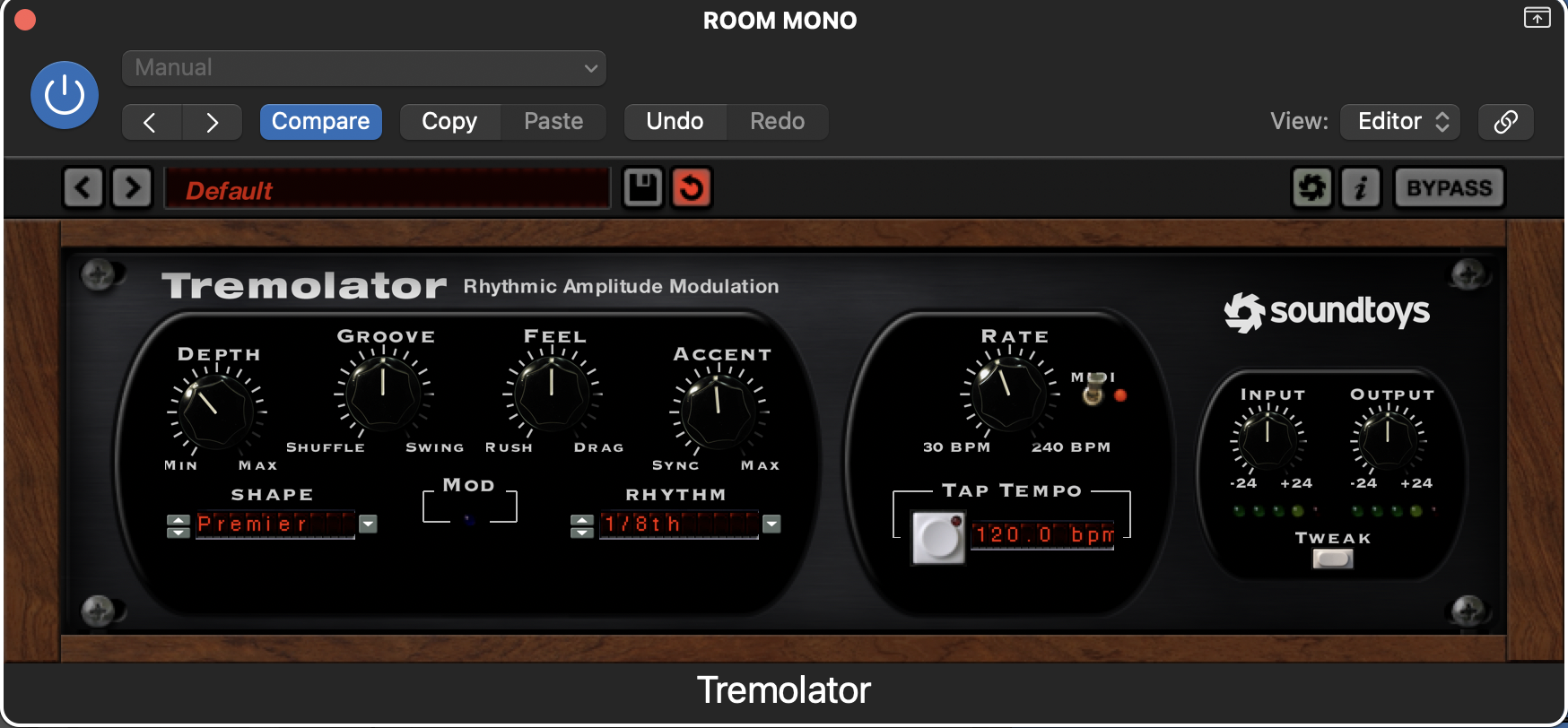
(Room mic tremelo using Soundtoys Tremolator)
Bass
I kept Mia’s post pre-amp DI as the main bass track. To give it its own edge amongst the distorted guitars and trashy drums, I added more grit with Soundtoys Radiator. I also high-passed this track.
I then created a low-pass on the clean DI track and allowed some cross over in the mid-range between the two DI’s. I then limited the clean DI track, to make it the flat, consistent low-end bass tone.
I grouped the two DI’s together and compressed further. I also used multiband compression to control the low-end, as the bass became overpowering whenever Mia played the low frets on the bottom string. I tried adding multiband compression to the upper-mids as I wanted to further emphasise the pick, however this didn’t have much effect.
I created an auxiliary channel for the bass group and added a chorus effect to it. This sound was very Post-Punk (The Cure), a big influence of the band. I had initially had the chorus directly on the bass track, but it was messing up the low-end. The auxiliary channel allowed me to blend the chorus effect better and add a high-pass to eliminate the low-end issues.
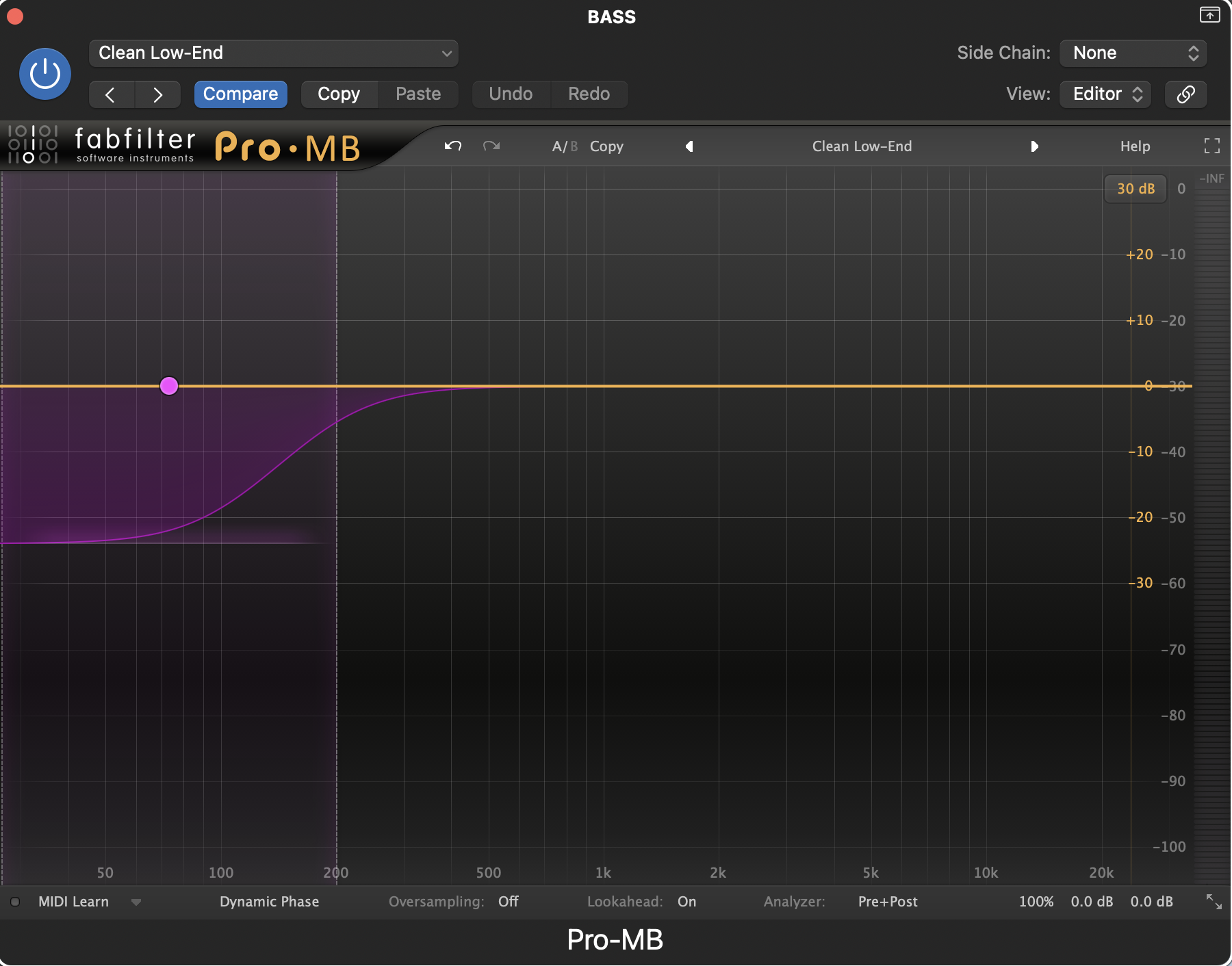
(Bass multi-band compression)
Guitars
I chose to double-track all of the guitar, thinking it would create lots of width. However, when it came to mixing, I discovered that having everything doubled created the opposite effect. It actually cluttered up the mix and made it sound narrow. To solve this, I muted some doubles and panned the guitars differently instead. I also EQ’d the remaining doubles differently from left to right, in order to add variation in them and bring back the width in the track.
Sam
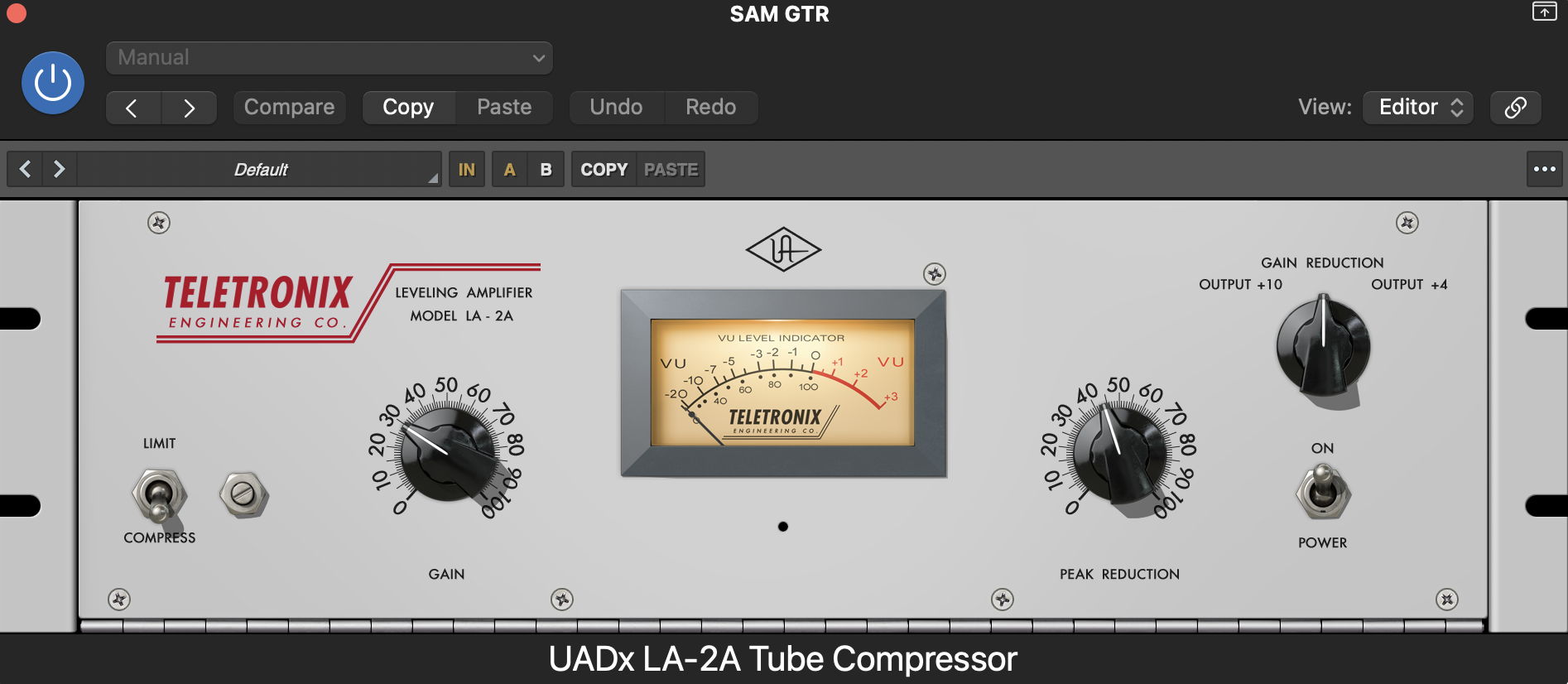
For Sam’s guitars I only EQ’d out harsh and muddy frequencies, and then compressed a lot using an LA-2A plug-in. This ‘squished’ the guitars and made them sound more powerful.
For any lead melodies that Sam played, like the solo in ‘Affirmation', I created a copy of the tracks and added an octave pitch shift. This gave those particular parts a different sound from the other guitars, helping them stand out amongst the layers.
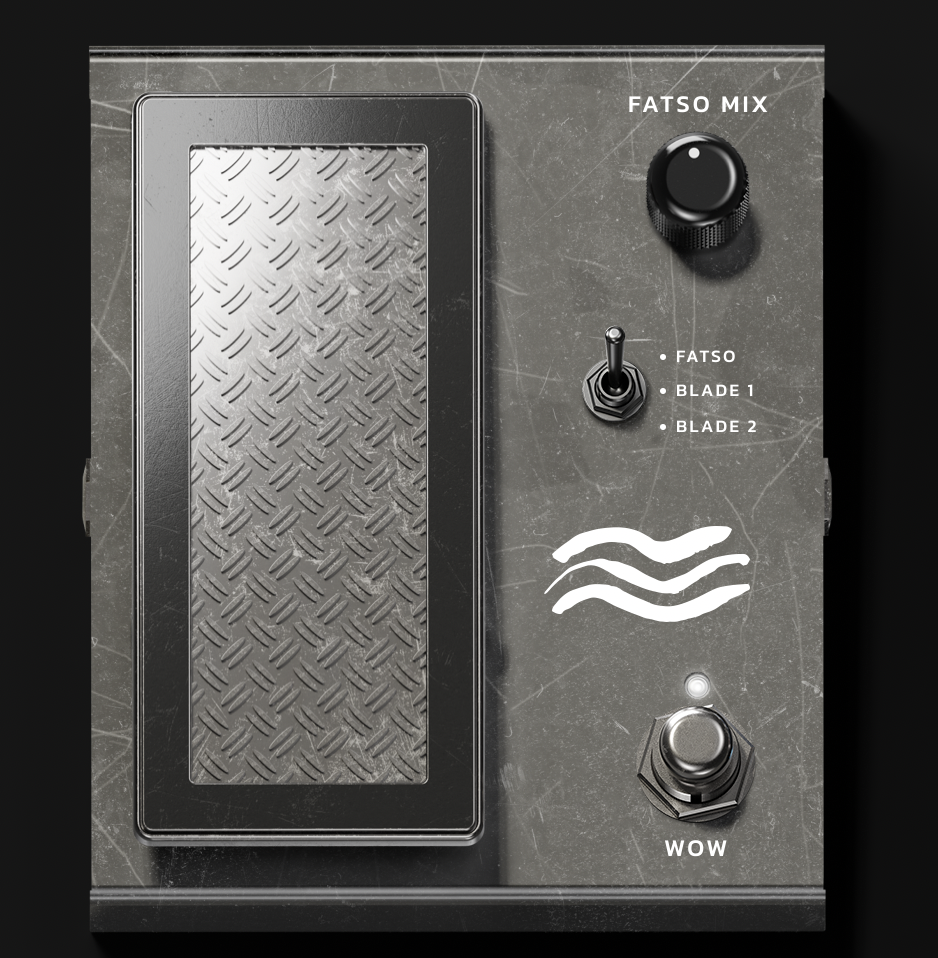
(Guitar pitch shift)
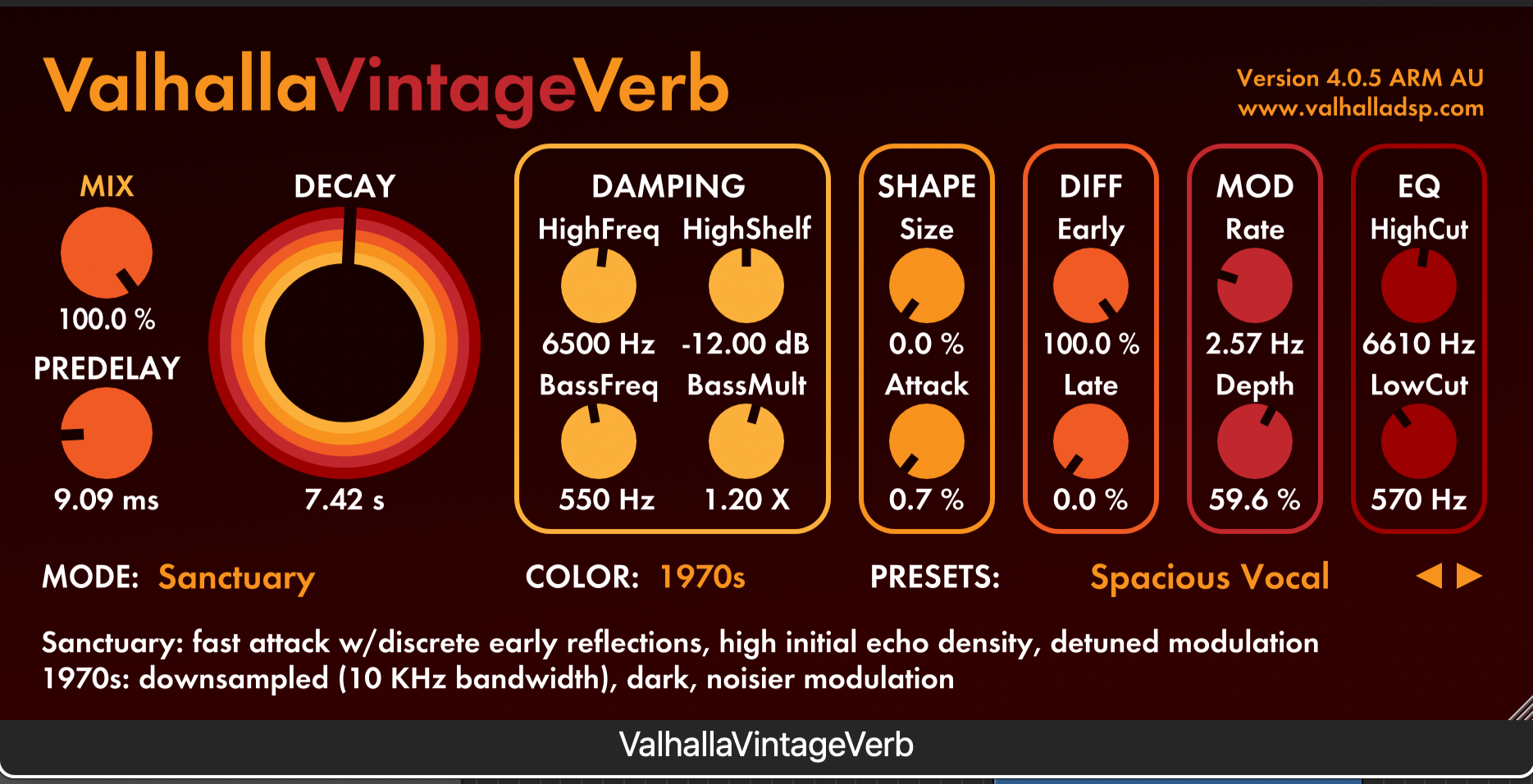
(Lead vocal reverb)
(Lead vocal De-Esser)
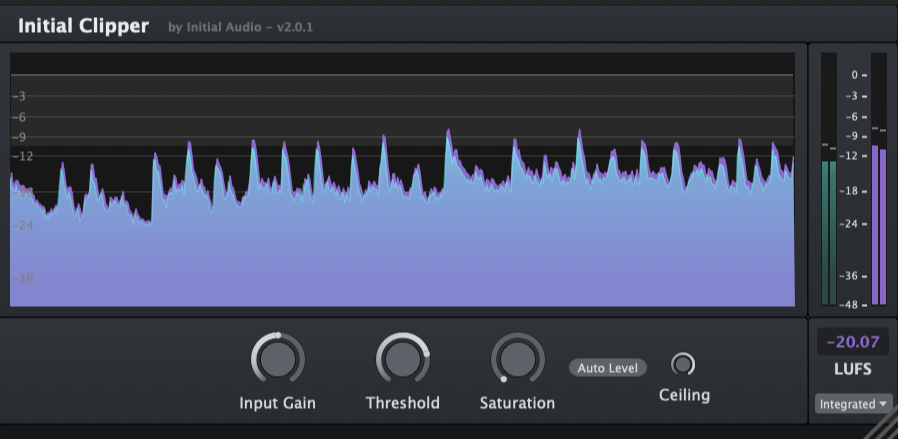
(Clipper on mastering chain)
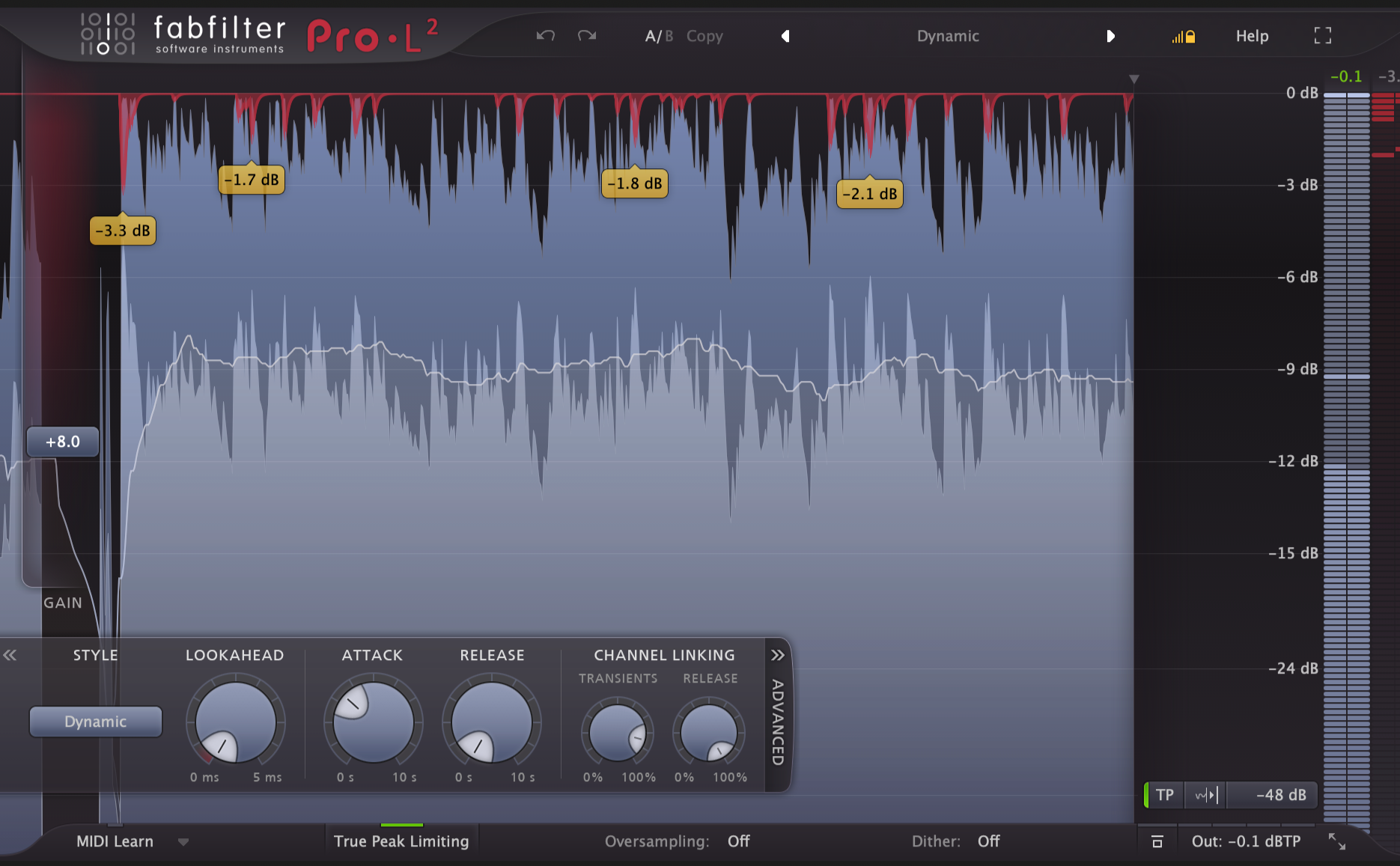
(Limiter aiming for -14 LUFS)
Danni
For Danni’s guitar I added Logic's guitar effect pedals for chorus and vibrato. I added these as auxiliary channels to blend the wet effects with the dry guitar. I also EQ’s the guitars more to create a honky tone, almost like it was coming from the radio. Danni’s parts add a lot of melody and are sometimes the main hook in the song. The tone made them just a bit more interesting and stood them out in the track.
Vocals
The vocals required a lot of added effects in order to make them feel a part of these mixes. The original vocals were soft and quiet, but they sounded weak and out of place when dry. The band are big fans of reverb on the vocals, playing into those Shoegaze influences and giving a more ethereal sound.
I used Valhalla Reverb on auxiliary channels; shorter reverb for the main vocals, and much longer reverb for the backing vocals. This ensured the main vocal didn't get lost amongst the reverb.
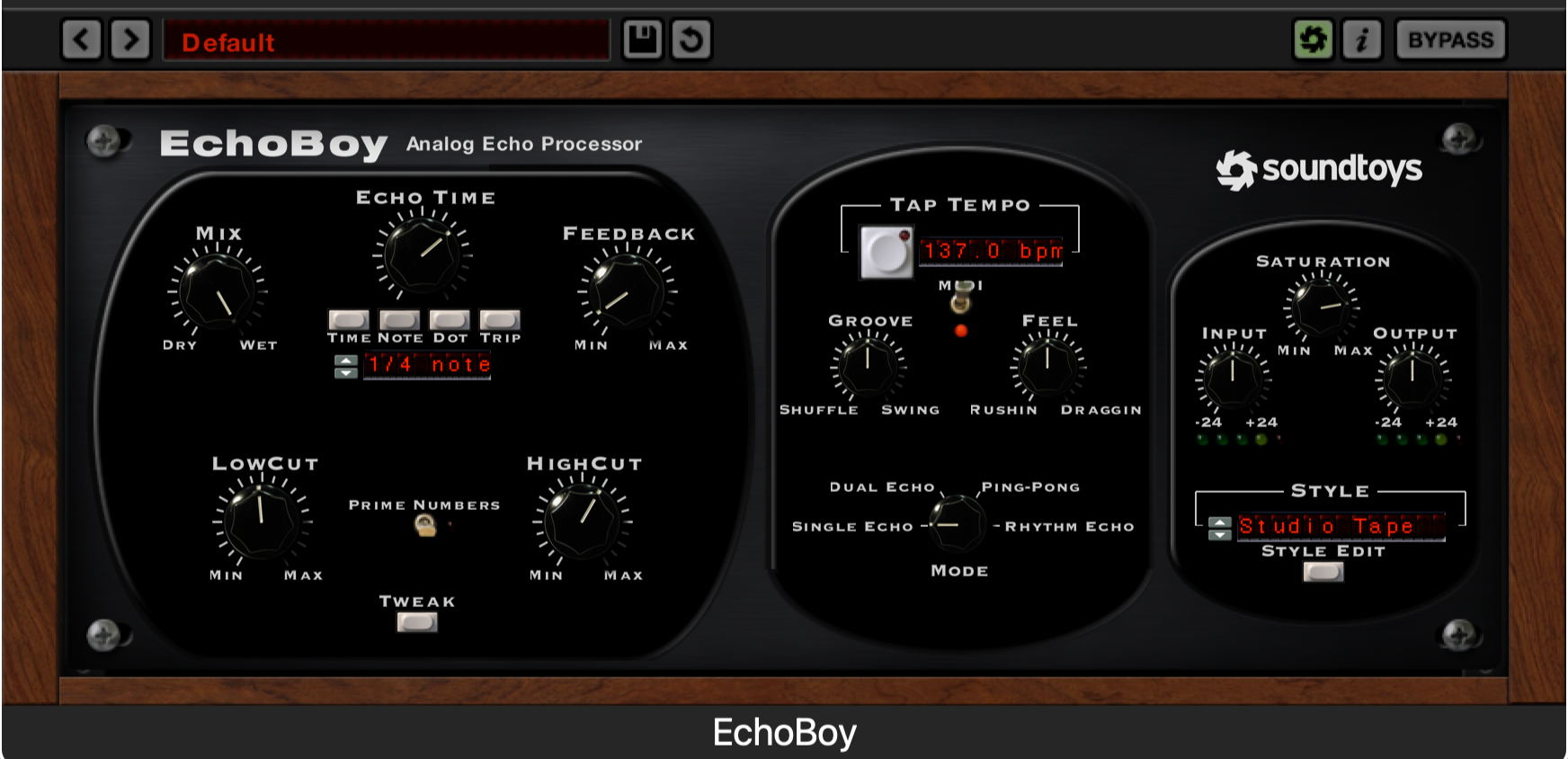
I also added ¼ note and ⅛ note delays on aux channels. These delays intertwined with each other, which I liked. I automated the level of these delays to create moments within the song.
The vocal had very strong sibilance sounds which I struggled to tame. When using the DeEsser to reduce the sibilance, too hard of a reduction would give Danni a lisp. Not enough made the vocal harsh throughout the mix. I eventually used a combination of Soothe 2, dynamic EQ’s and a DeEsser to remove the tame sibilance in gradual stages.
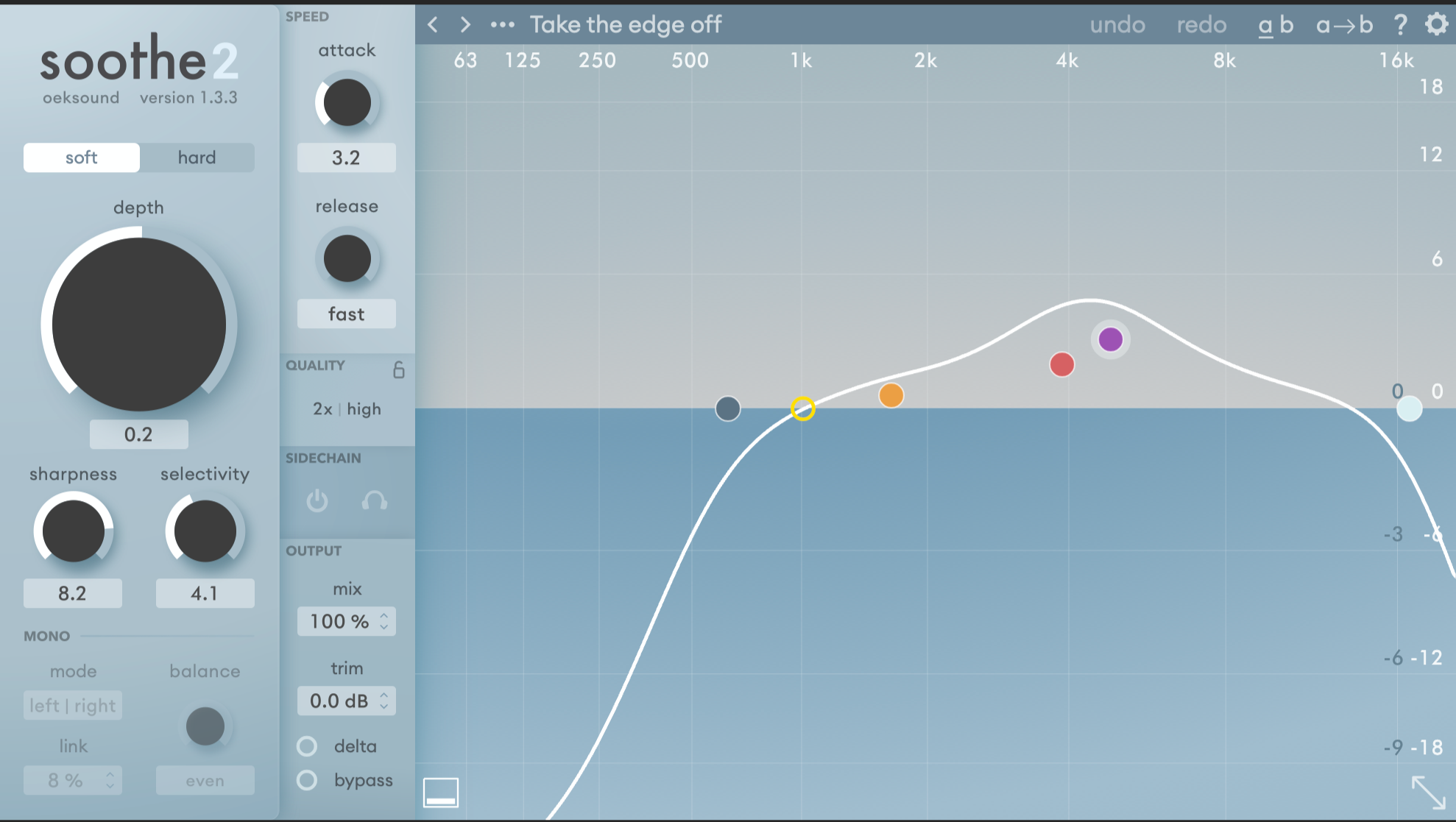
(Soothe 2 on lead vocal)
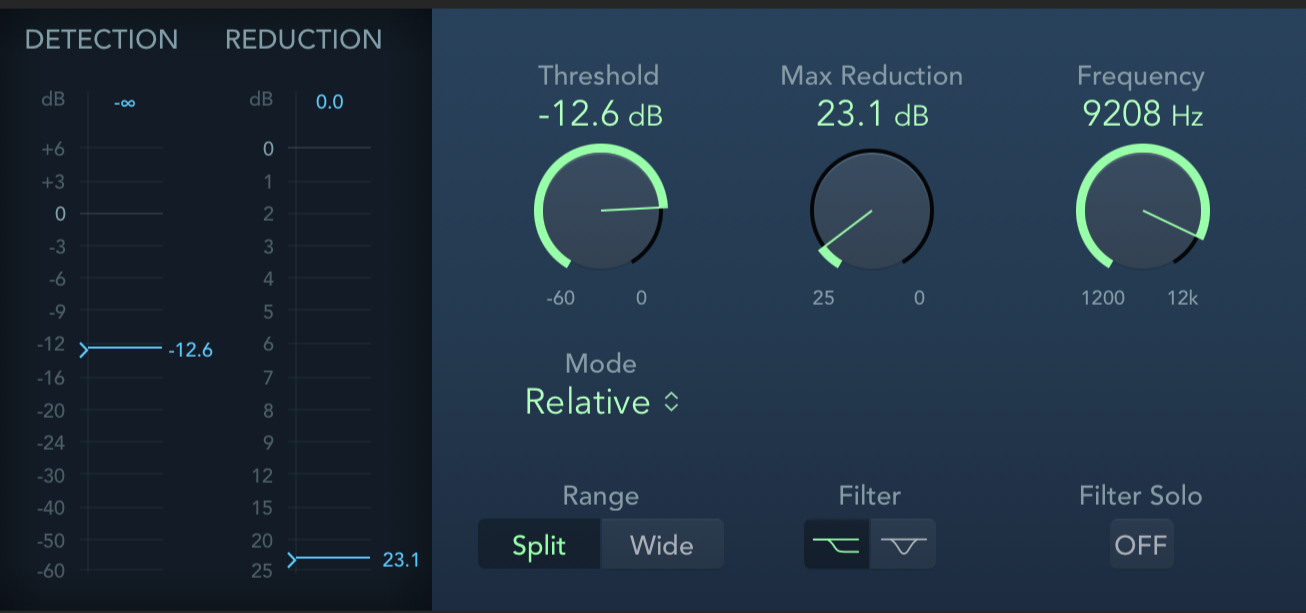
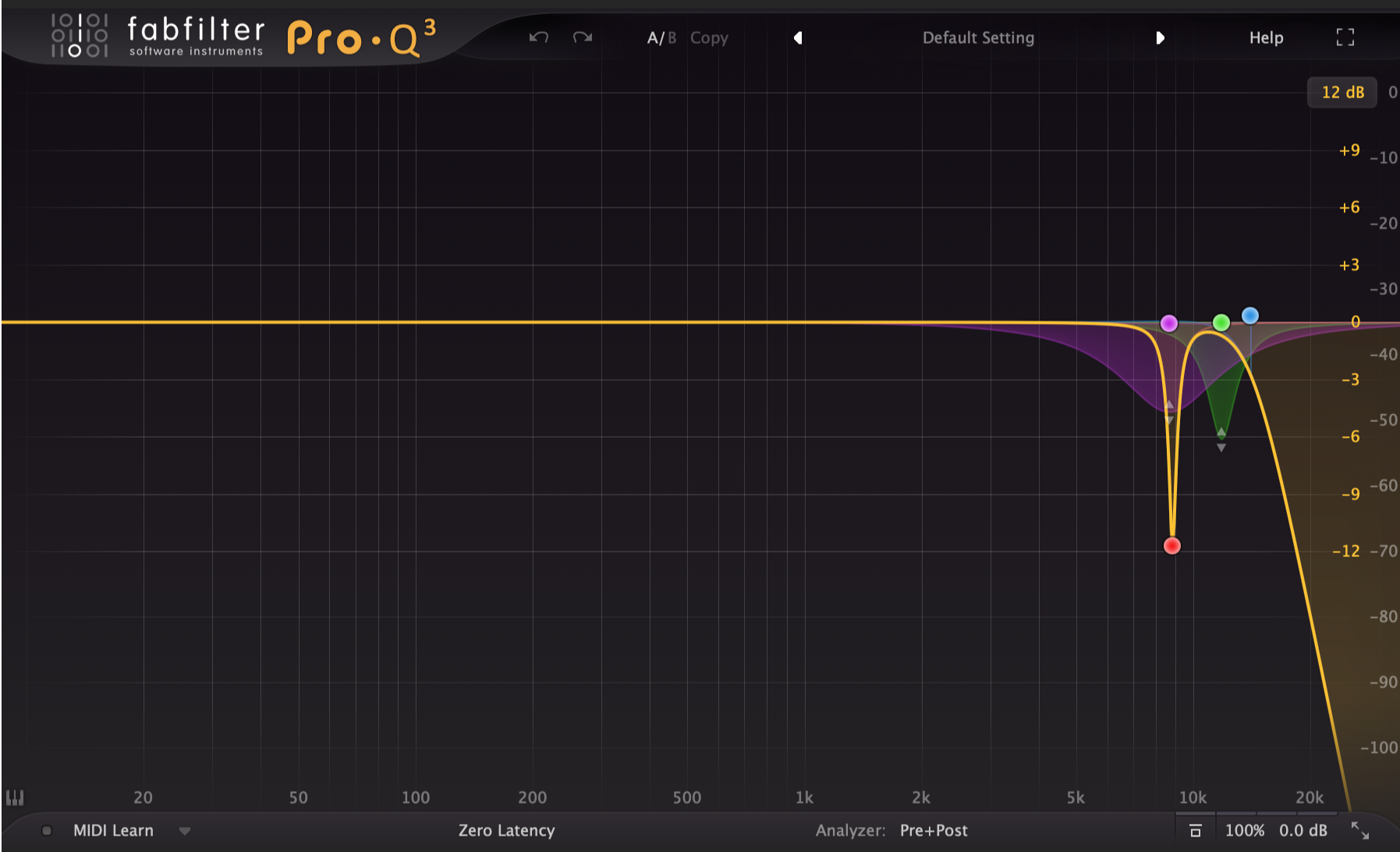
(Lead vocal dynamic EQ)
Mastering
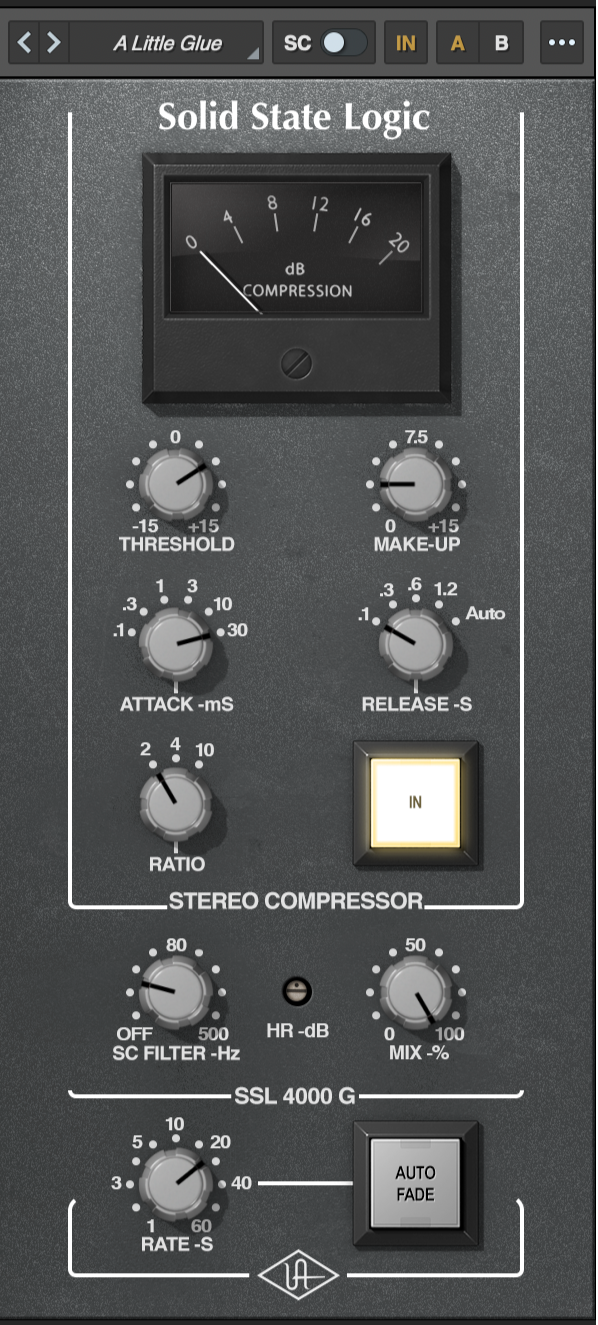
Prior to mastering, some elements stuck out more than others and the energy of the track wasn’t quite where I felt it needed to be. I wanted to further glue the tracks together. I started with UADs SSL G bus compressor and this began to bring everything together. I also set the threshold higher than usual to give a more aggressive and pumped compression sound to the mix.
I had previously used limiters to achieve more loudness in a master. These sometimes, however, introduced a harshness and bad sounding distortion. This was my first time using a clipper instead, which gave a nicer sounding distortion and allowed me to reach my desired loudness easier.
(UAD SLL G Bus)
I used a Pultec style EQ for a ‘smiley face’ high and low-end boost. This instantly gave the songs more energy. Finally, I used a limiter for the last push to reach around -14LUFs; to sit the songs well against other songs on Streaming.
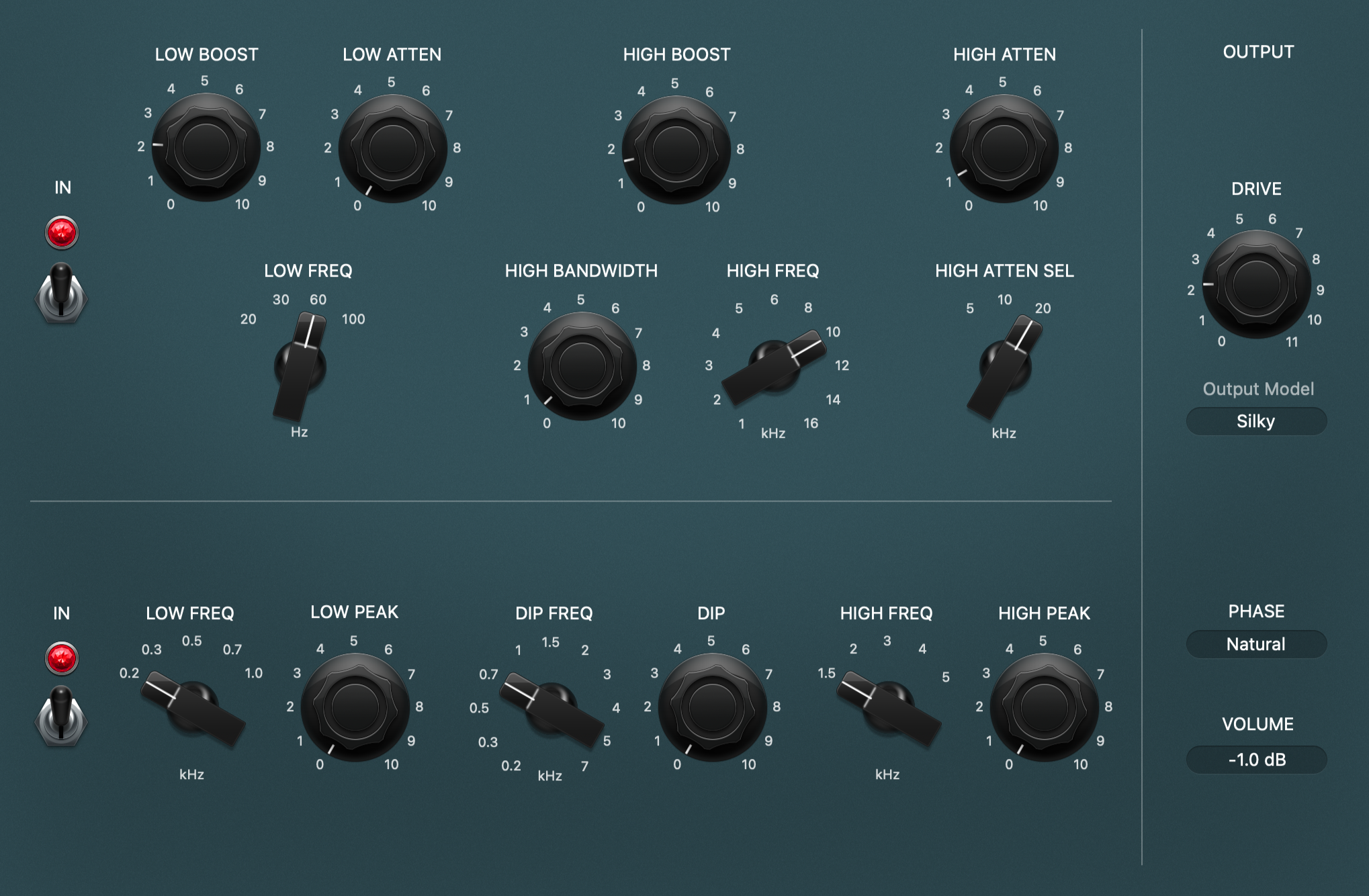
(Pultec EQ with ‘smiley face’ boost)
Critical Reflection
The band was unorganised at times, often taking long to get back about bookings, mix reviews, and they cancelled/ missed a few sessions.
The whole band wasn't always present at the session. I think it's nicer working with the whole band there, as it feels like everyone's fully invested in the project. It also gives me confidence that the whole band will agree and be happy with the results if they have all had an input to the process.
I have learnt from this project that I don't need to rely on double-tracking, or multiple tracks, to make things sound bigger. Sometimes fewer tracks can actually create a bigger space, and sound heavier.
The band is happy with the end result, but it has been nearly six months since completing the mix and I am unsure on their plans for release. Personally, I would like to revisit the mixes before release, as I think some small tweaks will improve them. The current mixes are potentially too compressed, and that is taking away from the dynamics of the track. Some of the bigger moments in the tracks could hit harder with better dynamics.
If the band is set on the current mixes, then that is ok too. It's their release at the end of the day.
I have been in discussions with Shutterspeed for more projects in the future, with an offer to pay me a producer/engineer rate.