The project - A four song EP, with two songs initially being released as singles. The first single, ‘Out of Spite’, was released in June 2026. The second, ‘Sick and Tired’, in September 2026. The EP, which includes these two tracks, will be released later in the year.
Override are a South West-based Hardcore band. This production aims for an extreme drum sound and an overall dense, relentless mix. Choosing to merge raw energy and a DIY, imperfect sound with modern production and mixing techniques has really enhanced the band's songs. It makes them competitive with larger acts within the genre, even at this early stage of the band's career. Working with Override was one of my first introductions to producing heavy music, a genre I really enjoy working within and one that plays to my strengths.
OVERRIDE
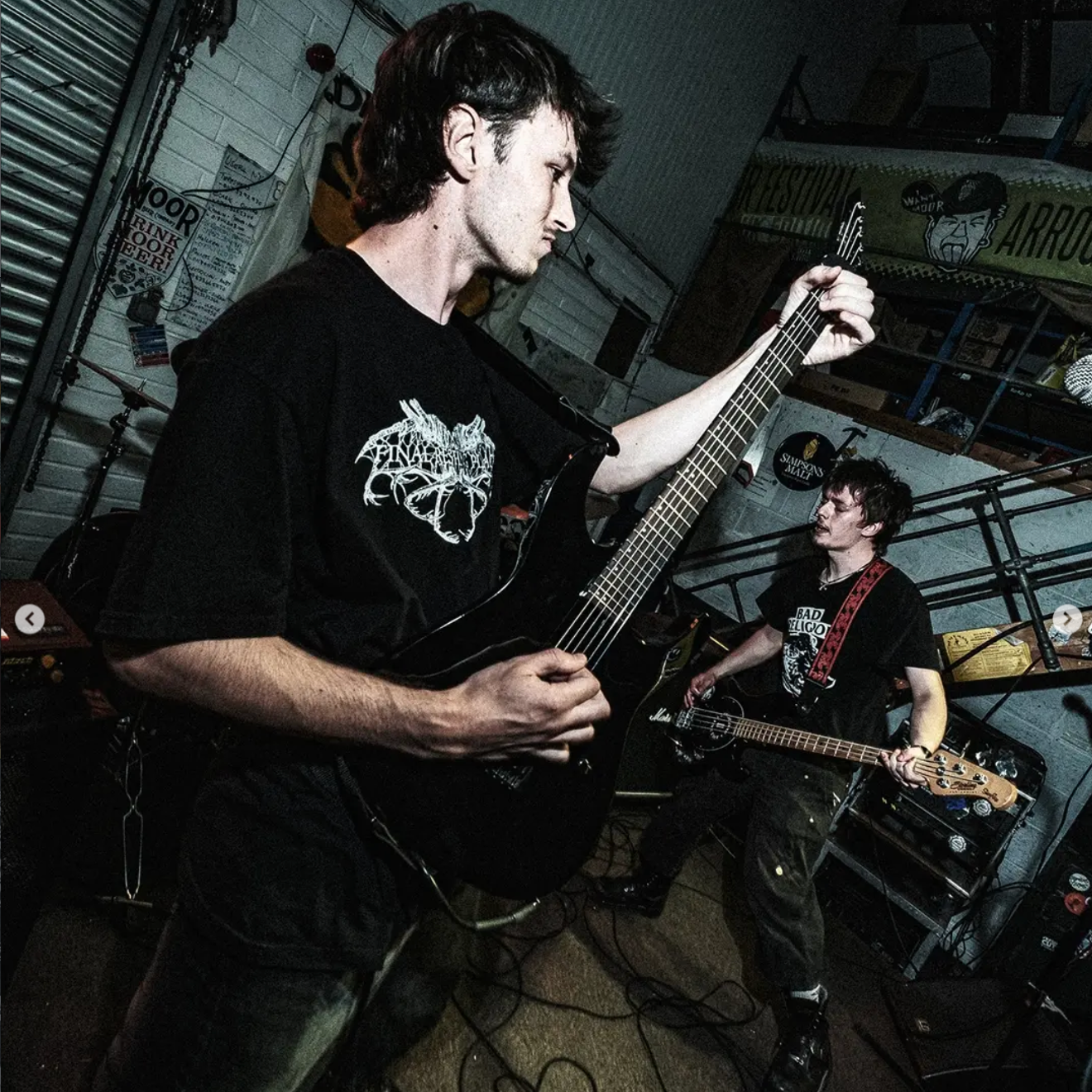
Meeting The Band -
I had seen Override play at a CM social and really liked their sound. I was getting into Hardcore at the time, and was interested in getting involved with the genre. I contacted them by Instagram DM, towards the end of 2025. Instagram tends to be the best way to reach out to bands, especially new bands, as it is usually their main social media and contact. It was also a more relaxed and informal way of communicating, which I think was important in starting a good working relationship with this band that I had never met before. Initially the band were not interested in recording, saying they were currently revamping their sound and focusing on writing new songs. However, in the new year, they got back in touch.
We arranged for me to come to a rehearsal to discuss the songs and what they wanted to achieve in the studio. I felt it was important to see them in rehearsal so I could hear the songs, get an idea of their sound, what gear they used, and what to expect on a technical level from their performances. I could then start to plan the best way to record them. We also discussed influences, and they provided some reference tracks that they envisioned the songs to sound like.
The biggest takeaway from this was that they preferred a more raw-sounding record, with a lot of aggression and imperfect human attributes, over a really polished and perfect-sounding record. Hardcore that I had listened to was more polished, or closer to Punk than Metal. Knowing what Overrides’ influences were allowed me to try and immerse myself into those influences and get a better feel of the sound before recording started. I could then aim to achieve a sound that felt authentic to the band and their scene.
(Reference tracks playlist)
Schedule -
The focus was on drums first, then guitars and vocals, and finally adding in bass. It was decided to work on bass last, as Dan (bass) had the busiest schedule in the band and booking in a session would be easier at a later date. I also didn't want it to delay any progress or completion of the other parts.
We began in February and I initially booked in four sessions over that month to get all four tracks of drums laid down. The rest of the tracks could then be built up from there. I believe that it is really important that bands record to a click, especially within very technical genres. Bad timing can completely ruin a track. The band totally agreed and came to the drum recording sessions with a click track completely laid out. Luke (guitar) and Ted (drums) had also already decided on drum parts, so everyone knew exactly what was going to be played, down to each hit. The band’s ability to do all of this pre-production was really useful, and little time was wasted on learning or debating key parts during the recording.
The plan was to have the EP completely tracked and mixed for mid-June, aiming for at least one 3-hour studio session a week. The estimated June deadline would also line up well with the band's upcoming run of gigs. They felt it important to get the music out sooner, so as to gain more interest in their project.
I made a chart to help myself keep track of the recording progress. This also helped me feel like progress was being made every time a box got crossed off.
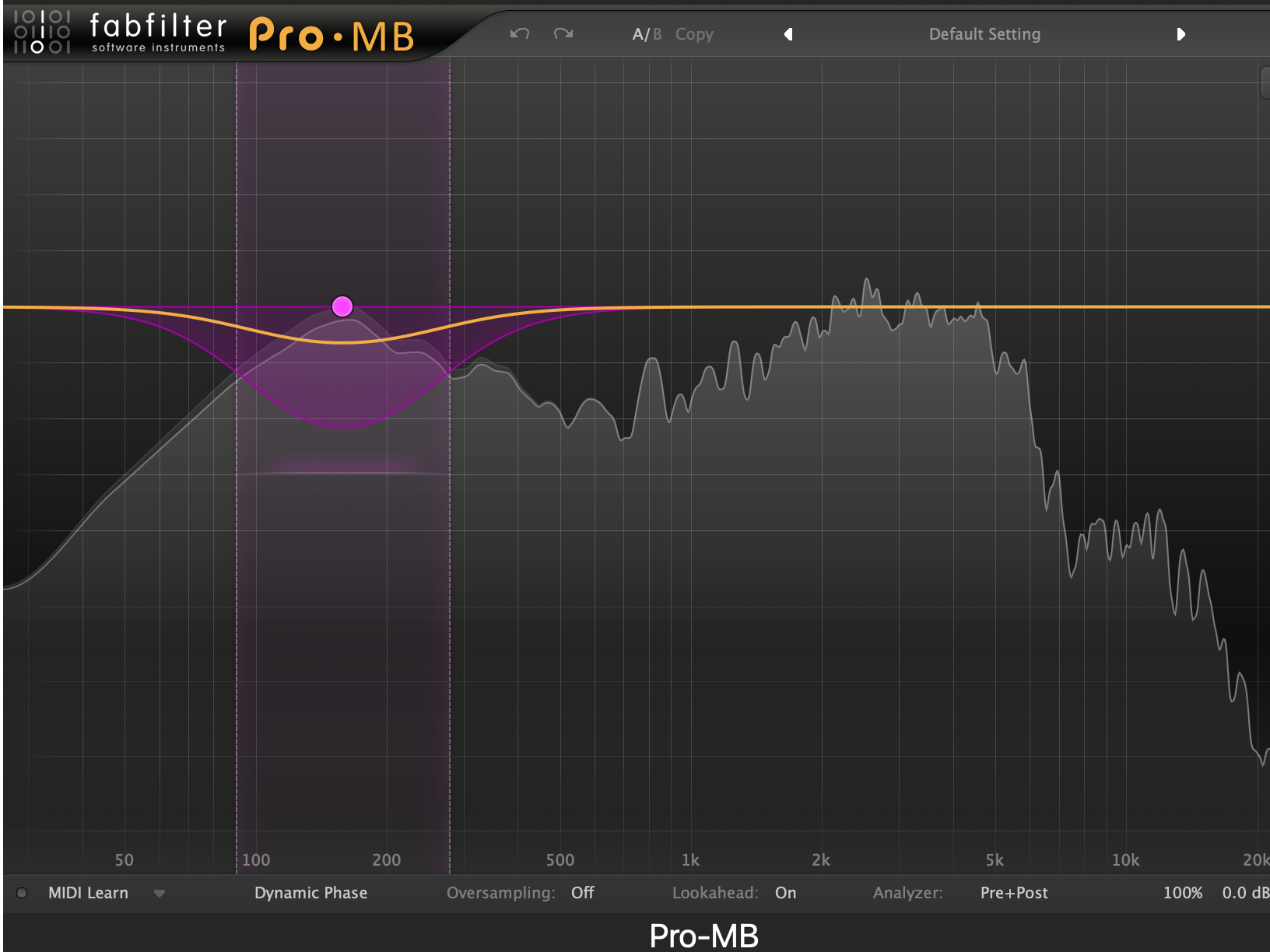
(Low-end guitar multi-band compression)
The mics used were:
Kick Out – Audix D6
Kick In – Beta 91A
Sub Kick – Yamaha Sub Kick
I felt it was necessary to use three mics on the kick to capture all aspects of the kick: the click of the beater from the Beta 91A to help cut through a dense mix, the D6 for a tight low-end punch, and the sub kick to give dense and heavy low end in certain sections and allow the kick to really be felt by the listener.
Snare Top – Beta 57A
The Beta 57A is hypercardioid. This tighter polar pattern would ensure more rejection of bleed from other drums and cymbals. The reduced bleed meant I could heavily process just the snare drum without affecting any other parts of the kit’s sound.
Snare Bottom – SM57
Snare Side – SM58
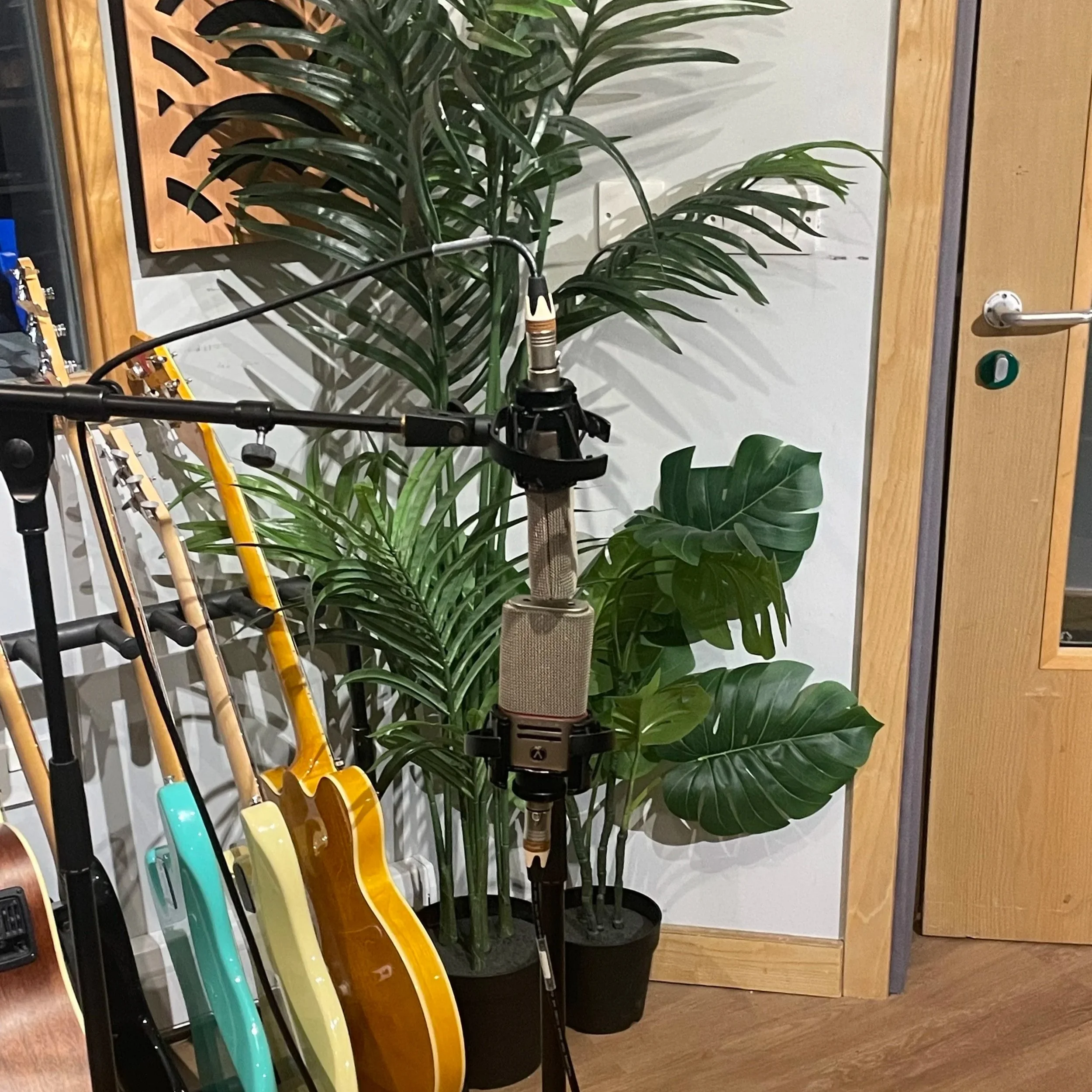
(Blumlein room microphone configuration)
At first, there was a lot of disagreement in the band about tones, and I had to do some mediating. While obviously having my own preferences, I didn’t want to impact too much on how they wanted to sound. It is their band at the end of the day. The disagreement mostly focused around mid-range, or, to be more specific, the lack of it. Ted favoured really sludgy guitar tones with absolutely no mids, just heavily boosted high and low frequencies. Whereas Luke tended to prefer tones with more mid-range punch and clarity. In the end, Ted won overall, and we settled with a more heavily scooped-mid guitar tone at source. In fact, it better suited the songs’ weight and outrageousness. I did add in a bit more mid-range frequency when mixing later, just to lift the guitars slightly and increase clarity. Luke’s parts can be technical in places, and I felt it was important to highlight that.
I did try using a condenser microphone (Austrian Audio OC818) to see how it compared, but it gave too much of an articulate sound and highlighted harsh frequencies in Luke’s vocals. So, the SM7B was the microphone of choice. Using the patch bay in the studio, I ran this signal through a Distressor to add heavy compression, pushed the input gain a lot, and set the ratio to “nuke”. I played around with the attack and release until I found settings that I felt grabbed the vocals in an aggressive way, making them feel really close and intense. I wanted the vocals to feel almost visceral.
I sometimes feel unsure when producing someone’s vocals. I am not a vocalist and have little knowledge of vocal techniques. Without it, I struggle to articulate feedback like I can with drums and guitar, since I do play those instruments.
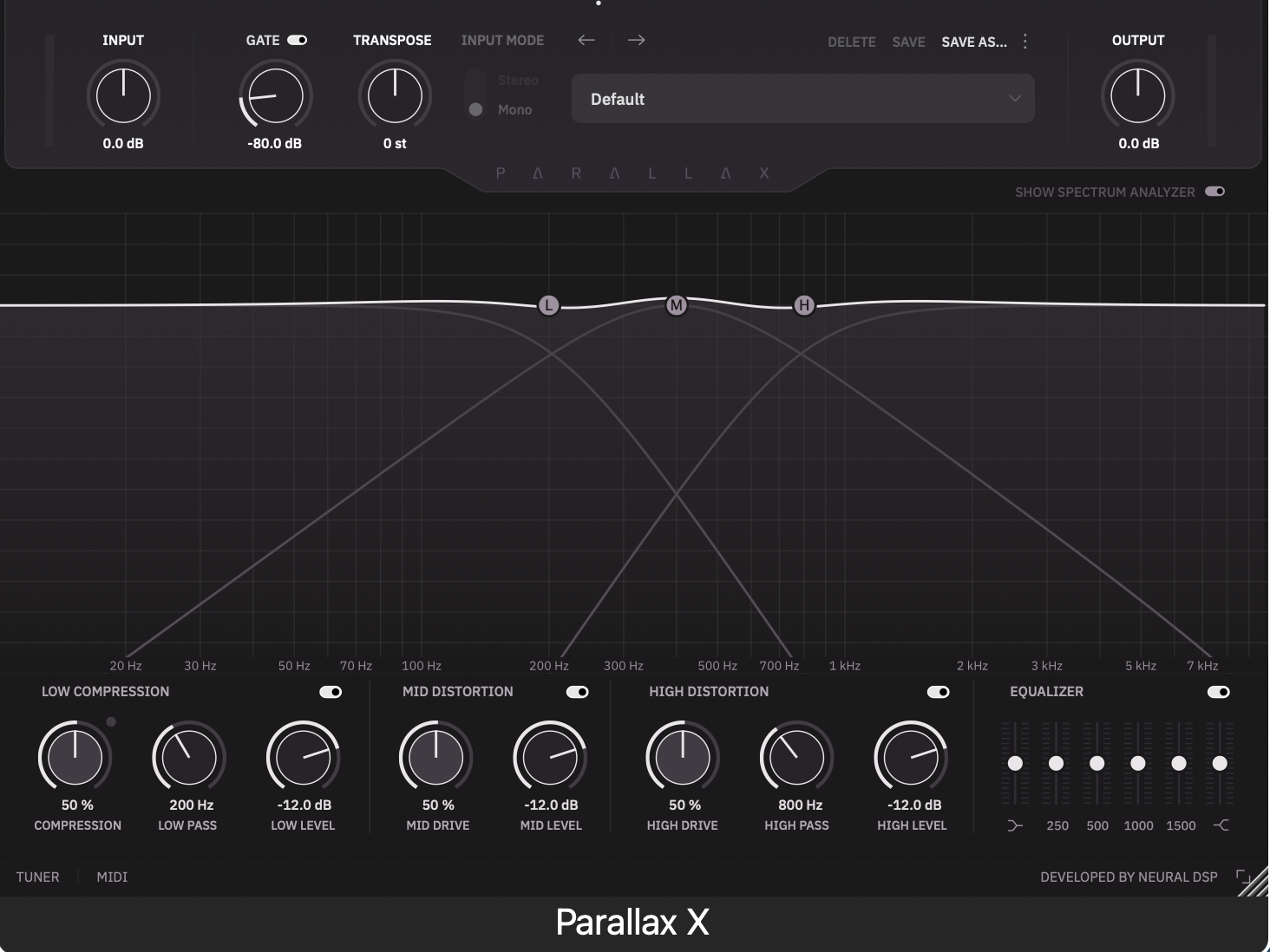
(Neural DSP Parallax)
(Drum kit set up)
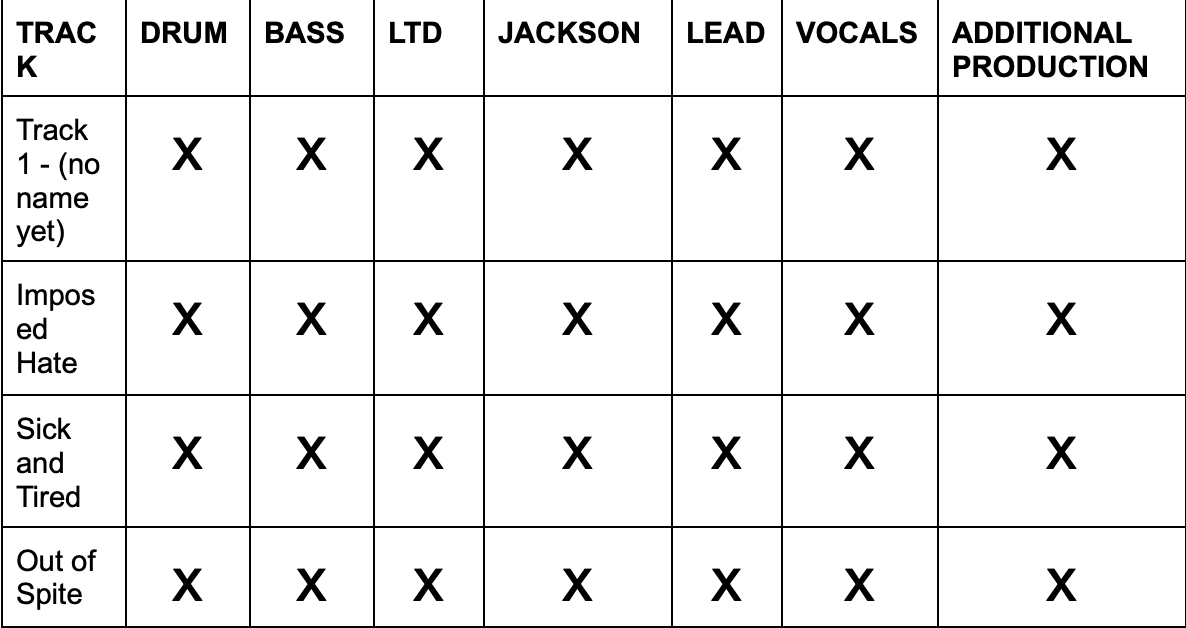
(Recording progress chart)
Recording Process -
Drums
I spoke in depth with Ted about the drum sounds he liked, as my goal with each band member was to portray their individuality and distinct sound. I prefer records that sound unique to a band over ones that are trying to sound like other people. I found that the band did reference a lot of other bands in how they were trying to sound, which is good, but at the same time I wanted to try and steer them away from just copying other projects. Hopefully, with enough combined references we could come up with something interesting.
I knew the snare had to be the centre point of the EP’s sound, maybe one of the most important parts of the recording. To me, snare drums are the centre point of the drums, and everything else is centred around that, especially the groove and what has the most impact on the listener. We chose to use Ted’s Joey Jordison (Slipknot) 13x6.5" signature snare. The drum is made of thick steel and produces loud hits and a ‘crack’ that easily cuts through loud mixes. I felt the more outrageous the better with this snare sound, as it needed to fit in with more extreme genres like Metal, and subgenres like Hardcore and Slam. We tried a few different heads that each had different things we liked and disliked. Initially, we tried a coated head which gave a more focused, beefier sound; however, it reduced the amount of ring and overtones, reducing the extreme aspect of the snare sound. We chose a clear snare batter head instead, as it gave more ring and a more extreme sound. The “beef” lost through using a clear head would be brought back into the drum through blending samples in post.
The kit used was a DW Collectors Series. I felt that this kit had the tightest, punchiest sounding kick out of the drum kits available in the university studios. The toms were deadened a lot to give a more meat-thwacking sound over a big, open tone. These punchy shell sounds would be great for Ted’s tight, fast playing, with the outrageously ringing snare being the explosive centre point.
I did plan to use some sample reinforcement on the snare, as it was mainly focused on ring, crack, and explosiveness and lacking in low-end and body. The snare was piercing through the mix but sounded weak in comparison to everything else and had no weight behind it. I spoke with the band about how they felt about using samples, as some people feel strongly against their use and feel it’s not authentic. I use them as a tool to reinforce drums, rather than replace them or compensate for poor playing. The band felt the same, as long as the samples weren’t replacing Ted’s playing and taking away from the raw sound of the record.
This snare side mic would be used to further the extreme snare sound. Heavily compressing and distorting the mic, I would then use gates in the mixing process to activate the audio track during specific moments when the snare’s ring needed more emphasis.
Tom 1 – MD421
Tom 2 – MD421
China Close Mic – SM57
Bell Close Mic – SM57
OH Left + Right – Stereo Pair C414
Room Top and Bottom – Austrian Audio OC818 (Blumlein)
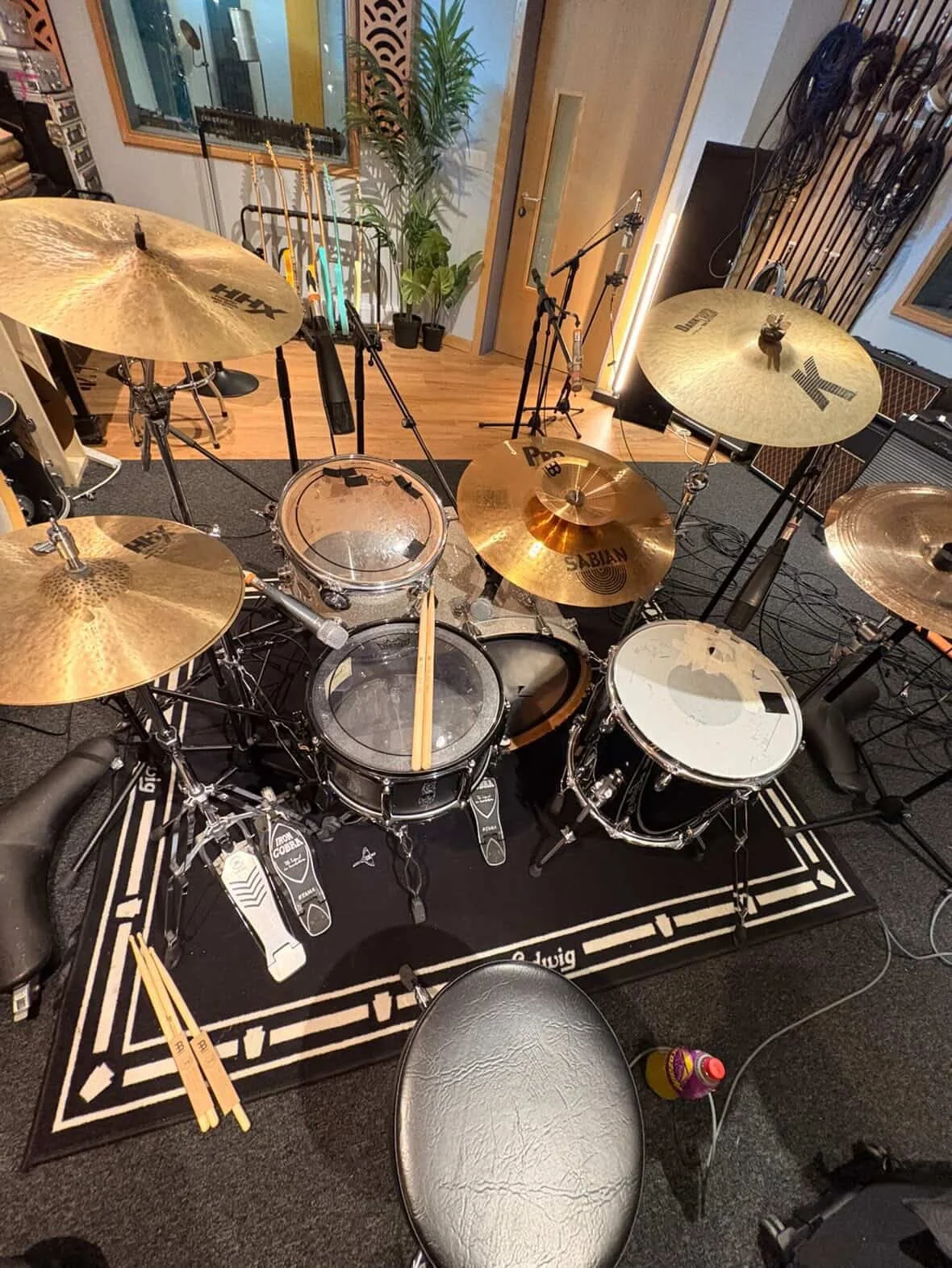
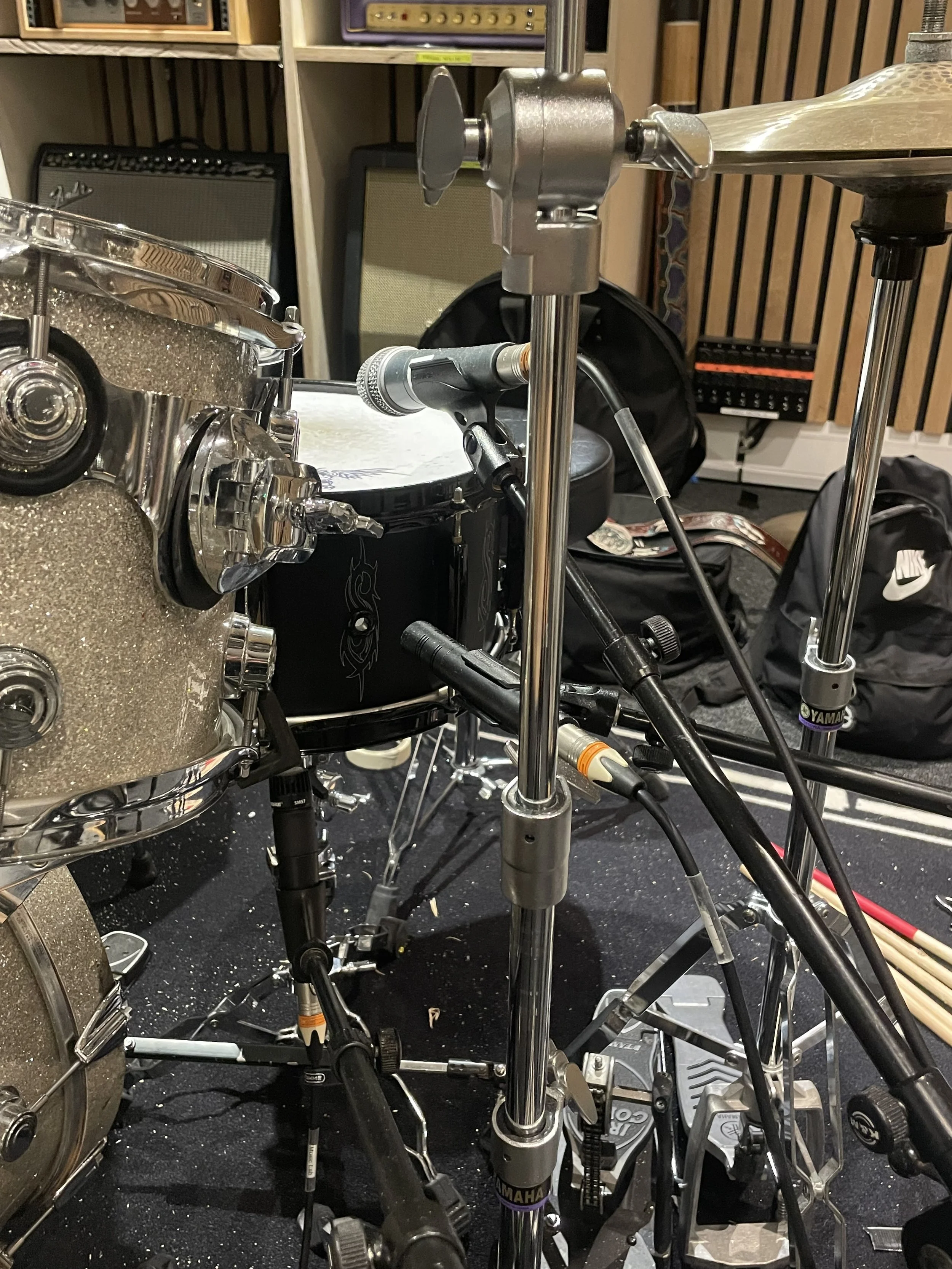
(Snare drum microphone placements)
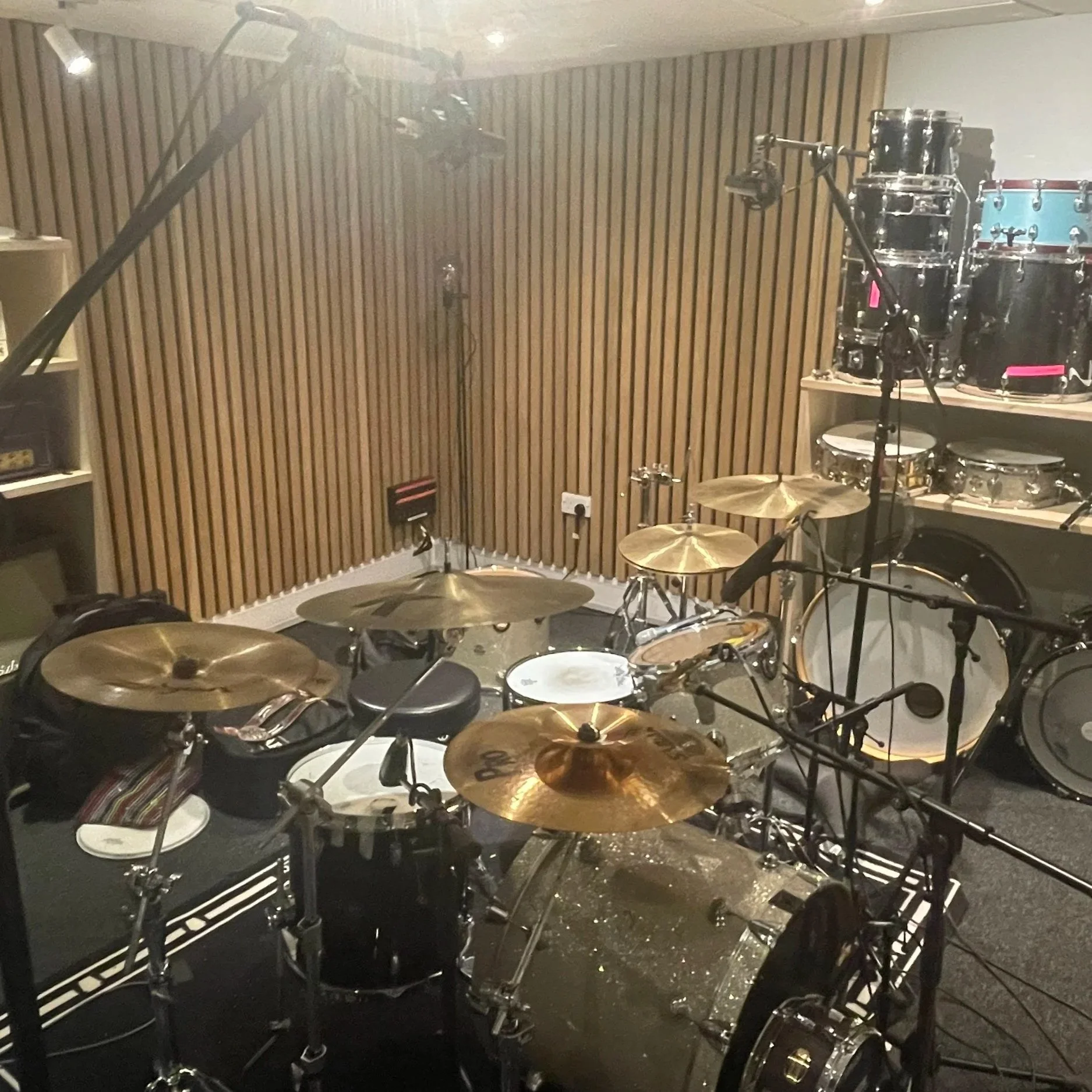
(Drum kit microphone set up)
During tracking, Luke played along with Ted so that the feel of playing with the band was captured. A click was used, but as an anchor that they could still push and pull against as they would in a live setting. Playing together was also useful to highlight parts that maybe didn’t translate as well onto a recording as they do live, for example, guitar hold-outs and particular slow-downs in tempo.
The songs were all tracked in four 3-hour sessions. However, after reviewing the recordings and also having gigged their new songs a few times, the band did want to revisit the track ‘Imposed Hate’, as they felt they had come up with a better arrangement and drum parts for the song. This wasn’t a huge task, and it only took another short studio session to retrack. I tried my best to keep the set-up and position of mics as close as possible between sessions to maintain a consistent drum sound across the EP. It would also make the mix process simpler and faster, as once I had a good mix of the first song, I could likely copy settings across projects as a starting point to get me close to the desired sound on the rest of the songs.
When it came to the mixing stage, there was a notable difference between the kick and snare on the first track we recorded, ‘Untitled’, and the other three songs. This made the mix process for that song a bit trickier, as I had to complete the other mixes first and then constantly reference them to ensure a consistent sound across the EP.
Guitars
Luke plays live with a Neural DSP Quad Cortex, a digital amp simulator. These are great, as you can access so many different tones and set-ups using just one piece of equipment the size of a pedalboard. However, in my opinion, digital amp sims often sound too perfect and polished, and I feel it is because there is no real air moving and interacting with the room and mics in that moment — it is just a recreation of what happened in another moment in a completely different environment. So while they sound great, it was not the raw, imperfect sound that Override or I wanted.
We did not have access to the amps that produce the sounds we were looking for. For example, a very popular amp in the Hardcore scene is the Peavey 5150, with very high gain and lots of chug. We therefore developed a compromise by combining digital amp sims with real cabs and speakers going into real microphones. This worked great, as we could achieve the desired source amp sound and then create imperfections and a rawer sound through pushing lots of air through the cab at loud volumes into real studio mics. I also feel there’s something about having the sheer volume that the guitars were recorded at playing next to you while recording a part. I hoped that Luke felt like he was at a loud gig, could feel the power behind his playing, and would really lay into the parts.
We also had two guitar options: a Jackson and an LTD Baritone, both in the same tuning but with different pickups, scale lengths, and tonal qualities. Some time was spent A/B-ing between the two guitars, deciding on the best choice for the songs, but then I had the idea to actually just use both. With the intention of double-tracking guitar parts to add width and size to the guitars, the Jackson could be panned left and the LTD to the right, almost like a separate guitarist playing in the band, despite Luke being the only guitarist. This was going to add a more real and raw feel to the playing and arrangement of the songs. Also, I have found from previous experience that double-tracking with the exact same guitar, with the same tone, can make the sound one-directional and doesn't actually make the guitars sound wider.
There were a few moments in ‘Out of Spite’ where I suggested that additional parts be added in, for example, some crazy dive bombs before the final breakdown (Van Halen style). I got this idea from a Guilt Trip song; it was a memorable moment in the track that made me smile. We tried it, and at first the reaction was amazing and everyone was really into the idea. Later, however, after more listens, it was felt a solo guitar riff was more effective.
(Tone searching)
I also EQ-matched each tone we tried against the reference tracks the band had given me, in order to identify differences between the tones we had and the tones the band were aiming for. This made it easier to know what amp setting to change to get the desired result.
Different mic set-ups were tried. The first was a MD421, and then two SM57s – one straight-facing and the other angled at 45 degrees to attenuate high-end fizz. This set-up captured too much mid-range though, and also sounded a bit thin in comparison to the reference tones that Luke had chosen.
The next set-up we tried, and the one we ended up using, was:
SM57 Close Mic – Close to centre cone and close to the grill
Beyerdynamic M201 – Close to centre cone and close to the grill
Austrian Audio – Room Mic
This set-up gave a thicker sound. We also scooped more mid out from the original tone, removing any boxiness and making the guitars sound larger and more aggressive. Scooping the mids is very common in Hardcore.
I also took a DI for the purpose of easier editing of takes and timing, if needed. In the end though, I felt the takes were really tight and natural, and no editing was needed.
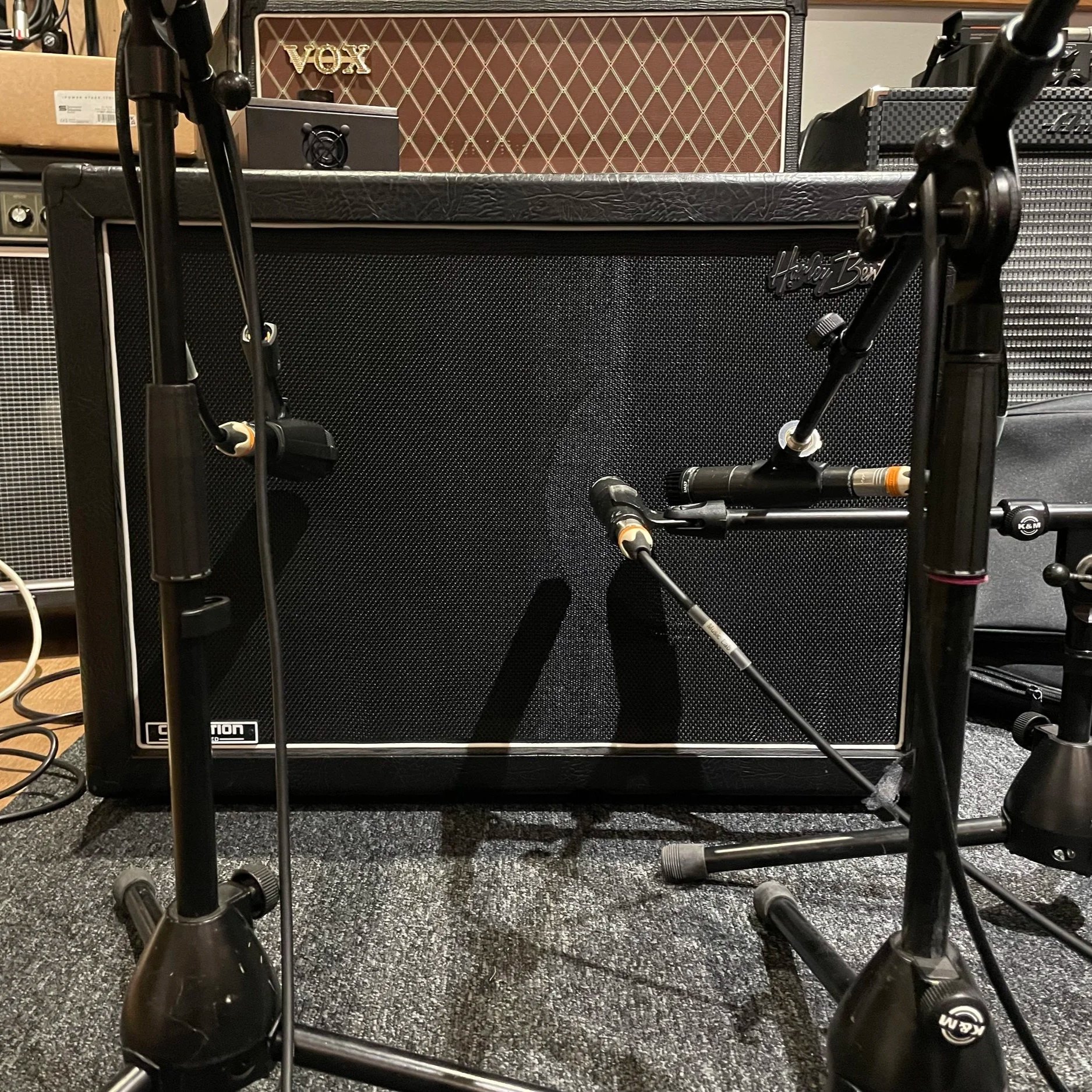
(MD421, SM57 90°, SM57 45° microphone configuration)
Finding the right tone took longer than expected, and it was about a month before we started recording actual takes of the songs. This put my schedule behind, so I began booking in more than just one 3-hour session a week. However, once we got started, progress was good. Luke seemed to be able to get all the guitar tracks for a song down in three hours, and do vocals straight afterwards in the same session.
Samples
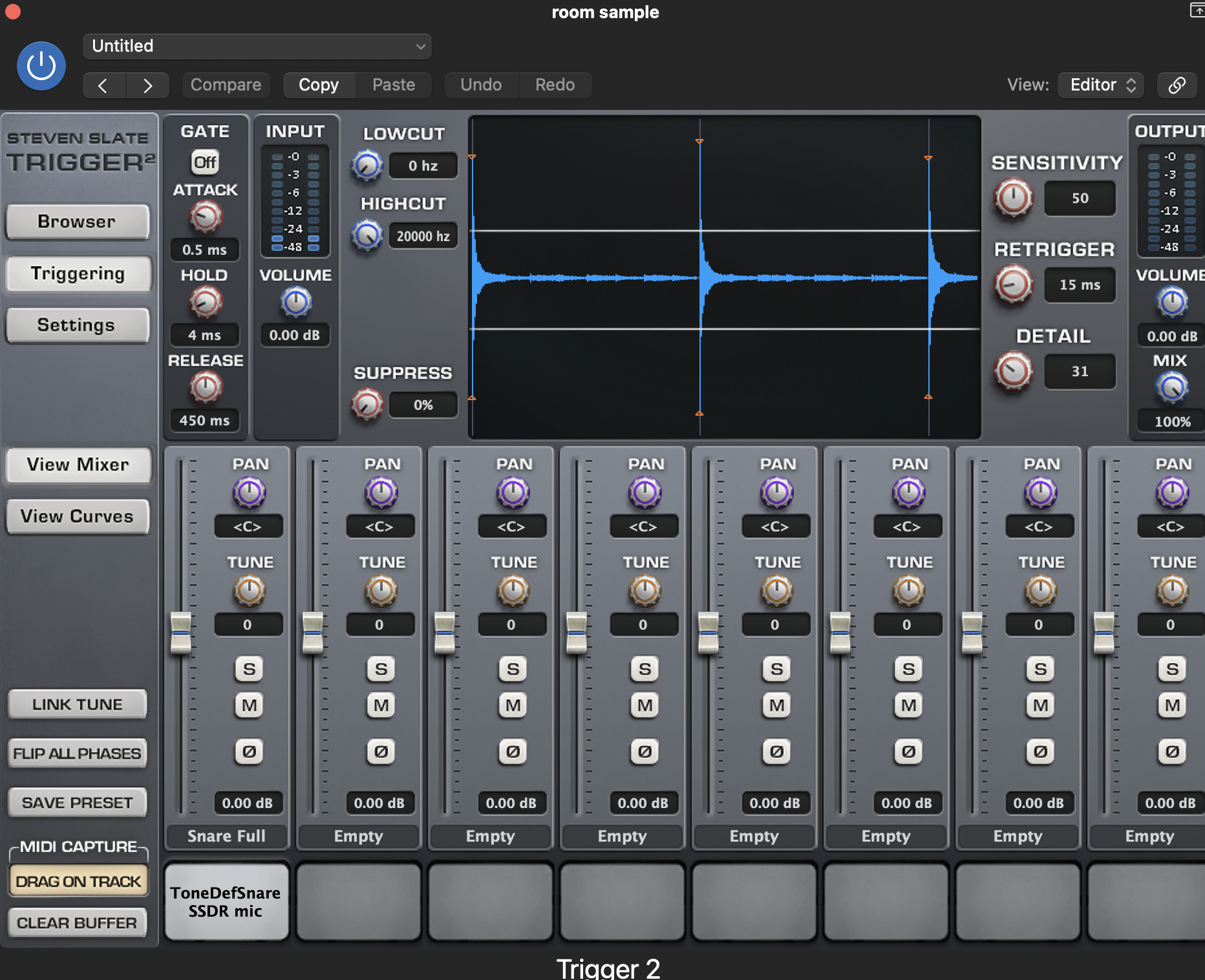
For the drum samples, I chose two snare samples. One close-mic sample which had quite a dry but weighty sound. This would make up for the lack of body in the existing snare due to prioritising the crack and ping of the snare. I also chose a room snare sample. Since the drums were recorded in a fairly small room, the snare lacked the explosive tail. I blended this very carefully and also automated the level so that this explosive room sound would become prominent when needed in sections like breakdowns.
Guitar
EQ
I mostly used broad EQ sweeps on the guitars at first, to clean up space in the mix for other instruments like bass and drums. For each guitar, I added a high-pass up to around 80 Hz to remove some low and sub frequencies that took up space from the bass and kick drum. There was also quite a large build-up around 100 Hz which was making the guitars and the mix muddy, so I also cut there. Finally, I added a low-pass to remove some high-end fizz and air which wasn't really adding to the tone at all.
Once I had done some broader EQ, I focused on notching out any harsh resonant frequencies like whistles from the cab. This tended to be around the 2–5 kHz area.
Multi-band compression
I used multi-band compression to further tighten up the low end of the guitar by targeting the 100 Hz range. This compressor would trigger mainly during any chugs, making them tighter and less flabby.
I also sidechained a multi-band compressor to the vocals, aiming for the 3 kHz range. This would mean that whenever vocals were happening, the guitars would duck slightly in the frequency range, allowing the vocals to cut through. I also did this for the snare in certain sections where it felt like it became buried by the guitars.
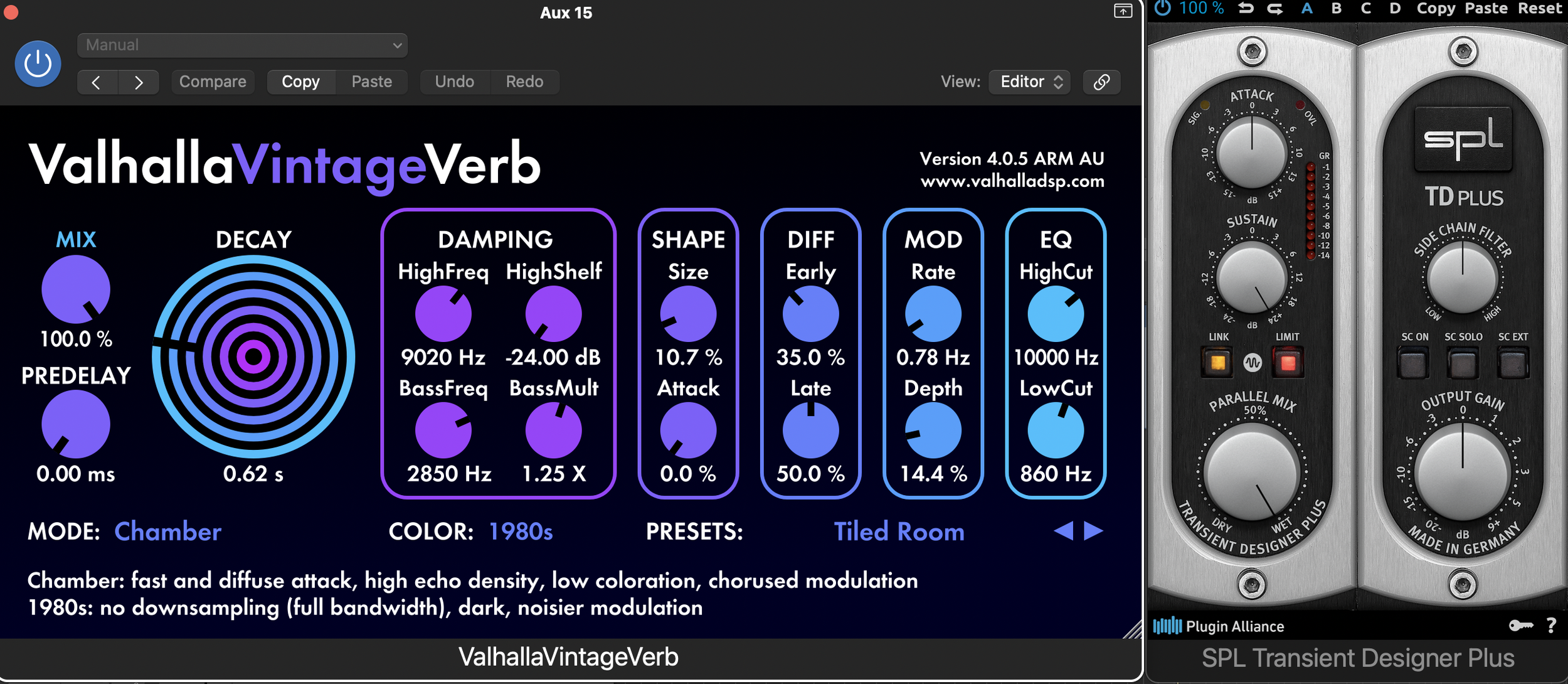
(Vocal reverb auxiliary chain. Using Valhallah Vintage Verb and SLP Transient Designer)
Vocals
Recording Luke’s vocals was a completely new experience for me, never having recorded harsh vocals before. So I did some research. I wanted to know about mic choices and the type of compression to use and commit to on the mic signal. From mainly watching making-of-style documentaries of bands I like, a very common choice of mic seemed to be the Shure SM7B, a dynamic microphone. It was also common to use a Cloudlifter, an inline preamp, to add more clean gain and what many people believe to be a better sound from the microphone. I did not attempt to A/B test with and without the Cloudlifter, and just trusted the internet on this one.
(Recording vocals)
(Recording bass)
I was able to provide input on timing and the “rhythm” of the vocals, but in terms of the technique and tone of the harsh vocals, I couldn't contribute much and left it to Luke. Vocal production is definitely something I would like to improve on.
Mix/Post Production Process -
Drums
EditING
Previously, I have always edited drums in Logic, mainly due to it being the only DAW I had access to and knew how to use well. However, this year I have made the effort to begin learning Pro Tools in order to incorporate better editing processes into my workflow. Logic’s Flex Time function often creates artefacts in the audio, and phasing issues. Editing in Pro Tools helped me avoid this. I have also previously only used Flex Time to edit drums, actually stretching the waveforms into place. With Pro Tools, I use a method closer to cutting tape, cutting up each drum hit and moving it backwards or forwards, and then creating fades between cuts. This method gives me much cleaner drum edits. The process was slower at first, as I was learning both a new DAW and also an editing technique. However, after editing the first song, I started becoming more fluent and edits became less time-consuming.
Becoming more familiar with using Pro Tools is also beneficial for me, as it is commonly used in professional studio settings.
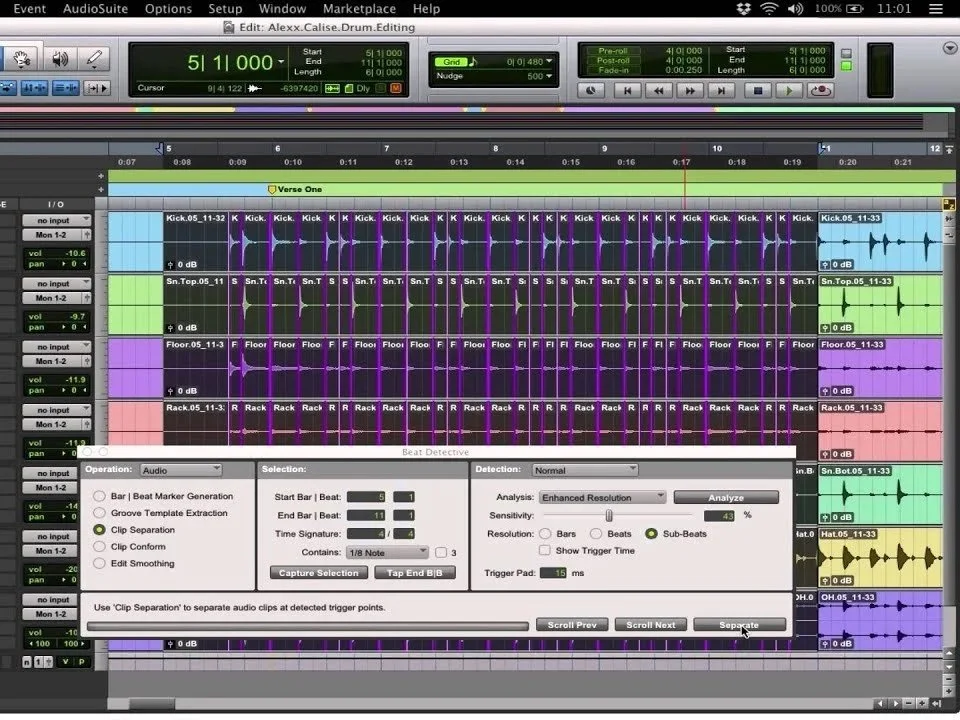
(Pro-Tools drum editing technique)
Bass
For bass, the setup was simple: record a dry bass signal using a DI and then use Neural DSP Parallax to create the bass amp and distortion. This decision was made simply for ease and accessibility to equipment. The plugin gave all of the sounds we wanted and saved time that Dan's busy schedule didn't have. The DI allowed us to focus on getting good takes, and then we could find the sound later with the plugin.
I personally prefer a bass tone with more mid-range distortion and “clang”. To me, it is more interesting and highlights the bass as its own instrument, rather than just a lower copy of the guitar. However, Override wanted to go more towards a low, dense sound; not necessarily heard within the thick mix of guitars and vocals, but weighty and definitely felt.
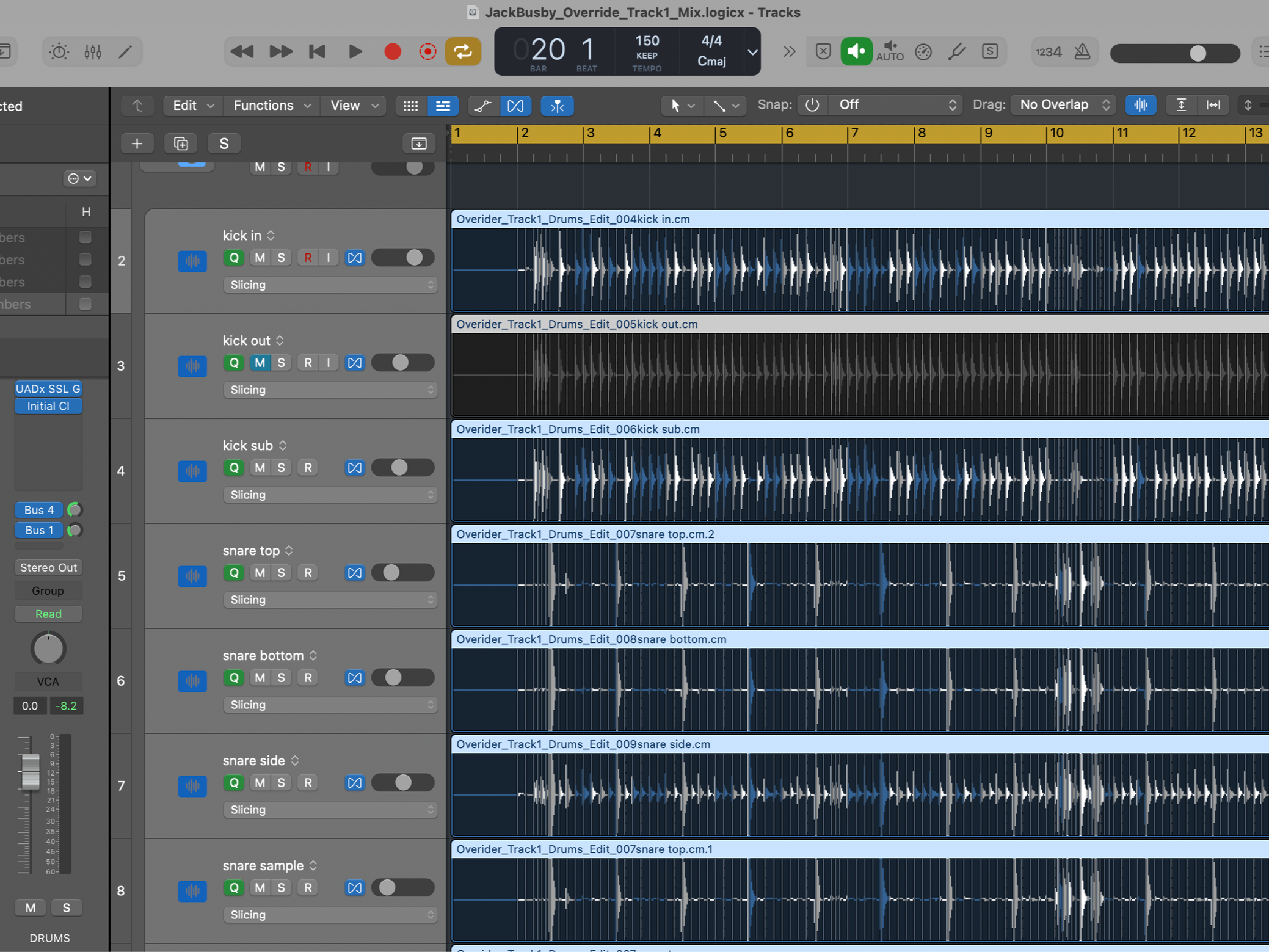
(Logic Flex-Time drum editing technique)
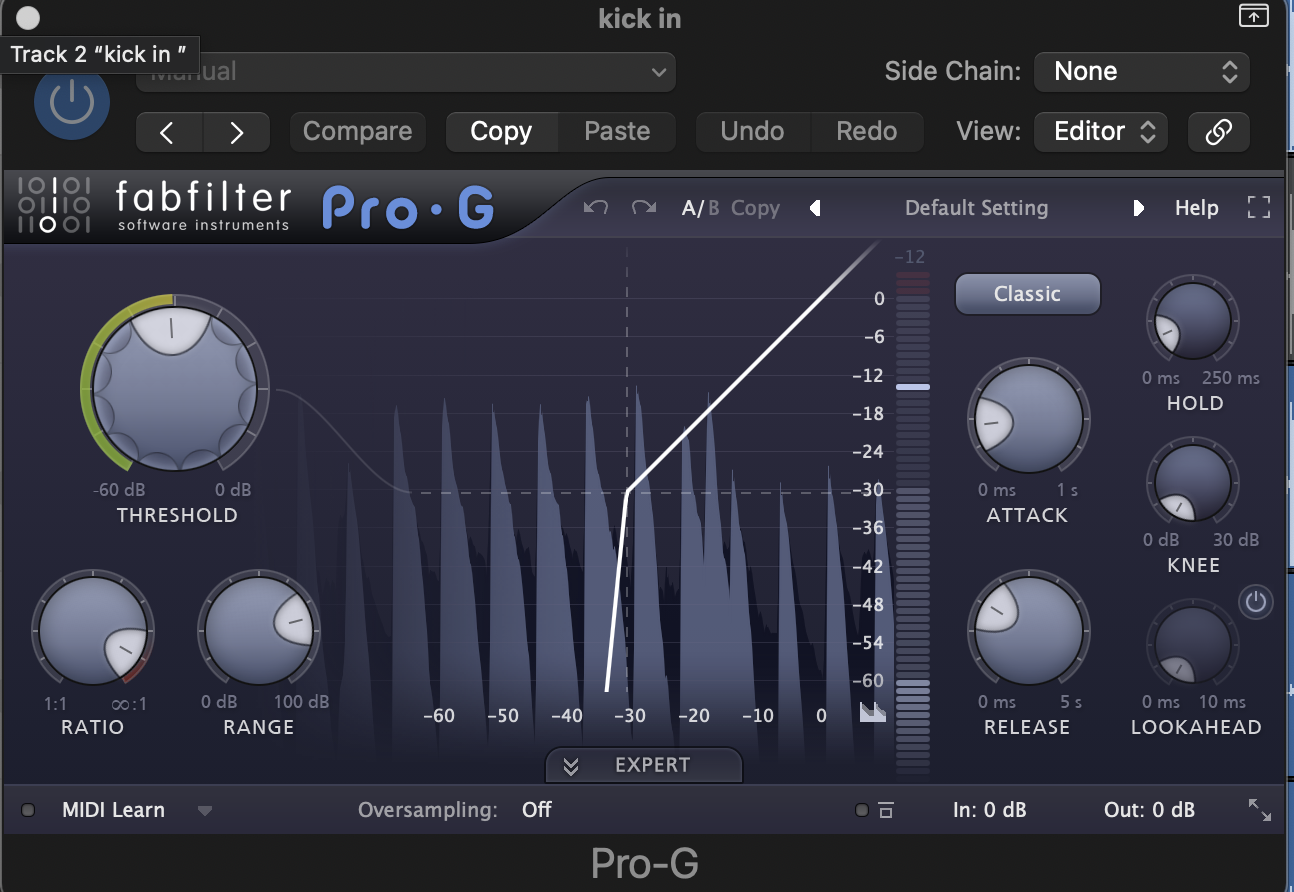
(Fabfilter Pro-G gate)
(Snare drum room sample using Trigger 2)
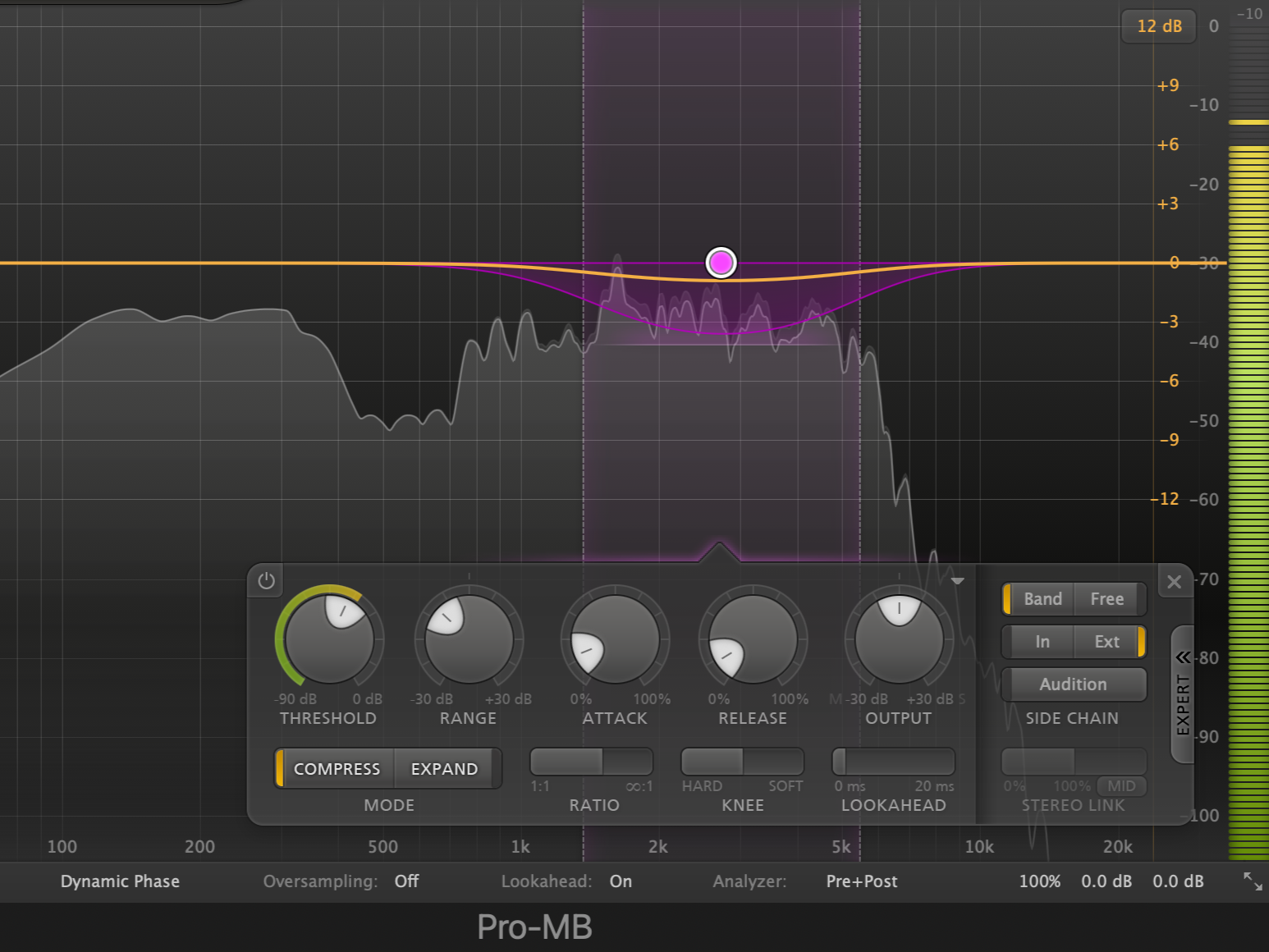
(3kHz guitar multi-band compression, side chained to vocals)
Bass
The bass tone and distortion was achieved using Neural DSP Parallax. I created a copy of the DI channel. Then I low-passed one track (this would be my low-end track) and high-passed the other (this would be my high-end track), leaving some crossover in the mid-range. I used a limiter on the low-end track to ensure a really consistent low-end in the bass guitar. Some frequencies were a little bit too resonant and, at points, overpowered the entire mix. I used dynamic EQ to control these resonant frequencies when they became too much. The high-end track is where I used Parallax to add distortion in the mids and highs; this would allow the bass guitar to cut through the mix more. I then summed the two tracks together and compressed further.
Multi-band compression was used to clear up the low end in some areas and was also side-chained to the kick drum to allow it to cut through when hit.
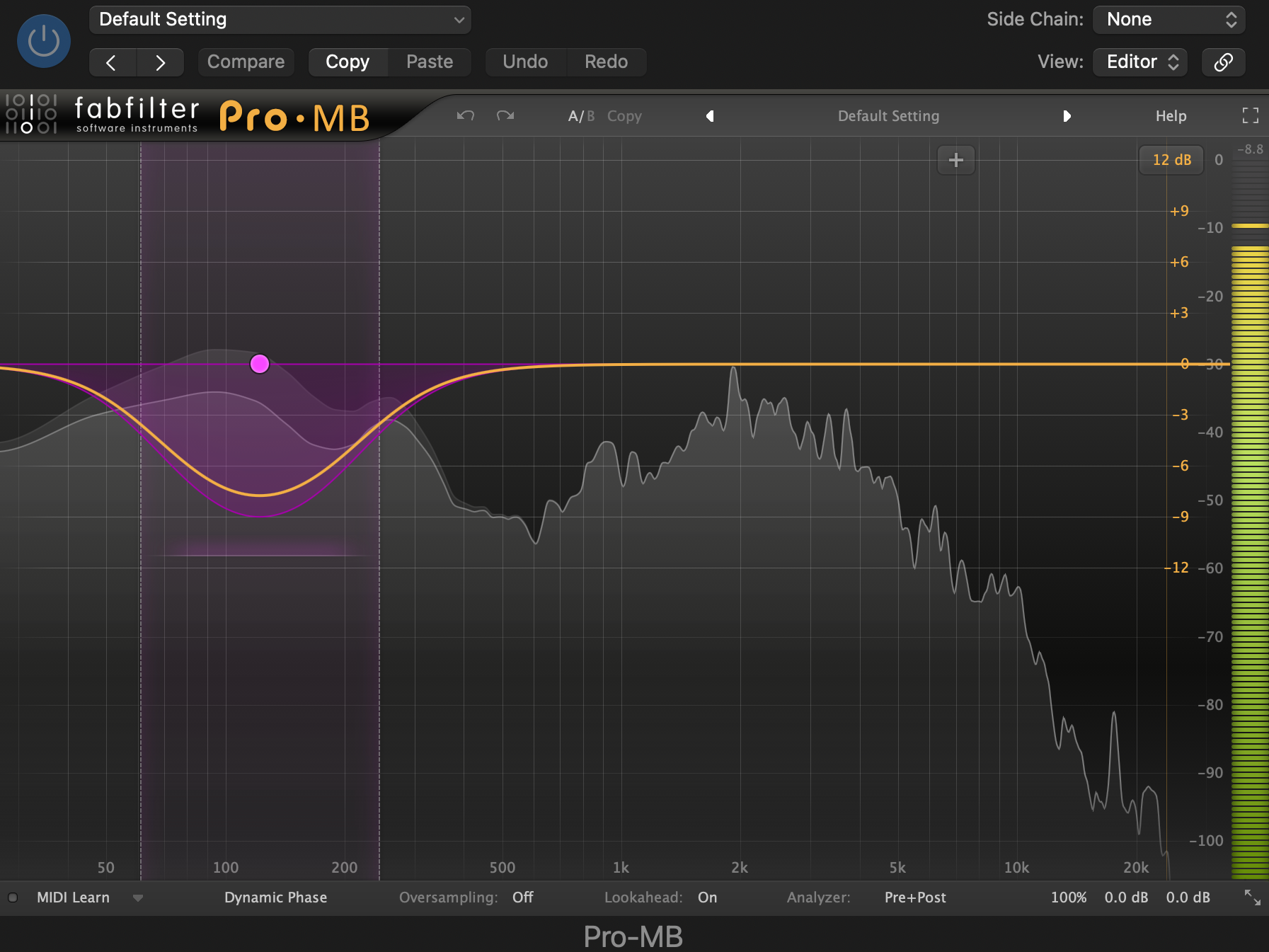
(Low-end multi-band compression, sidechained to kick)
Vocals
The vocals were already very heavily compressed on the way in, so I didn’t compress any further using plug-ins during the mix. I reduced the low-mid to mid frequencies to reduce some boxiness that had come from Luke cupping and getting very close to the microphone. I also used the high-pass up to around 100 Hz, as there was nothing in the vocals below that and it would only take up space in the low end from other elements of the mix.
I created a bus send where I used Soundtoys Little AlterBoy to formant shift Luke’s vocals down slightly and heavily distorted them. I then blended this in with the dry signal. The lowered tone and added distortion blended in added more aggression to the vocal and helped it match the energy of the rest of the mix. I also created a second bus with a short room reverb on it. I used a transient designer plug-in to increase the sustain after the reverb to give a more explosive sound. This added a nice tail to the vocals, and, in my opinion, added a more live and raw feel, as the vocals were feeling too close and dry.
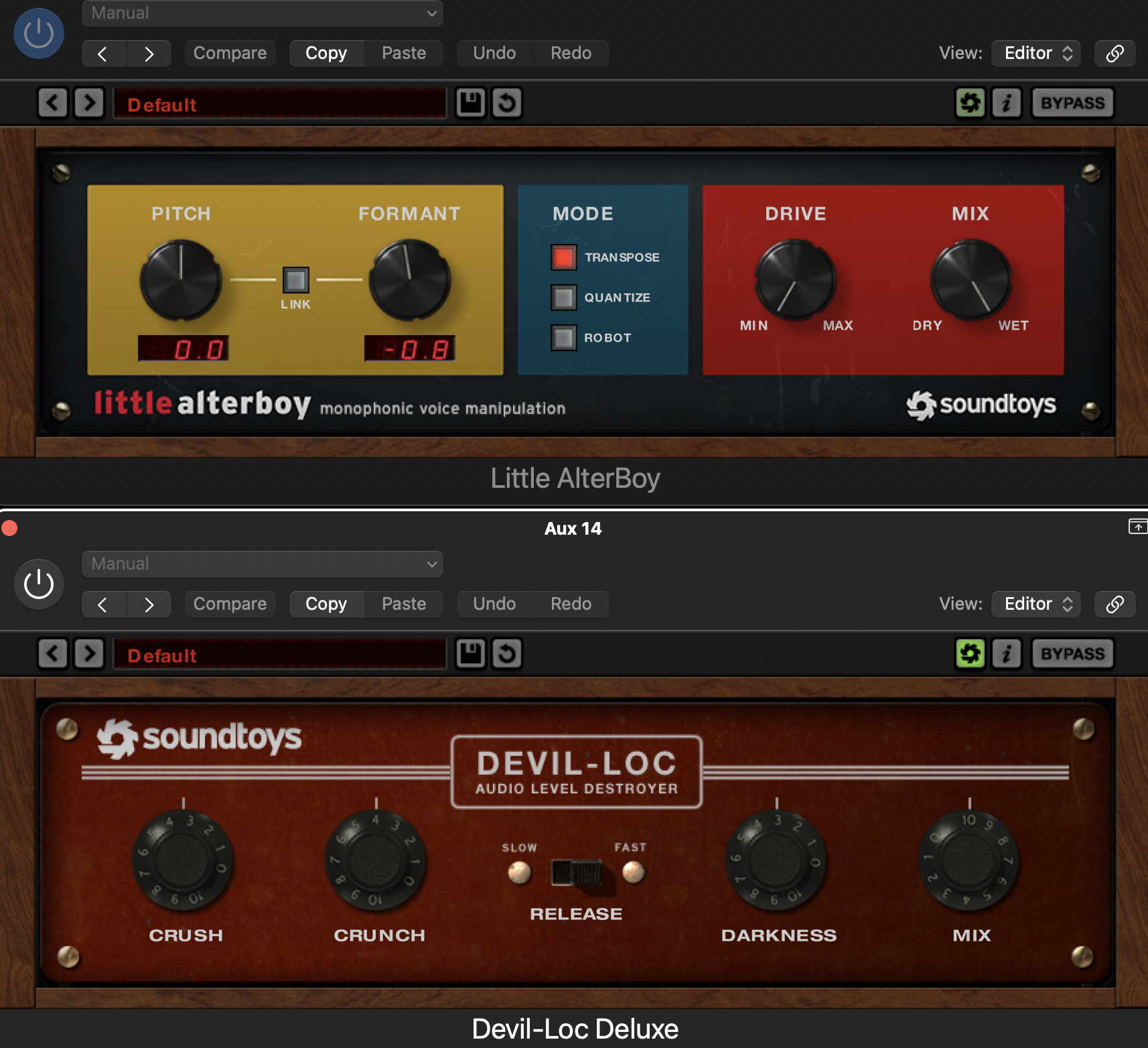
(Vocal formant shift auxiliary. Using Soundtoys Little Alter Boy and Devil-Loc Deluxe)
Additional Production
The only additional production elements added to these tracks were some 808 sub drops. These are very popular in modern Metal and some subgenres of Hardcore. They help emphasise sections in the song, especially the breakdowns. I created these drops using a plug-in called ‘Sub-Destroyer’. I altered the lengths of the drop at each trigger so the progression of the drop fit in time with the section of the song. I also layered in some impact hits on some of the bigger drops to further increase the intensity and accent the biggest moments of the song.
Mastering
To master the tracks, I bounced them all into a new project. As ‘Out of Spite’ was released earlier, it was mastered alone, but was used as a reference for the remaining tracks in order to keep a consistent level and overall vibe across the EP. I also used some of the early inspiration tracks the band gave me as references for balancing the EQ across the song and to see how the songs might sit next to other releases in a playlist.
Cut below 30 Hz
Below 30 Hz is pretty inaudible and was only taking up space in the mix.
Mono Low-end
I then made the low-end (below 150Hz) mono to ensure that it translated well across all systems. This also centred the bass and the kick drum and created a strong foundation to the track.
SSL Bus
I used the UAD SSL Bus compressor plug-in to glue the track together.
Clipper
I used a clipper to cut off any peaks above the set threshold. This achieved a higher perceived loudness of the track without risking elements like the snare jumping out of the mix. Using the clipper at this stage also meant that the limiter would work less hard at the end of the chain, avoiding any risk of horrible distortion from the limiter.
Pultec
I used Logic’s Pultec-style EQ to create a ‘smiley face’ boost in the low end (60 Hz) and the high end (8 kHz). This lifted the energy of the track.
Tape
I then used a tape emulation plug-in. This further glued the track together, as well as taming some of the harsher high-end frequencies. It also added some nice saturation to the mix, which created more excitement.
Soothe
I used this to remove harshness from the upper mids, as well as any resonant frequencies in the lows and low mids.
Limiter
A limiter was used to bring the tracks up to the desired loudness. I turned up the level on the limiter until there was between -1 and -3 dB of gain reduction on the largest peaks, such as snares and kick drums. For Override, I mastered to -9 LUFS, as I felt that a loud master is what suited the tracks and their intensity. This exceeded streaming platforms’ limit of -14 LUFS, meaning the tracks would be turned down when uploaded to distributors. However, I felt that this would not lose the tracks any significant amount of dynamics, and prioritised the intensity of the master over the recommendations for streaming.
I have mastered all four tracks submitted in this major project. However, I only mastered the track ‘Out of Spite’ for release. The band felt that, in retrospect and in comparison to other tracks released by bands on Spotify, the master didn’t quite compete in volume and energy. They asked if I was ok with the rest of the songs being mastered for release by someone separately, which I totally am. I feel that someone else's input on the final stage of the songs, with more knowledge and experience of mastering, will benefit the songs even more.
Critical Reflection
I felt that both the tracking sessions and mixing phases went very smoothly overall. The band were very well rehearsed going into the sessions, meaning there were no major issues with achieving strong performances and the arrangements were already fully written. This meant I focused mostly on my role as recording and mix engineer, with some creative input into the drum and guitar tones. As I was not heavily involved in the songwriting process, my role in the EP was translating the band's existing material into a finished record.
Working with Override developed my understanding of how to contribute creatively to an artist's project without necessarily being involved in the writing itself. Unlike my previous production projects where I was also a member of the band, my input to this project focussed purely on the recording, stylistic choices, and the final sound. The project has also reinforced the importance of clear communication and boundaries when working as an engineer.
One area where the project developed differently from my original plan was the tracking schedule. I initially intended to have a more structured recording period, but availability and duration limitations on booking the music labs studios meant that sessions had to be spread out more than I had anticipated. The long timeframe of the project also probably lured us into a false sense of time-comfort. With recording beginning in February and both the band's planned release and my major project deadline being several months later, there was less immediate pressure to complete the recording quickly and we were a little too relaxed with the schedule in the early stages.
Although the scheduling issues were partly caused by the limitations of the university facilities, I think that I could have managed the project more proactively. A shorter and more concentrated recording schedule,for example over four consecutive days, could have created greater momentum for both myself and the band, and been more realistic to a real industry setting. This approach may have also provided greater consistency in recording set ups between sessions and across songs.
On the other hand, a shorter, more restricted approach could have tired out the band and reduced the opportunity to reconsider decisions between sessions, so it is uncertain if either way would have made a significant difference.
The band's availability during the summer also affected the original schedule. Once the undergraduate academic year ended, the members of Override were no longer consistently based in Bath, while my postgraduate course continued. This meant that sessions became more difficult to arrange and had to be booked further apart. I tried to get the general availability of the band's members at the beginning of the project however, this availability often changed and their schedules were unpredictable. This highlighted the importance of considering the availability of all collaborators when planning a project as well as the unpredictability of young/student bands.
I have learnt from the scheduling of the Override EP sessions that a longer deadline doesn’t make the project easier to manage, especially when managing alongside multiple other recording projects, university, and life in general. In the future, I would set internal deadlines and establish a more specific recording schedule rather than allowing the available timeframe to decide the completion of the project. Also, by removing the comfort and security of the university setting from the process and introducing both the cost of my time and the studio, scheduling will become even more crucial to my work and the band's attitudes to the process of making a record. Time is money.
The process of working through mix revisions is another area where I have learnt through this project. The band asked for a large number of revisions, although these were generally small changes such as level adjustments and were communicated constructively. At times, completing multiple rounds of changes felt challenging alongside completing other parts of my major project. It felt like the workload never got any less. However, I realise that the band's attention to detail and aim for perfection was positive for the project. The difficulty was less about receiving feedback and more about managing the revision process efficiently alongside other workloads.
This has highlighted an area of professional collaboration that I would like to improve. In future projects, I should be more confident in setting expectations around revisions at the beginning of a project. I also spoke to course tutors about revisions and they also believe limits and expectations should always be agreed to manage workloads and costs.
Although I am happy with the overall sound of the EP, one area I feel could have been improved is the vocal production. The vocals fit the aggressive style of the band and work within the mixes, but personally, I feel that they could have had greater clarity. The close and aggressive sound suited the genre, but I sometimes found the vocals slightly muffled, especially against the dense wall of sound the band creates. I also feel that some vocal layering could have helped the vocals feel larger in certain sections of the songs. This is just my personal taste, but it is something I would like to experiment with more in future
Following the release of ‘Out of Spite', the response from Override, friends and other bands within CM was positive and they were particularly impressed with the production. More importantly, after seeing Override perform live following the release, I noticed that members of the audience recognised ‘Out of Spite'.This told me that the release had successfully connected with the band's existing audience.
Overall, I feel that the project was successful both creatively and professionally. The final production represents the style of Override and has received positive feedback from the band and their audience. The “hang” and interaction with the band during recording was awkward for me at the beginning, and I knew this was a personal skill I needed to work on anyway. However, after a few sessions, things became easier, more relaxed, and enjoyable. I feel that I have formed a better connection with the band now, professionally and personally. Override are already keen on continuing working together in the future on more releases, as well as introducing an engineer rate for me. It will be interesting to see how managing this project will work once I have graduated from university.
(Out of Spite studio clips)
Parallel Compression
Parallel compression was a very important part of this drum mix. Previously, I have always put compressors on every channel. However, after a guest lecture from Dom Mitchison, engineer at Humm Studios in Bristol, where he spoke about mainly using parallel compression for his drum sounds, I decided to try this approach instead. I found that this actually gave much better results in my mixing than I had previously and also kept my channel strips much simpler and less cluttered with unnecessary plug-ins.
Parallel compression is a mixing technique where dry, unprocessed tracks are blended with heavily compressed duplicates of the same tracks. Using mostly parallel compression allows the dry hits to be maintained, keeping a more raw feel to the recording, but reinforces and adds weight behind them.
I used bus sends and multiple different auxiliary tracks for my parallel compression, and one track could be sent to a multiple of these. My favourite plug-ins to use for parallel compression are Soundtoys Devil-Loc, UAD’s 1176 FET, and GGD Smash and Grab. Each one brings out very different characteristics in the drums, and having all of them available to blend between was very useful in shaping the drum sound.
Gates
I used gates and a MIDI spike track to allow me to automate certain moments on the drums. The MIDI spikes would be side-chained to the gates so they could be precisely opened and closed when I wanted, instead of relying on a threshold level to trigger the gate. I learned this from watching a tutorial from Lamb of God producer ‘Machine’, during my first semester on MA Commercial Music as part of the Production Anatomy 2 module. This technique was used on the snare side mic as well as on the cymbal close mics, such as for the china and ride bell. These mics contained a lot of bleed from the rest of the kit, and since the bell and china weren't always being played, the gates would remove this bleed.
Another good trick that I have picked up during my studies is using FabFilter Saturn and a form of cymbal bleed reduction in close mics. The plug-in is intended for saturation and compression; however, it has a ‘dynamics’ knob which, when turned down with frequencies above 1 kHz selected, seemingly reduces the level of cymbals in close mics, like on the snare.
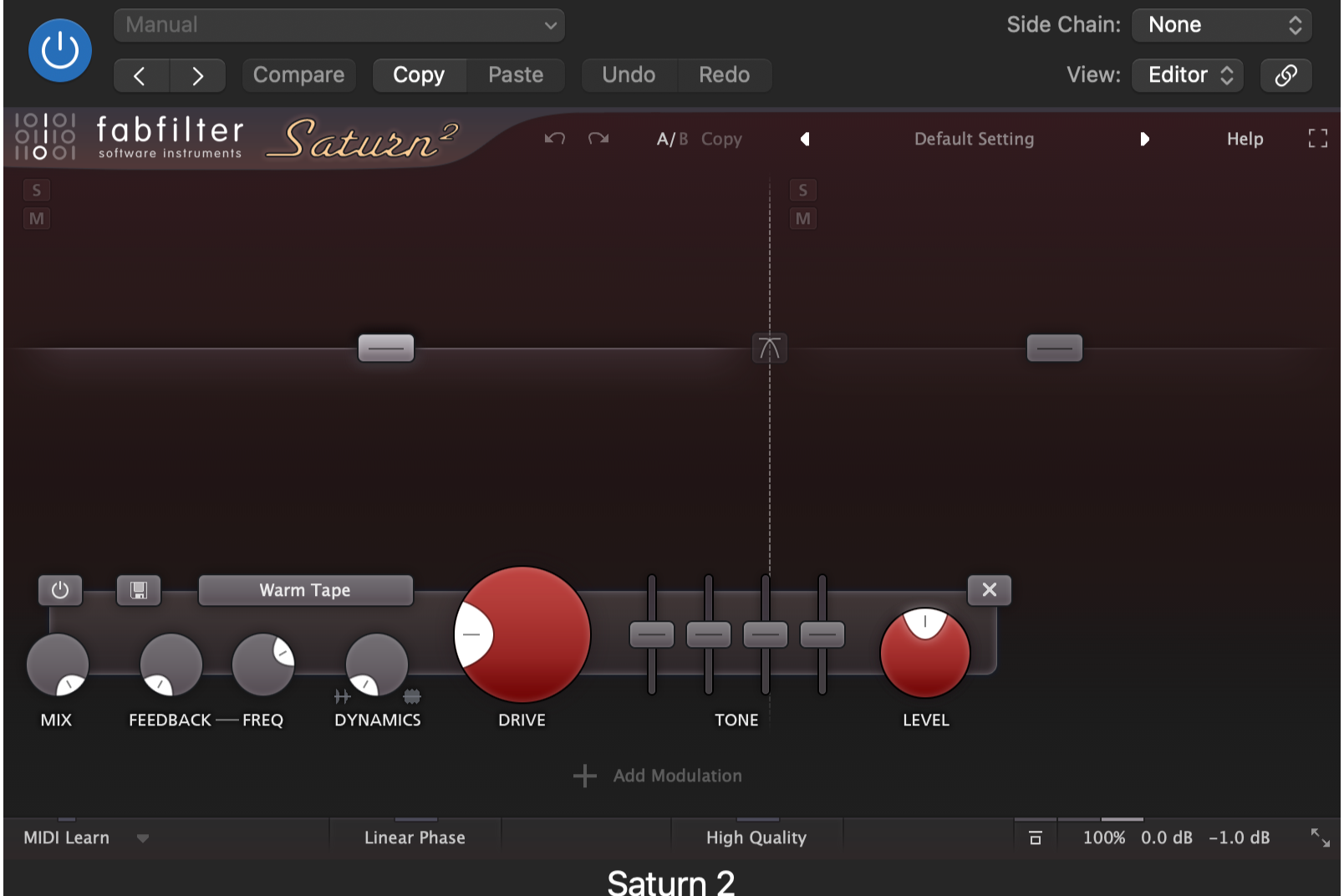
(Saturn 2 cymbal bleed reduction trick)