KRIDE
The project - A four song EP. The first song, ‘Sucre’, to be released in early September and then the remaining songs as an EP soon after. My aim with recording this project was to capture the chaotic and DIY feel of their music.
Kride are a Math Rock/Screamo three-piece. They were in their first year of CM during the making of this EP.
Meeting the band -
I was looking through posters of CM Socials gigs, for new bands for my major project portfolio. An Instagram bio, ‘Evil mathy stuff’, caught my attention. It was Kride and I was very interested.
I DM’d them, introducing myself, in late March 2026 and asked if they would be interested in recording. Like most of the bands I approached this year, they were very excited about the idea. I wanted to organise an in-person meeting to discuss their music more, what influences they had, and what they wanted to get out of the recording. Unfortunately, the band members had gone home for the Easter break but we met up soon afterwards.
The band played me a couple of songs, as well as a few that were in the process of being written. As for their references and influences, there were a lot I had never heard of. So, I had a lot of research and listening to do in preparation. The reference tracks they provided all had a raw, unproduced sound. I decided then that I would be focusing more on capturing Kride’s energy than the sound quality.
The band really wanted to release an EP and get their music out as soon as possible for people to hear. Their first couple of gigs had generated a lot of excitement within their CM course and their local scene.
Schedule
We settled on a date in May, to give the band a few extra weeks to finish off the remaining songs. This first session would run for six hours and focus on getting all four drum tracks completed. After that, more sessions would be booked to track bass, guitar, and vocals for the entire EP. These extra two sessions had to be booked for June because there was a period near the end of May where the band was busy with course deadlines and end-of-year events. The band members were also all going home in June for the summer, so our recording window would be small.
The sessions were:
May 7th, June 2nd, June 3rd- all 10am to 4pm.
Recording
The demos the band played me were chaotic, with a lot of time signature and tempo changes. This would be almost impossible to record with a metronome track, so I suggested the idea of tracking in a live set up with the band playing all together in one room. The band could monitor each other using individual headphone mixes and the focus would be getting a good and natural drum performance, without the need of a click. We could individually record and overdub the guitars, bass and vocals afterwards.
I chose to use The Hive for this recording. It would work best for the live set up, had the gear that would work best for the band's sound, and the vibe in there is more comfortable and relaxed than some of the other Uni studio spaces.
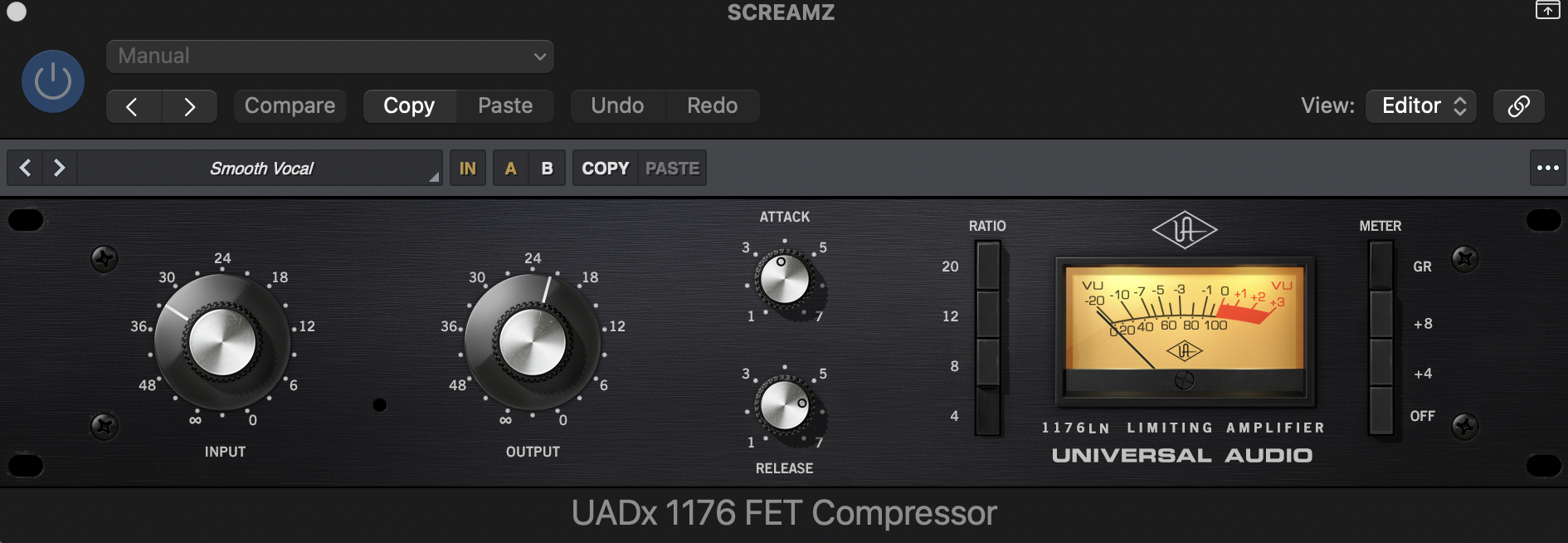
(Rory vocal compression using UAD 1176)
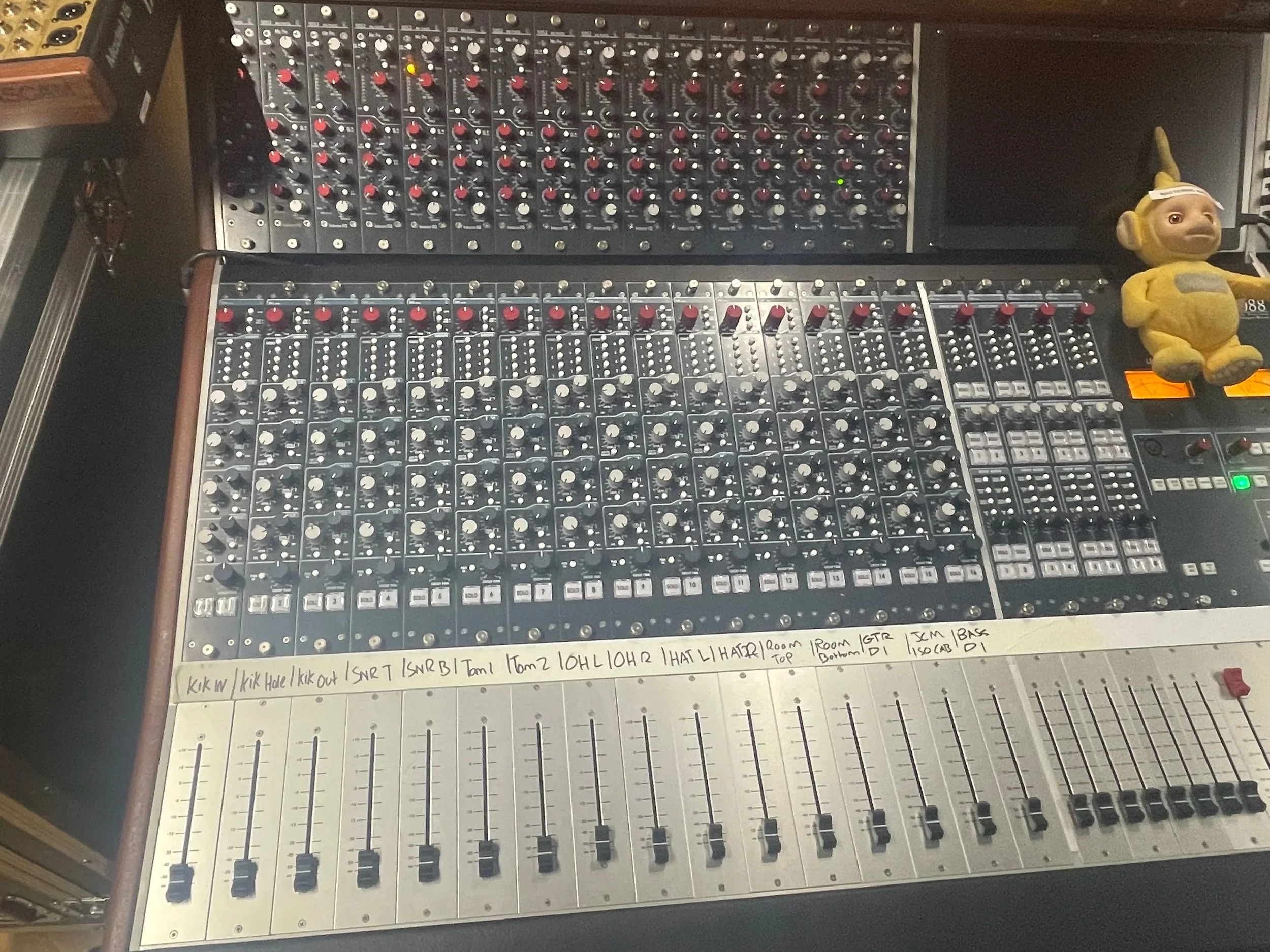
Drums
In the reference tracks that I was supplied with, the drum sounds were more from the room mics than really clear close mics. For my recording I would therefore rely more on the room mics and overheads for the majority of the drums energy, and prioritise the snare bottom mic over the top one.
We chose to use the Gretsch kit. While we did want a roomy sound, the available Ludwig kit had too much of a rock sound for these songs. The Gretsch provided tighter and warmer tones. I also chose a Ludwig Acrolite snare. To deaden its ring and make it sound fatter, we dampened it with a cut out of an old snare head.
Finnan (drums) had a lot of cymbals. He also set them up quite close together, which blocked some of the positions that I would normally place mics. I didn't want to disrupt his comfort and playing style though, so I tried my best to adapt. Inevitably, some of the end results from the close mics were not as good as they could have been. I had to offset the snare top mic, for example, because the best position was blocked by the splash cymbal. Listening back, this mic recording was near unusable.
Due to the Hive's open room layout, it is difficult to gauge the drum sound during tracking and I struggled to achieve a drum sound I was happy with during the session. With the time constraints, I couldn't spend time on doing practice takes, listening back, and making adjustments. It just meant I had a lot of extra work to do, in post, to shape the drums how I wanted them.
The mic set up
Kick In - Audix D6
Kick Out - Soyuz 023
Snare Top - Beyerdynamic M201
Snare Bottom - SM57
Tom 1 - MD421
Tom 2 - MD421
OH - Neumann USM 69 i
The Neumann is a microphone I had never tried before. I had seen it used as an overhead during a lecture, with really good results. It is actually two microphones in one body, that can be twisted and aimed separately. Due to lack of familiarity, it was hard to tell where the front of the mics were. Listening back to the recording, I’m not convinced that I had them the right way round and they may have been pointing more towards the wall than down at the drums and cymbals. Again, due to the limited availability of the band and sessions for the EP, I was unable to redo the drum recording.
Hi-Hat - M160 Ribbon
Rooms - 2 x Austrian Audio OC818 (Blumlein configuration with deadzone directed at kit)
Guitar
Rory (guitar) played a Marshall JCM800 during the drum tracking sessions, and I asked him to use an ISO cab. This meant that Rory could play as energetically as he wanted and the guitar wouldn't bleed into the drum recordings.
For the later overdub session we stuck with the JCM800, but this time through a 4x12 cab. The guitar, when distorted, was quite bright. I therefore chose to use an M160 ribbon mic, positioned about a foot away from the speaker, to hopefully smooth out any harshness. For a room mic, I use a Coles ribbon mic to blend in a more natural live feel.
For the clean tones we used the same amp and mic, but with an extra, up close, SM57 to blend in the mix for more clarity.
I also used an LA-2A for a small amount of compression on the clean guitars, to even out the dynamics.
(Guitar overdubs)
Bass
For the original live tracking session, I DI’d the bass so it wouldn't bleed into the drum mics. It also gave me the option of re-amping the bass if the band liked those takes. The band ultimately decided not to do this though, and we retracted the bass in a later session..
In the overdub session Xavier used an Ampeg SVT. I captured a DI and used an OC818 condenser on the cab. I struggled to monitor how this bass was sounding in The Hive, so chose to record with no outboard gear or EQ, and then do all of the mixing on the bass in post. Xavier’s bass playing style is quite soft and he plays fingerstyle. This worked well for some quieter sections of the song, but for the heavier sections the bass needed a bit more attack. I suggested using a pick for these parts, but Xavier struggled with its unfamiliarity, and we went back to just fingerstyle.
For Rory’s scream vocals we also used the U87, but with the polar pattern set to omnidirectional. I asked Rory to stand back from the mic and scream more out into the room than into the mic. This achieved a really gritty, and very unpolished, sound on the vocals. I heavily compressed with an 1176 to further bring out the room's sound energy and push the vocals more in their intensity.
Mixing
Drums
In retrospect, having listened to the completed mix many times, I now feel a more open snare sound would have benefited the songs better. The drums would have referenced the 90’s Emo influences and given a more trashy DIY sound. The snare we used, to me, sounded a bit flat and uninspiring. My decision to deaden the snare, in hindsight, was not the right one. To add some life to it, I blended a trashy sounding room sample using Trigger 2.
The poor positioning of the overheads meant that the cymbals were quite dark. I had to turn the room mics up more and more to capture them, but then risked making the drums altogether too roomy. It was a fine balance, but in the end I think I achieved a good result and the room mics captured the majority of the drumming energy I wanted.
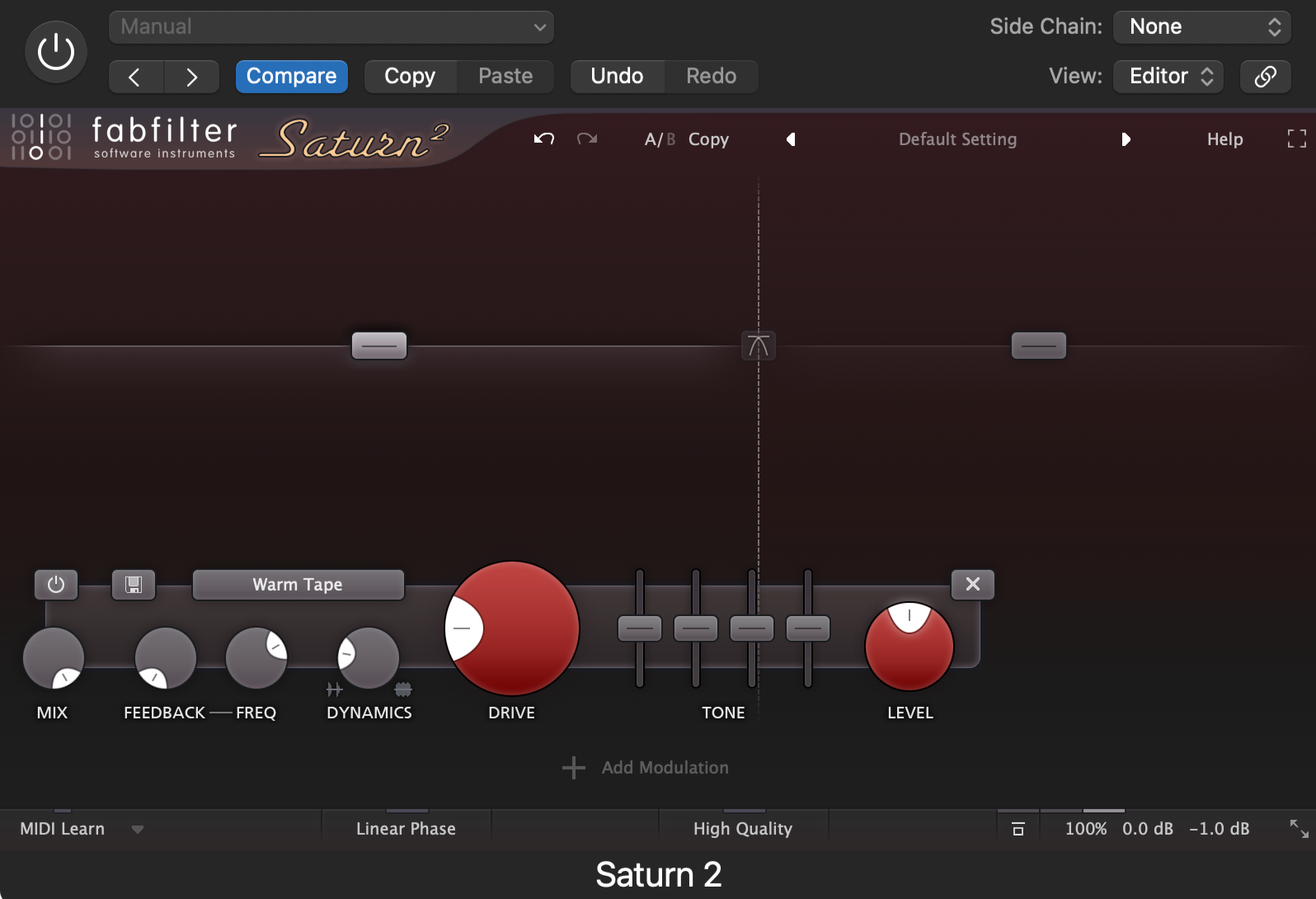
I used the snare’s bottom mic a lot for its sound, saturating it with a Soundtoys Decapitator to really emphasise the snare wires. I used Saturn 2’s dynamics control to reduce the amount of kick drum picked up by it.
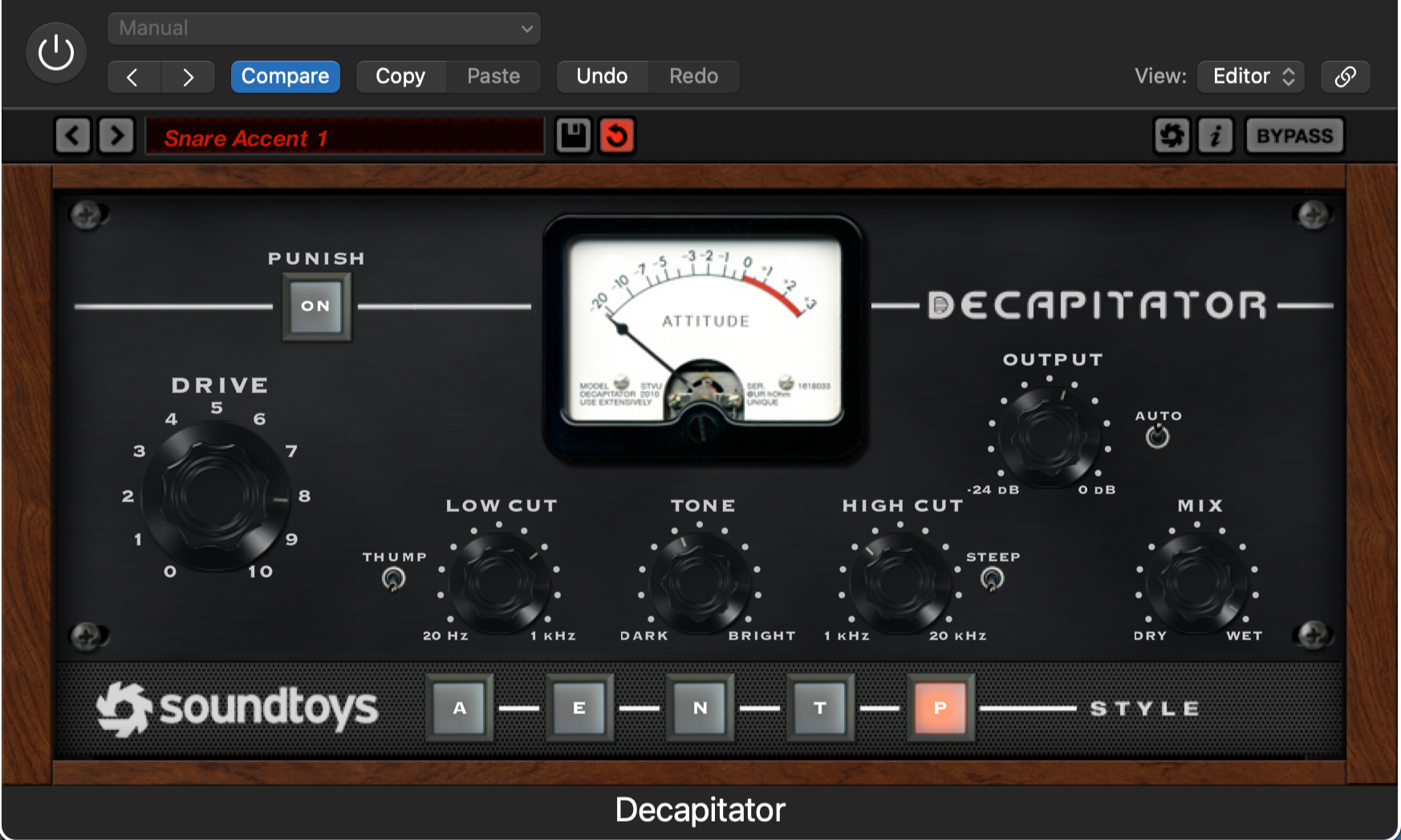
(Soundtoys Decapitator)
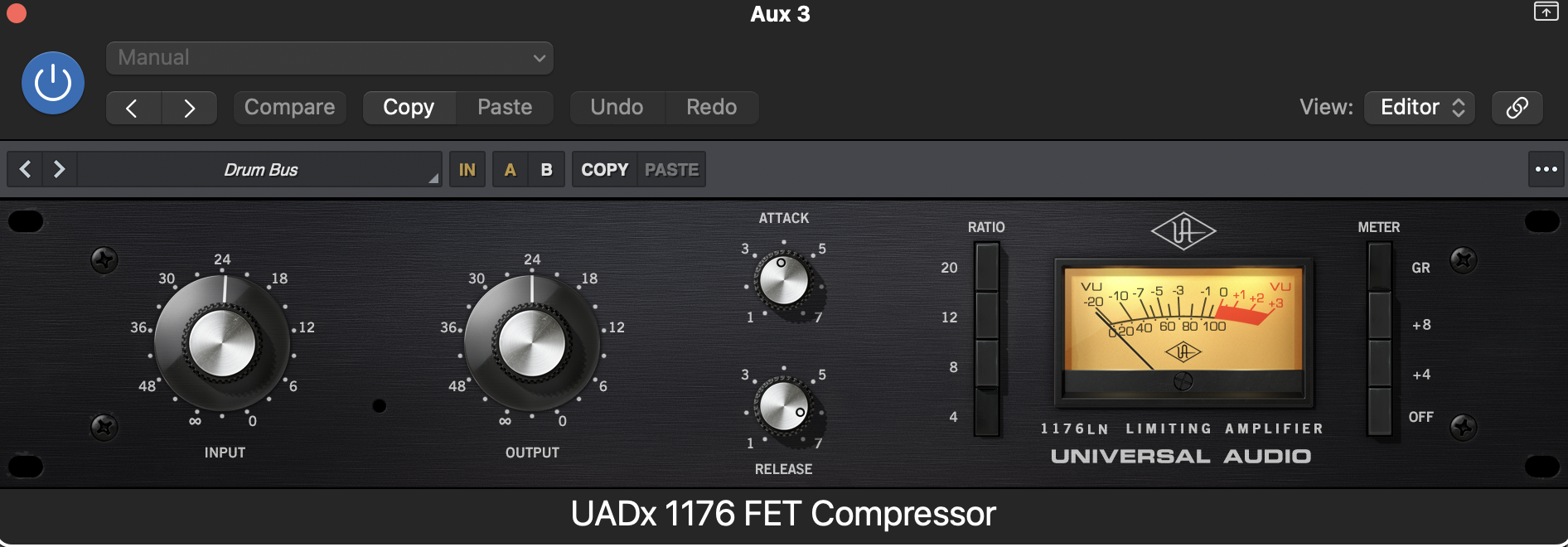
I didn't feel that the drums were driving the songs in the recordings, or blending well with the other instruments. Parallel compression played a large role in countering this, giving the drums a punchy and solid foundation. I used a combination of an UAD’s 1176 plug in and Soundtoys Devil-Loc. I had to EQ a lot of high end from this auxiliary channel because the Devil-Loc added a lot of harshness to it.
(UAD 1176 compressor)
Guitar
Very little mixing was needed for guitar. I EQ’d each microphone to remove harsh upper-mid frequencies, particularly in the SM57. I also EQ’d the 4 x12 cab to eliminate some muddy low rumbling.
The room mics hadn't quite achieved the depth I wanted, so I created two auxiliary channels for the left and right guitars. Here I added a gritty sounding room reverb. I also panned the aux channels to opposite sides of the track feeding it (i.e. left reverb panned right etc) which I think gives the guitars a larger sense of space and width.
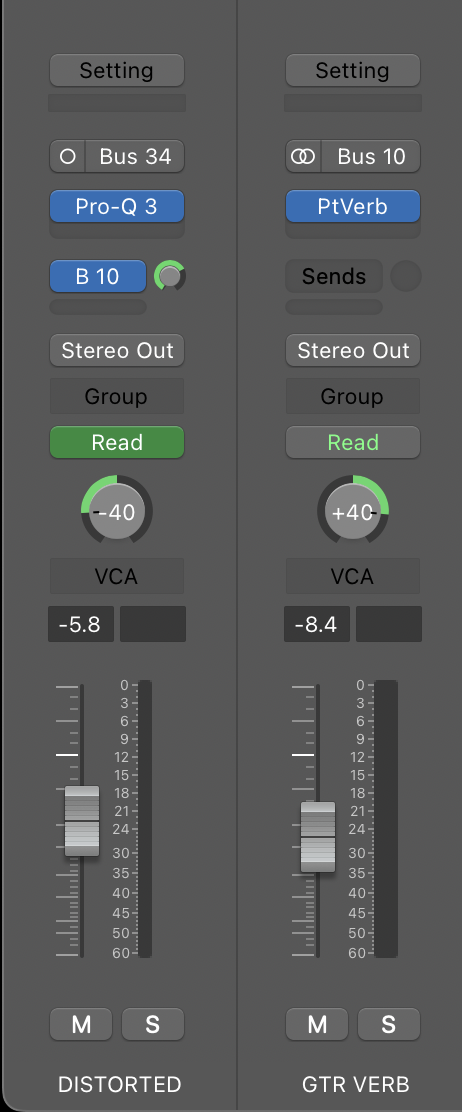
(Neve console live recording channel layout)
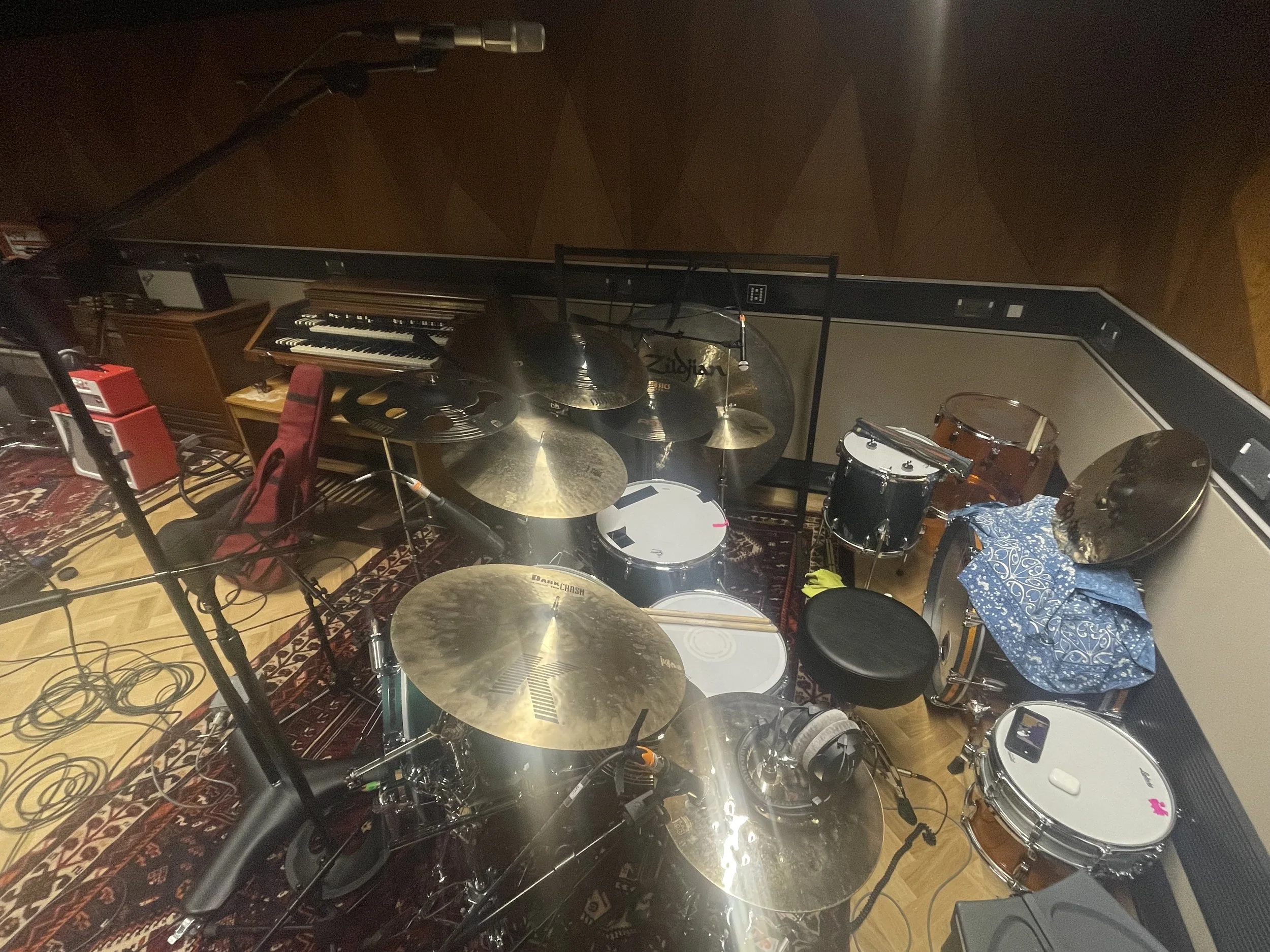
(Drums recording setup)
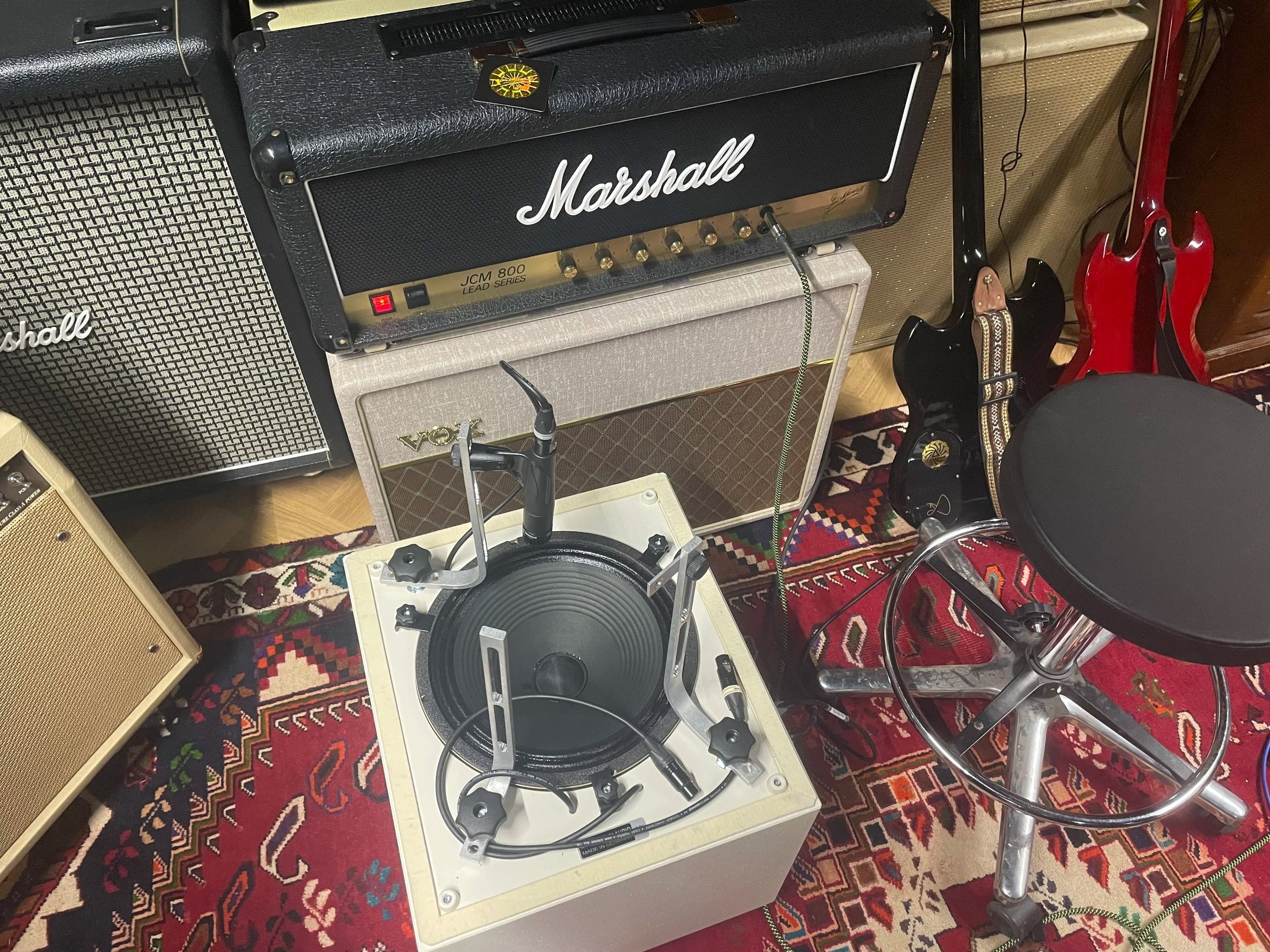
(ISO cab for silent guitar recording)
Vocals
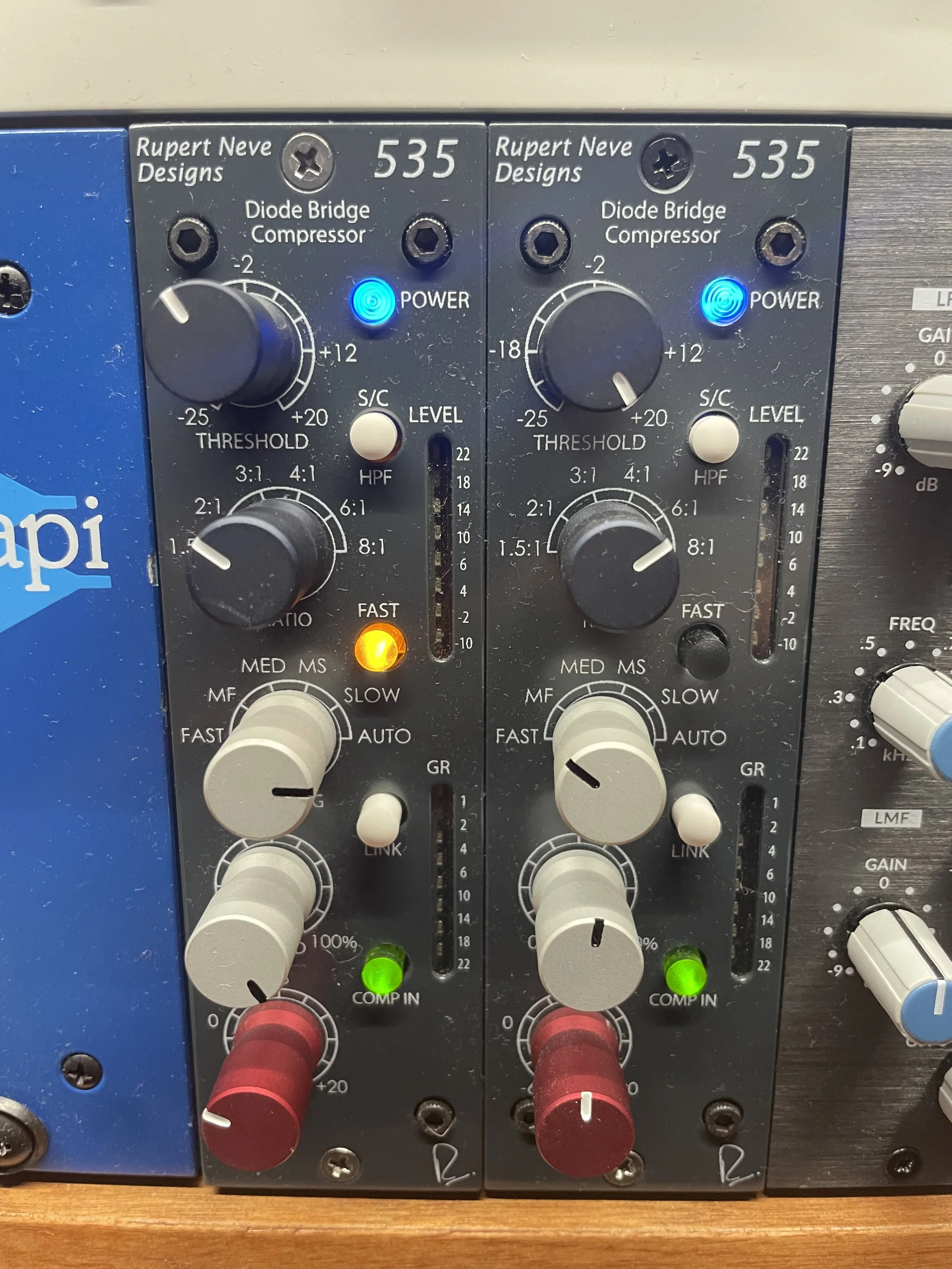
For Xavier's clean vocals we wanted a close and intimate sound. I chose to use a Neumann U87 mic, as it gives a very natural and articulate sound. I also used a Neve 542 tape emulator to give his vocals a more vintage sound. Xavier's vocal dynamics jumped around a lot, which I think was mainly due to confidence and mic technique. However, I compressed them with a Neve 535 Diode Bridge, and after some practice takes, we achieved a performance everyone was happy with.
(Neve 535 Diode Bridge compressor)
(Bass overdubs)
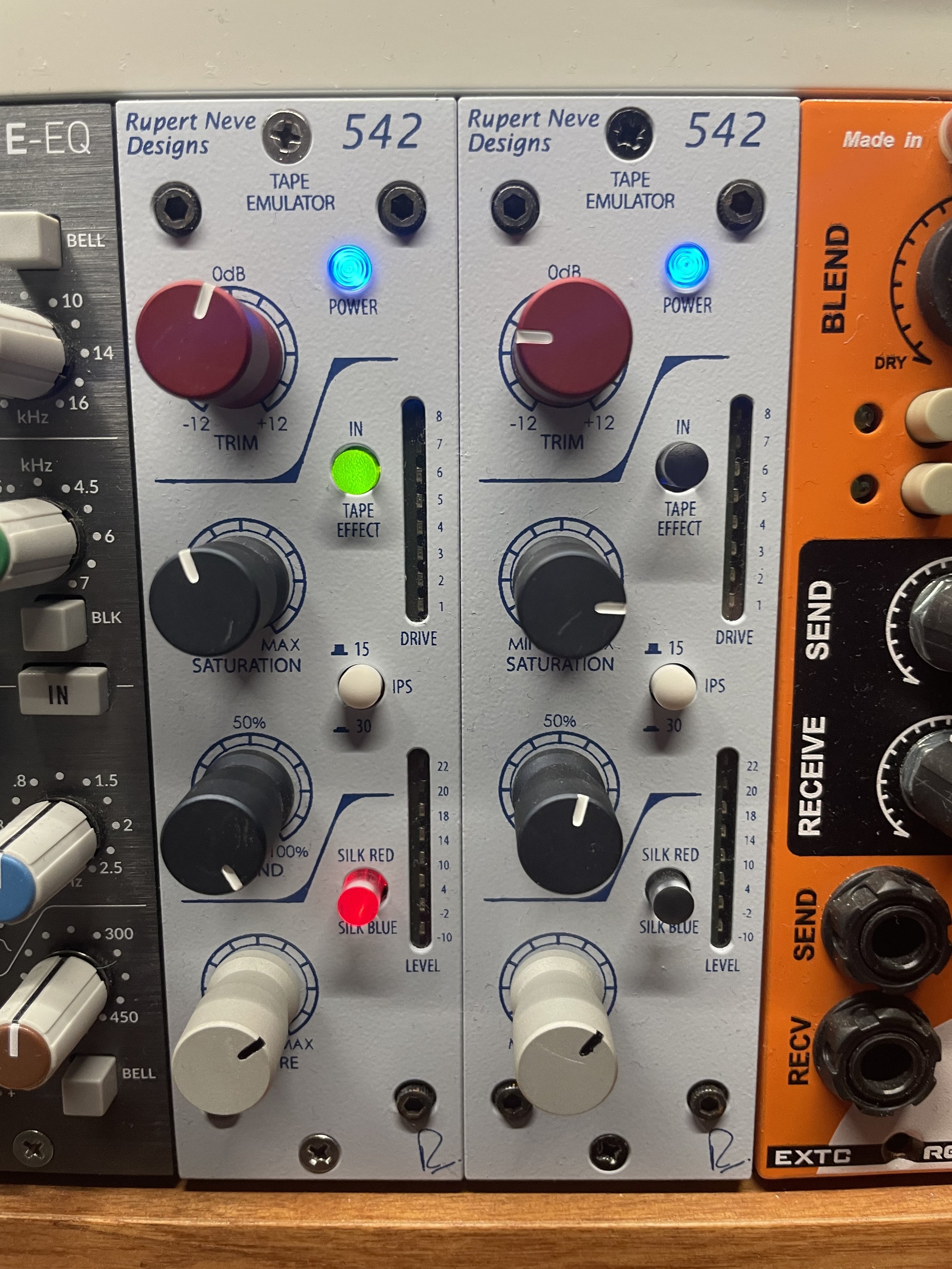
(Neve 542 tape emulator)
(Fabfilter Saturn 2)
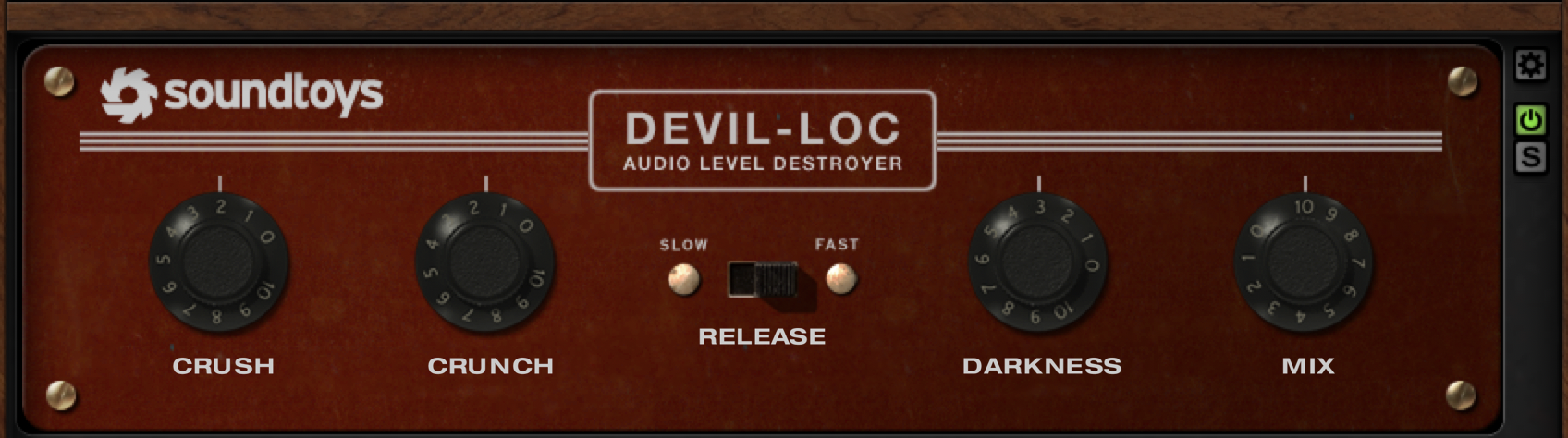
(Soundtoys Devil-Loc)
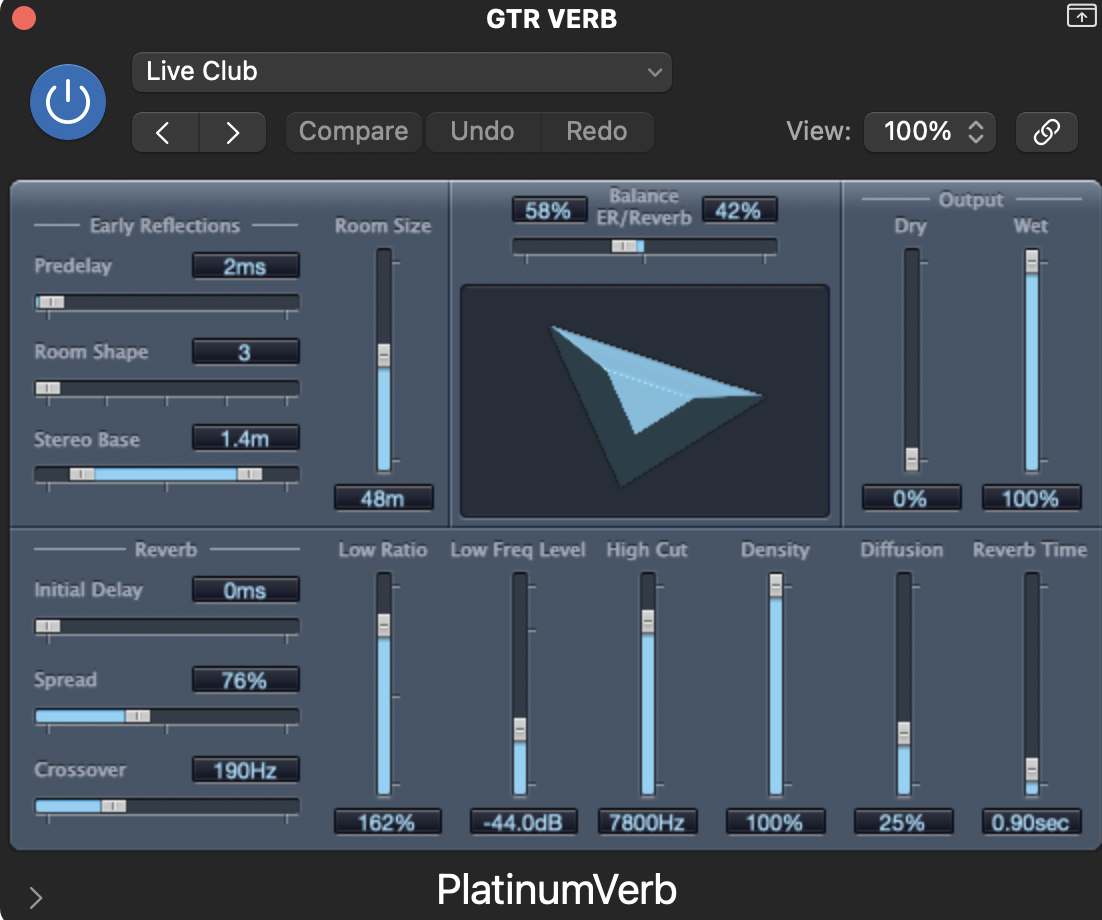
(Guitar reverb bus panning + PlatinumVerb reverb)
Bass
On the bass I low-passed the DI and hit it really hard with a limiter. This provided a completely flat and consistent low end. I blended the OC818 for more clarity and mid tones. I had to shape this mic a lot with EQ to achieve the desired sound.
Vocals
Xavier's clean vocals felt a little bit out of place in the songs when completely dry. To make them more interesting and sit them back in the mix, I created a ‘radio’ effect and also used slap-back delays and reverbs. I compressed Rory’s vocals even more, to push their explosiveness in the mix. I feel that the contrast between Xavier's weird radio sound and Rory's painful screams are a highlight of the band's sound.
Master
I didn’t want these tracks to sound particularly ‘professional’, with a super clean master. My mastering chain for this EP needed to dirty up the tracks further, with more compression and saturation.
Mono low end
I made the low end of the song (below 150hz) mono. This would keep the low-end tight and the kick and bass centre of the song. It would also allow the vocals and guitars to feel wider and to surround the listener.
SSL G Bus
This compressor hit the mix quite hard, bringing the dynamics closer together. When the loud section of the song hit, it created an intense and pumping compression feel.
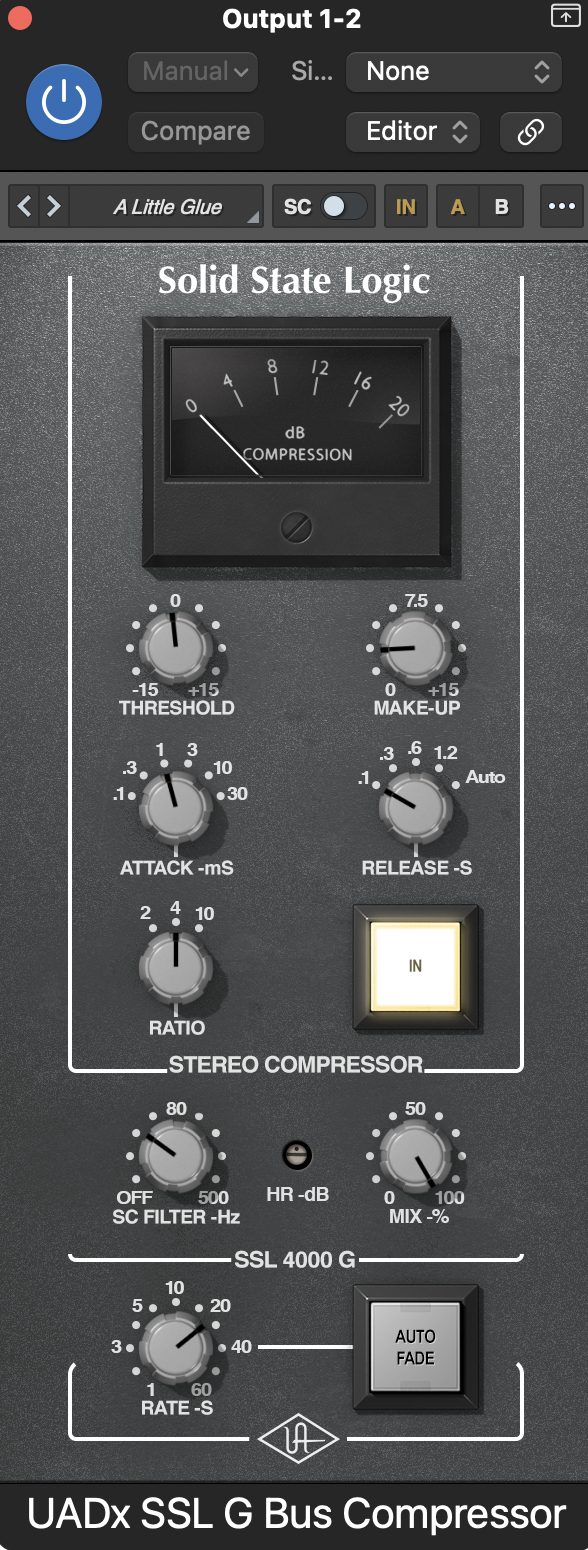
(UAD SSL G bus compressor on mastering chain)
Capitol Master Compressor
I used this for even more compression on the mix. It added saturation, brought the mix more together and added more high end energy. It also made the mix sound dirtier.
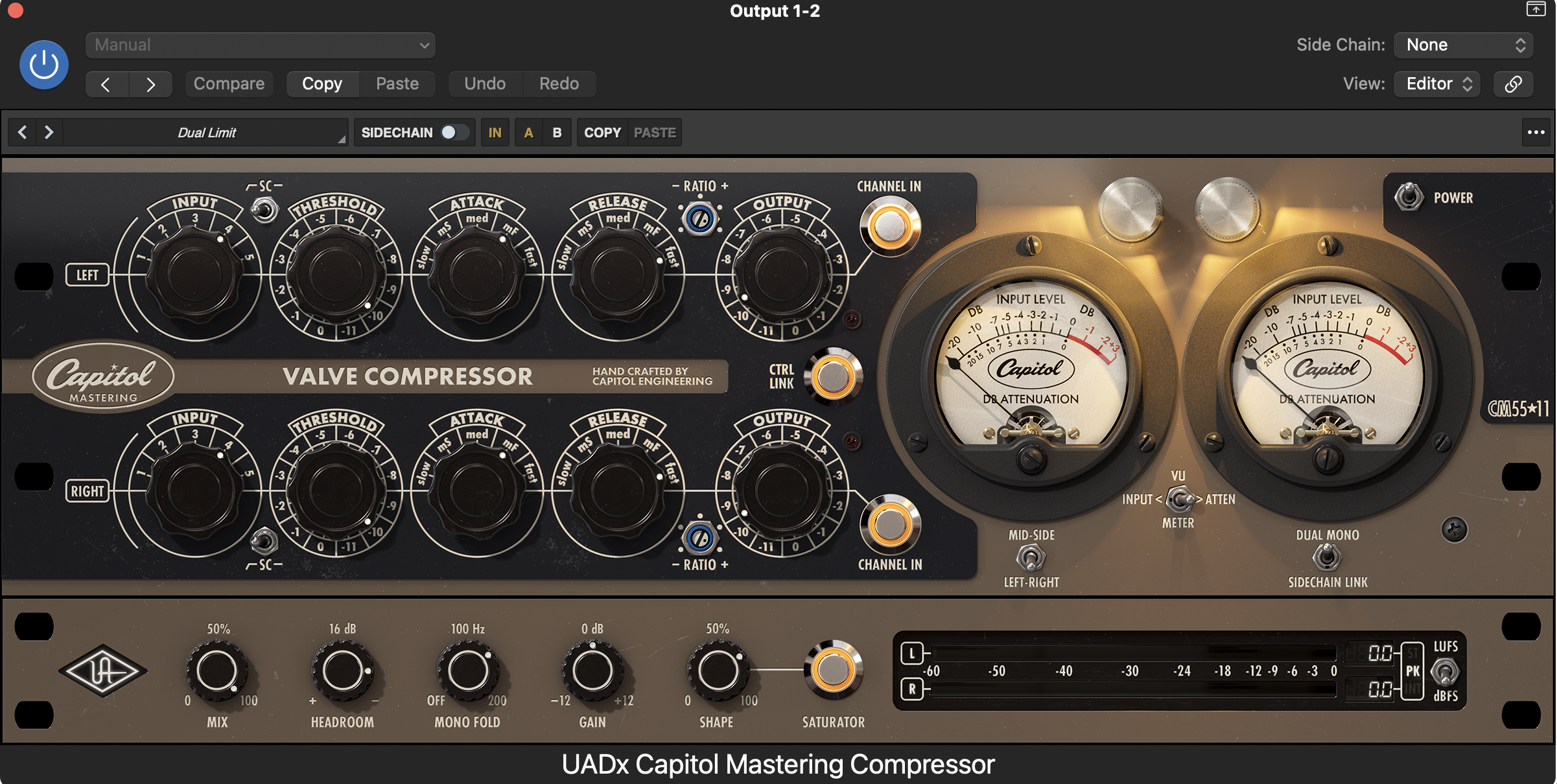
(UAD Capitol Mastering Compressor)
Limiter
Finally, I used a limiter to bring the track up to around -14LUFs. I usually use Fabfilter Pro-L as my limiter of choice, however, I felt that it was too hard for these songs. I used a Logic Adaptive Limiter instead, which gave the more transparent results that I preferred.
I mastered all of these songs alongside each other in a new project, and made overall EQ adjustments to each song to ensure they sounded cohesive as an EP. I used a Pultec style EQ for broader adjustments and Pro-Q 3 for more precise cuts.
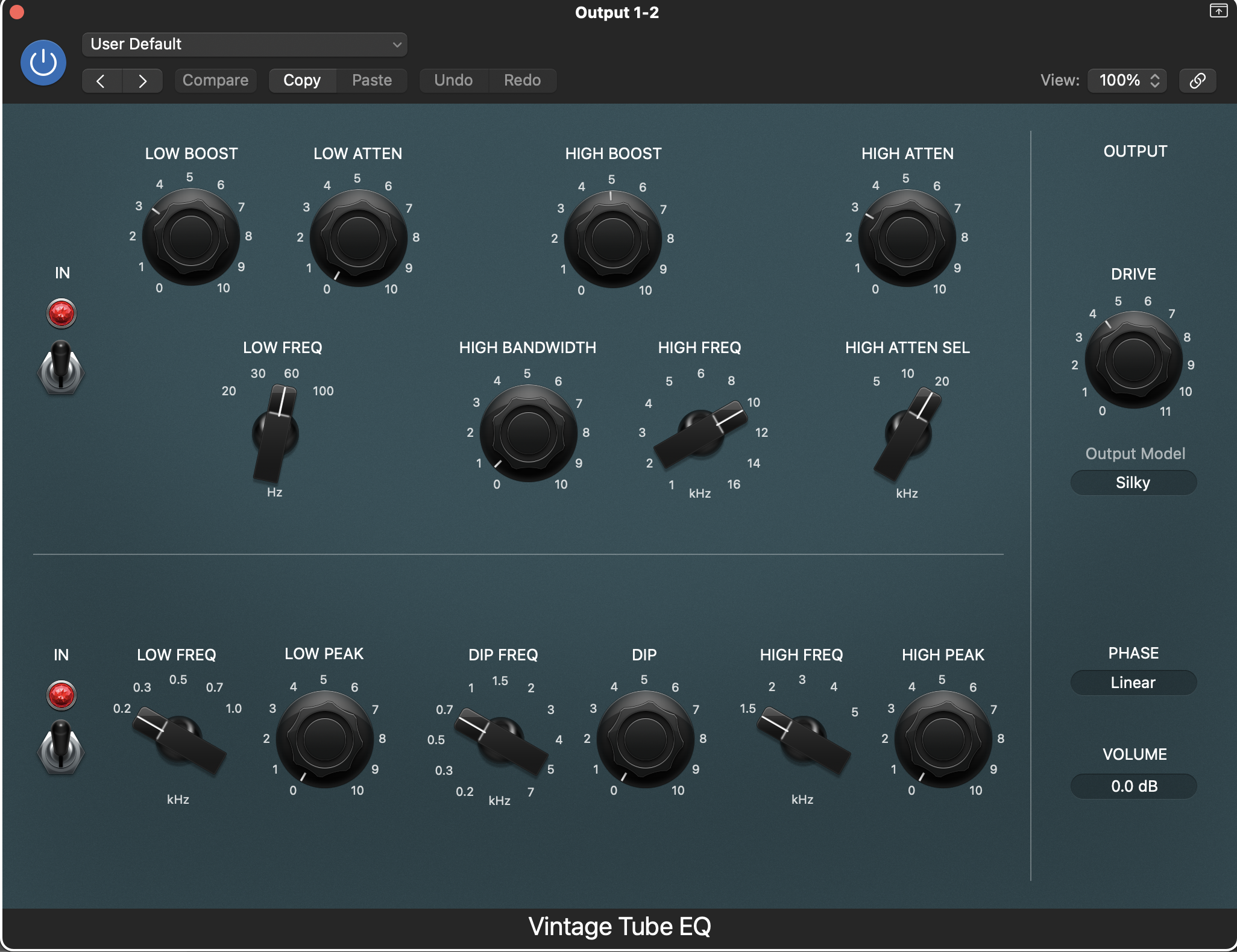
(Pultec style EQ for overall EQ matching of the EP)
Critical Reflection
I achieved results that Kride was happy with, and excited to release. Communicating scheduling and mixing revisions with the band was really easy. They always provided concise feedback, keeping the amount of revisions needed to a minimum. I found that I reached a final mix with Kride a lot faster than other projects I have worked on so far.
On a personal and professional level though, I feel could have done better on the recording side and created something more unique and interesting for the band. Due to the short timeframe I had to record in, I don't think I put enough planning into my approach, didn’t have a clear enough vision of what the outcome would be, and did not have much opportunity for experimenting. This led to issues like the snare choice and overhead mic positions. I managed to fix most of the recording issues, in post, but it did create a lot of unnecessary work for me that could have been avoided.
While the sound we achieved was DIY, it relied more on chaos and roughness for this. I like a DIY sound that, while sounding raw, sounds like it has more thought and intent.
I also think the band could have been tighter. The songs do have complicated time signatures and tempo changes, however, if performed slightly off it doesn't have the right effect. I can do some minor time edits in post, but without a click as a guide, I can only do so much.
With more time in the studio, more takes, discussion and critique, we could have captured the best performance from each member.
Something I had never encountered before was a file format problem that Kride encountered when they went to upload a finished song to Streaming. I provided WAVs at 24-bit 48kHz, but their distributor, CD Baby, will only accept 16-bit 44.1kHz - a lower sample rate. I had never experienced, or heard of, this problem before with other distributors. From now on, I know to ask or export multiple format versions to clients.
These sessions furthered my experience using The Hive. I felt really comfortable and confident setting up, managing headphone mixes for the band, and quickly patching in outboard gear when needed. After these sessions with Kride, I have decided to record bass in a different studio to the Hive. One that has proper separation between the live room and control room. This will ensure that I can always achieve the desired tones at source, which saves lots of fixing in the mixing stage.
I enjoyed my time working with Kride. The sessions were relaxed and I feel like I have formed a good relationship with them. Hopefully it will lead to other opportunities with them in the future, where I can immerse myself more into the creative process, put more intent behind the recording, and create something really meaningful with the band.