Greensmith
The aim of this project with Greensmith was to record a full studio album, of around fourteen tracks, to release in late September 2026. An ambitious task.
Greensmith is a band I've been a member of for almost two years now. Louie previously released a lot of music as a solo project, Louie Greensmith. It was all recorded and produced by Louie at home, mostly using free software like GarageBand. Despite these limitations, the music sounds great, has a definite sound, and really captures Louie’s style. Since Louie's solo project evolved into the band Greensmith, our aim has been to elevate the quality of production, maintain Louie’s roots and distinct sound, but also build on Louie’s original ideas with each member's unique approach to playing and songwriting.
At least half of the songs planned for this album were already known to the band and have featured regularly as part of our live set -
Can I Stop The Rain
Feel It
Nowhere To Run
Hurricane
Faded Signal
Take Me Where You Lay
I Know Who I Am
The rest are new songs, and a lot of the writing and arrangement of the songs, happened in the studio -
That’s Alright
For You
Please Don’t Be Very Long
Have You Ever
Watch Me As I Fall
We Remain In Love
The songs came from Louie first, who writes the guitar, lyrics, and the majority of the structure. The rest of the band were then introduced to the songs in their acoustic form and, though still led by Louie, built their parts onto it.
As well as being lead engineer and mixer, I had a prominent producer role in the making of this album. I discussed with Louie what he wanted the album to sound like, how it fitted in with the new band setting, and the direction he wanted it to go compared to his old music. My main responsibilities were the sounds of the album and bringing Louie's recordings up to a more professional standard.
I used engineering assistants at times, for example, when I was playing the drums. It enabled me to focus on my playing, rather than engineering the session and running the desk as well. It was also good to have a second pair of ears in on the session, to contribute to Louie and I trying different things and not getting too stuck on one pathway.
Schedule
With such a large body of work, I needed to keep a clear track of what stage each song was at. So I made this chart -
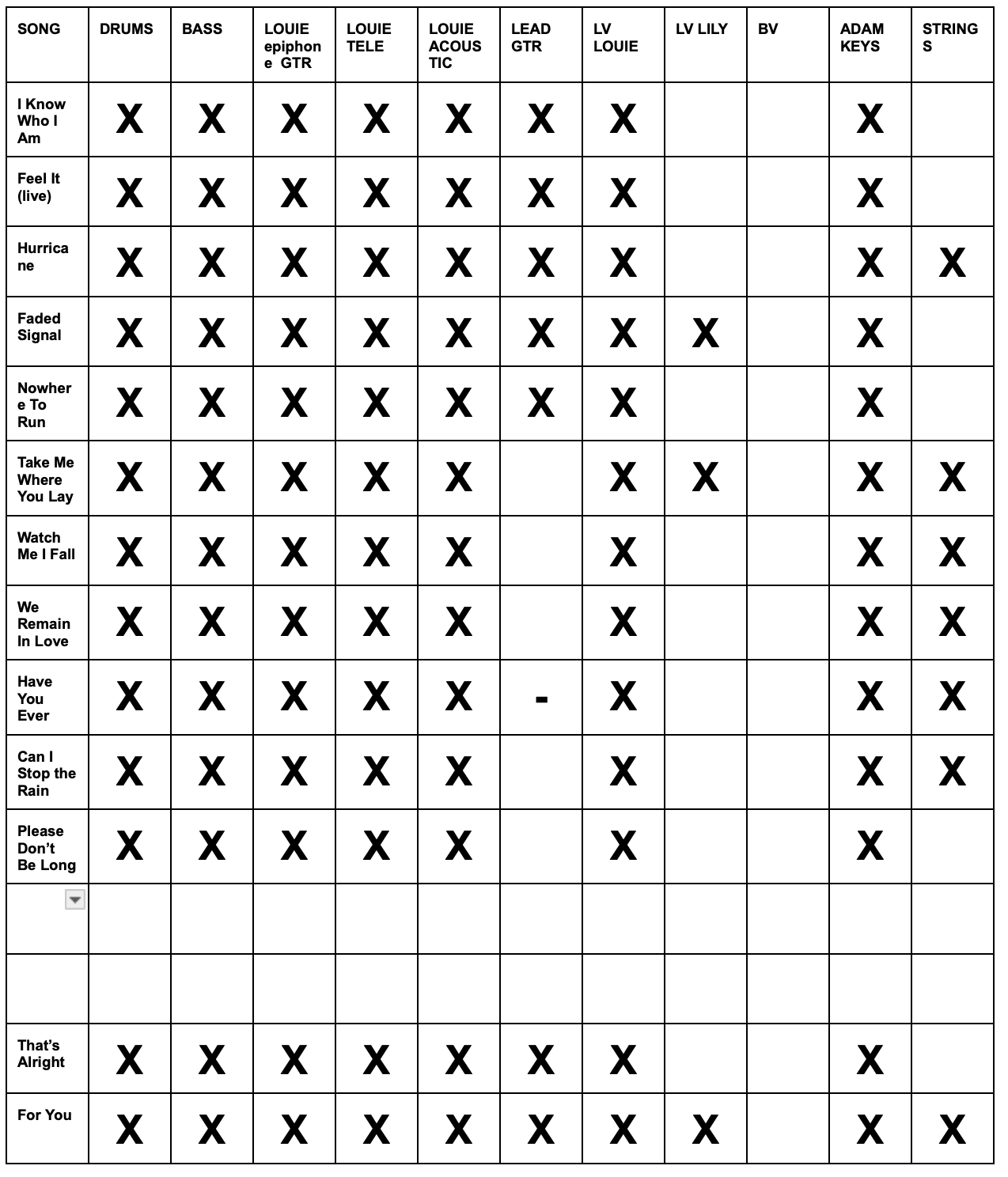
(Recording progress chart)
The aim was to have everything completely tracked before the end of the academic year, as we would no longer have access to the studios and professional equipment after completing our postgraduate studies. Once that was done, the album would be fully mixed by me.
Overall, though, tracking the album took a lot longer than I had expected. I underestimated the amount of recording that needed to be done for thirteen songs. The recording schedule had started off quite relaxed, aiming for maybe one half-day session per week. Near the end of the project this had increased drastically and we would often book three consecutive days so we could leave equipment set up and track an entire album's worth of parts. I did actually prefer this approach because there was less setting up and finding a good sound. We could spend most of it focusing on the performances and arrangements. It also felt more like we were recording an album, rather than small, disjointed, fragments across several months.
I always had a clear plan for each session, who needed to be there, and what would be achieved. However, in the last couple weeks I had less control over this. For one of the last sessions, for example, I had planned to just review final mixes with Louie; but the night before plans were made to record a small choir and add on group vocals to the majority of the tracks. I managed to cope but events like this did put me under some stress, especially when deadlines were approaching.
During the making of the album both Jack and Louie’s living situations changed. Jack moved to Frome and started a full-time job. Louie moved to Liverpool. This seriously reduced their availability and made session booking harder. Jack also became very hard to contact at one stage, which was not helpful at all. We had only recorded less than half of his parts at this point. The decision was made to get someone else in and we invited Finn Roach, a very skilled guitarist on the Commercial Music course, to complete the lead guitar recordings. He came to the session well prepared, we went through any specific parts that needed to be featured, and between us also came up with lots of new ideas. This collaborative process with Finn as a session player was really enjoyable. Recording him was easy, as he played well and achieved a great tone that worked well in the songs.
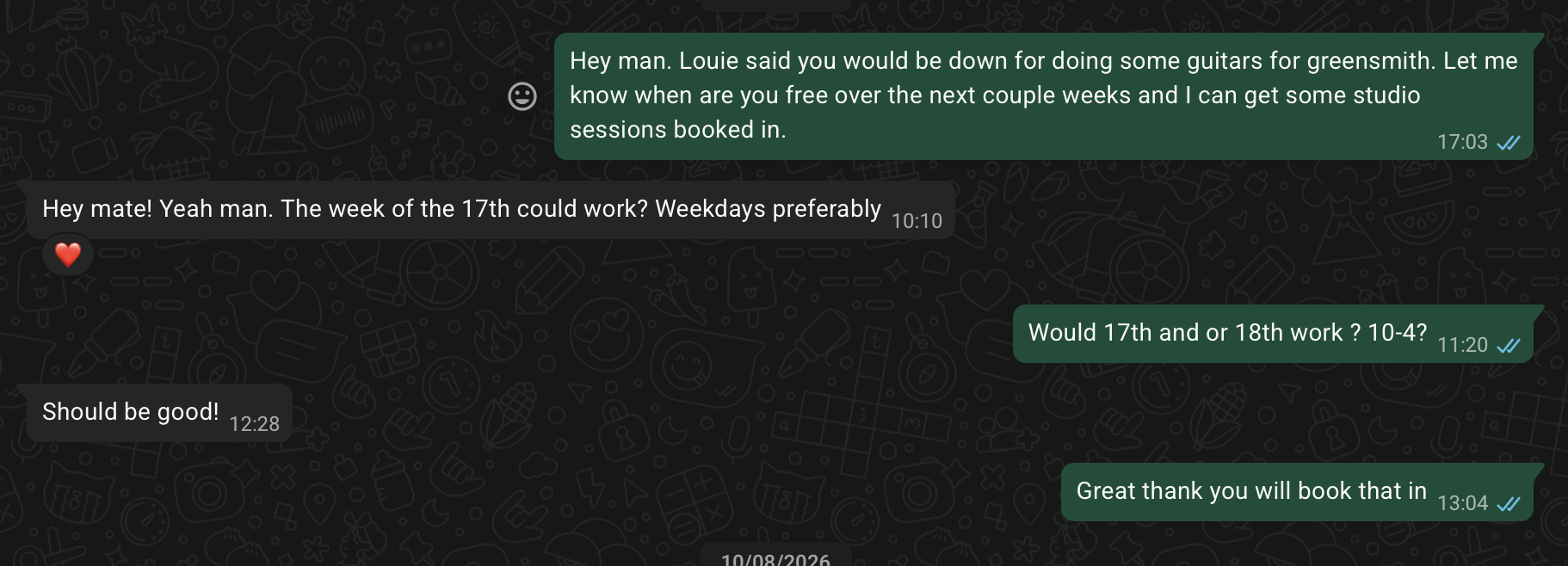
(Organising recording sessions with Finn)
Recording
Drums
The drum tracks were recorded first, as these would lay the foundations of each track. I recorded the drums along to demos Louie had created with Jack (lead guitar) at home. These were really useful, as I could play with the same energy I would live. Some were to a click, which was even better. Everyone benefitted from them, as it kept the recordings in time and tight. Some demos were not to a click though. I find it difficult, mainly in a studio setting, to play along and lock into a pre-recorded demo with no click. I therefore tried creating my own click tracks by manually mapping a click to those demos, but they weren't perfect. The timing tended to drift when editing later.

(Manual click track mapping)
Recording the first half of the album was really easy and we managed to get all of the drums for those first six songs laid down within three or four sessions. These tracks were pretty high energy, I got into a flow, and I think I nailed them for the recordings. There were a few places where I needed to apply some variation, but only to highlight specific moments because they didn't translate as well onto recording as they do live. When it came to the newer songs on the second half of the album, however, it took more time. I was learning parts of the songs for the first time, in the studio, and it was an experience very different from what I’m used to. Louie guided me through each song though, explaining his vision for the track, and giving me a rough outline and key moments to hit. I then filled in the gaps with my own style and what I felt was best for the song.
I chose to use a Ludwig Vistalite kit, with a Ludwig Acrolite snare. This gave a big, John Bonham style, drum sound which I absolutely love and wanted to feature; especially in the higher energy songs. When I've listened to some of Louie’s previous releases, the drums are very GarageBand; close and loop-like. I wanted this album to have a much more lively and exciting drum sound.
The mic set up was
KICK IN - D12
KICK OUT - Soyuz 023
SNARE TOP - Beyerdynamic M201
SNARE BOTTOM - SM57
TOM 1 - MD421
TOM 2 - MD421
OH LEFT and RIGHT - Nueman KM184
HI HAT - M160 Ribbon
ROOM MONO - Coles Ribbon
I used different overheads when I felt a different cymbal sound was needed. On ‘Take Me Where You Lay' and 'We Remain In Love' I did not record room mics and switched the overheads from KM184 condensers to Coles ribbon microphones, for a darker and more stripped back drum sound. I also removed the kick in mic for more of a low-end pulse result.
Rather than precision and lots of attack, the focus of the drums in this project was the vibe and musicality. I chose these mics for a warmer and fatter sound, particularly on the kick. I wanted the kick to be thick because, along with the bass, it would be providing the main low-end in the recording.
A mic on the hi hat was also an unusual choice for me. I usually find them overbearing but, with a more articulate and classic style of drumming on some of these songs, I felt it important that the hi hat was more prominent. With such a large number of drum tracks to get recorded, which took over a month, there was unfortunately some variation in sound between songs. I would have rather have had the drums sound more constant across the album, with some variation to fit the overall vibe of each song. As it is, a few track’s drums sound very different from others. Overall though, I am really happy with the drum performances and sounds we have recorded.
After completing the drum tracks, it became obvious that the task at hand was very big. It was becoming a more difficult and draining process than it should be. To counter this, we decided to record the album in more manageable bits, four songs at a time. This kept up the motivation and made the completion of a track more achievable and rewarding.
Bass
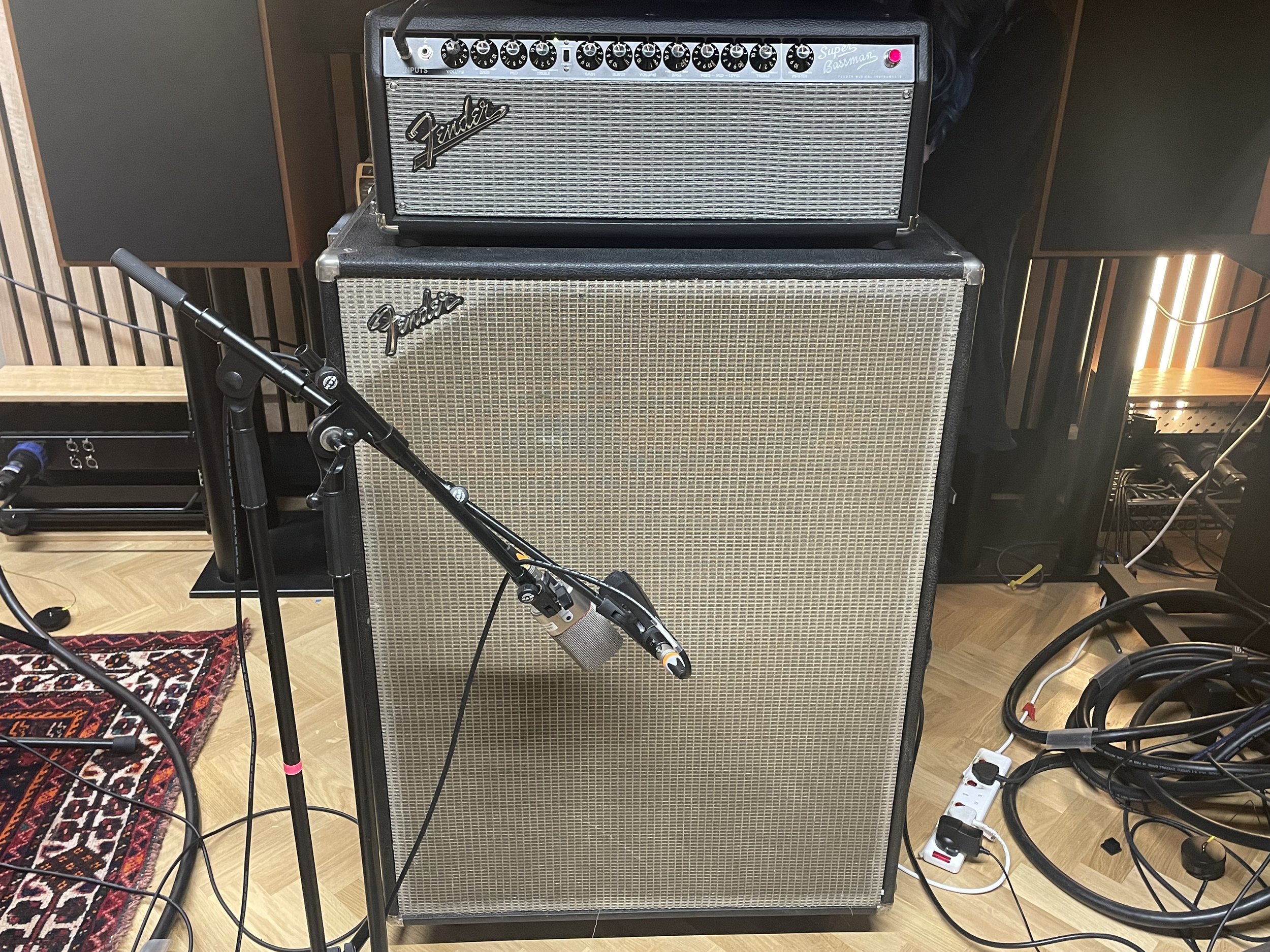
We wanted a vintage bass sound. A more dulled string sound, with more mid-range honk, but low-end that would lock in with the kick drum and provide weight in the tracks. We went with a Fender Bassman head and speaker cab. I took a pre-pedal DI, and used a Sennheiser MD421 and Austrian Audio OC818 on the cab in the centre of the cone. These mics would provide more of the amp tone and mid-range, and were also where any bass pedal effect, like Lily's fuzz pedal ,would be recorded. Keeping the DI separate from any effects pedal would ensure that low-end could be kept clean and consistent throughout the tracks. We used this amp set up for the first four songs recorded - ‘I Know Who I Am’, ‘Hurricane’, ‘Feel It’ and ‘Faded Signal’.
However, like on many other project sessions doing bass in The Hive, I struggled to monitor the recording well without separation between the live room and console. I made the decision to record the rest of the bass with Lily in Music Labs, where we could both sit in the control room to communicate and monitor clearly. We kept the Fender Bassman, but changed to a smaller 1x12 Orange bass cab. We kept the same mic and DI set up, minus the OC818 as it wasn't adding much to the tone.
Lily is very efficient at recording her bass parts. She usually gets them down in a couple of takes, with a really good performance.
(Have You Ever bass layer recorded with Rickenbacker)
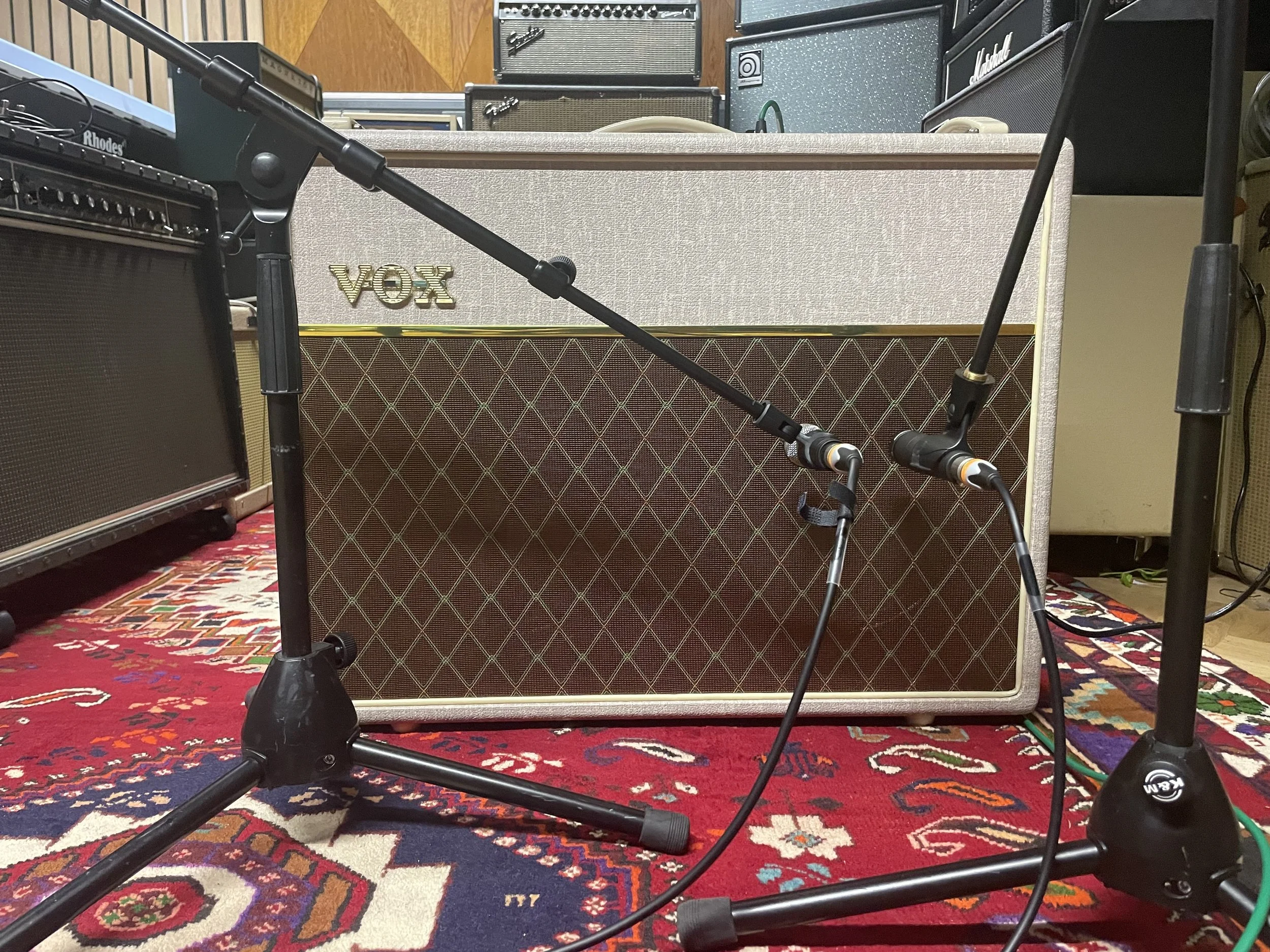
(Vox AC30 with M160 ribbon and SM57)
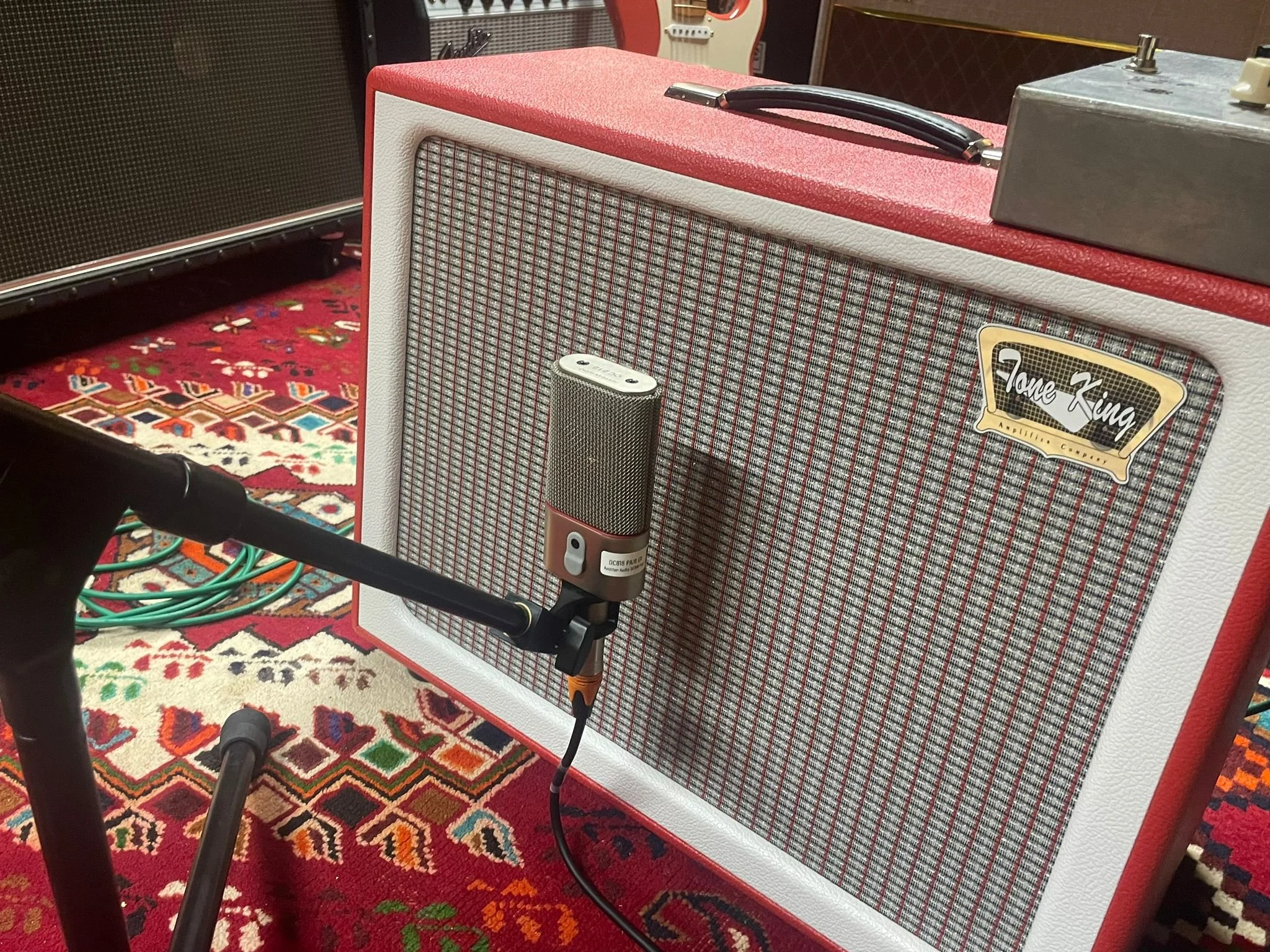
(OC818 microphone on Audio Kitchen Big Trees + Tone King cab)
(Can I Stop The Rain guitar solo overdubs)
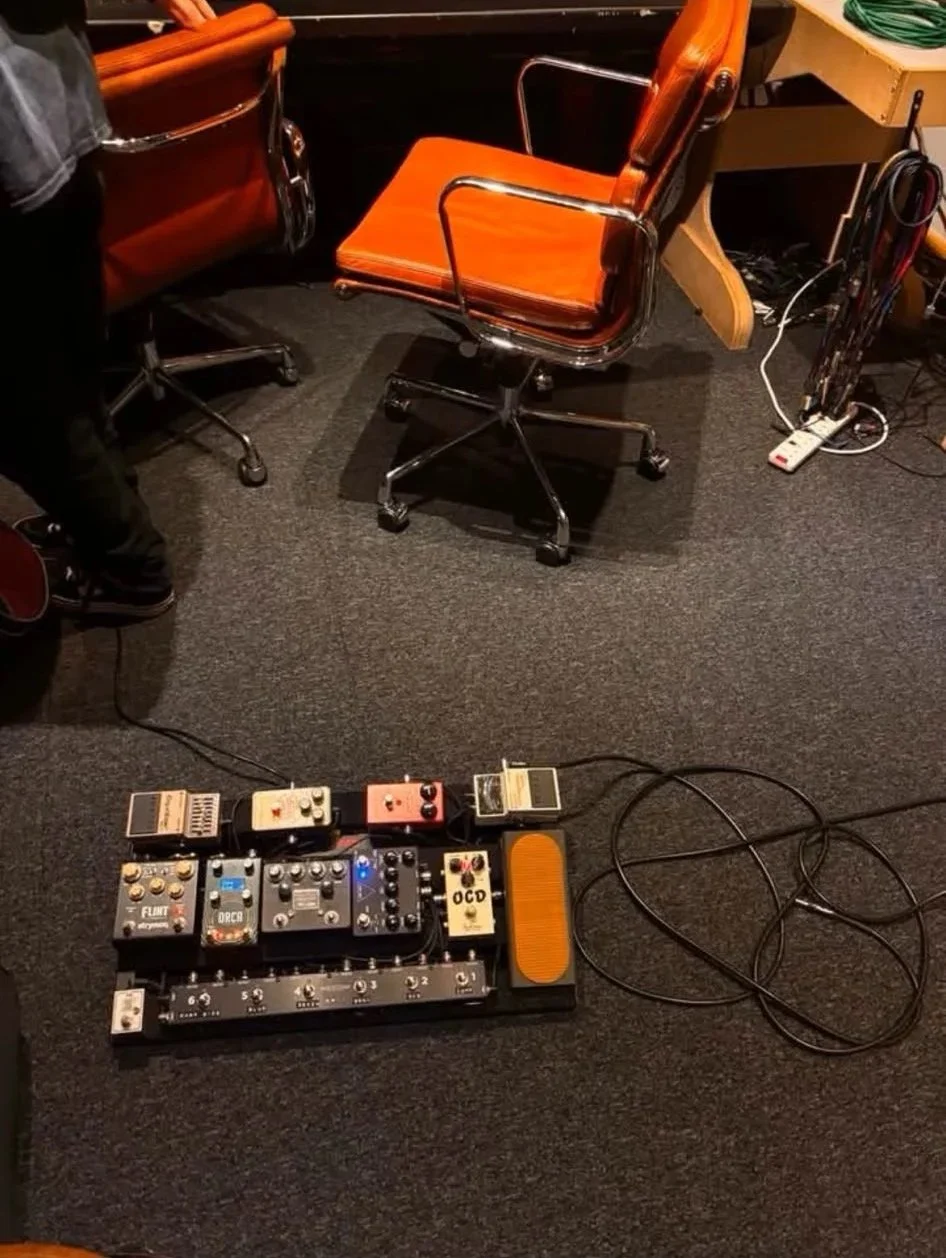
(Finn’s pedalboard)
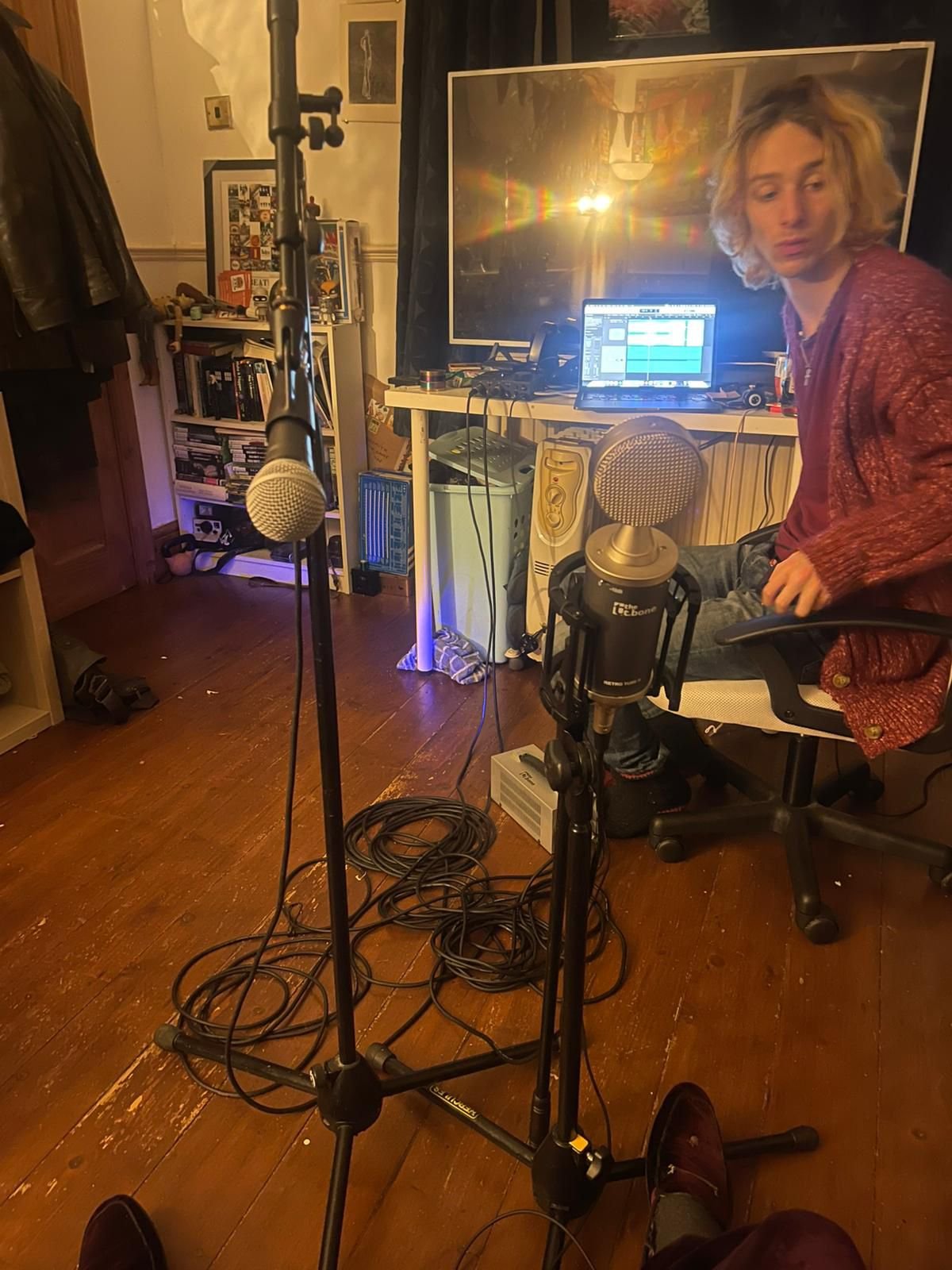
(Acoustic guitar home recording set up)
(Piano demo session)
(CP80 tracking for Can I Stop The Rain)
(Recording Mellotron for Take Me Where You Lay)
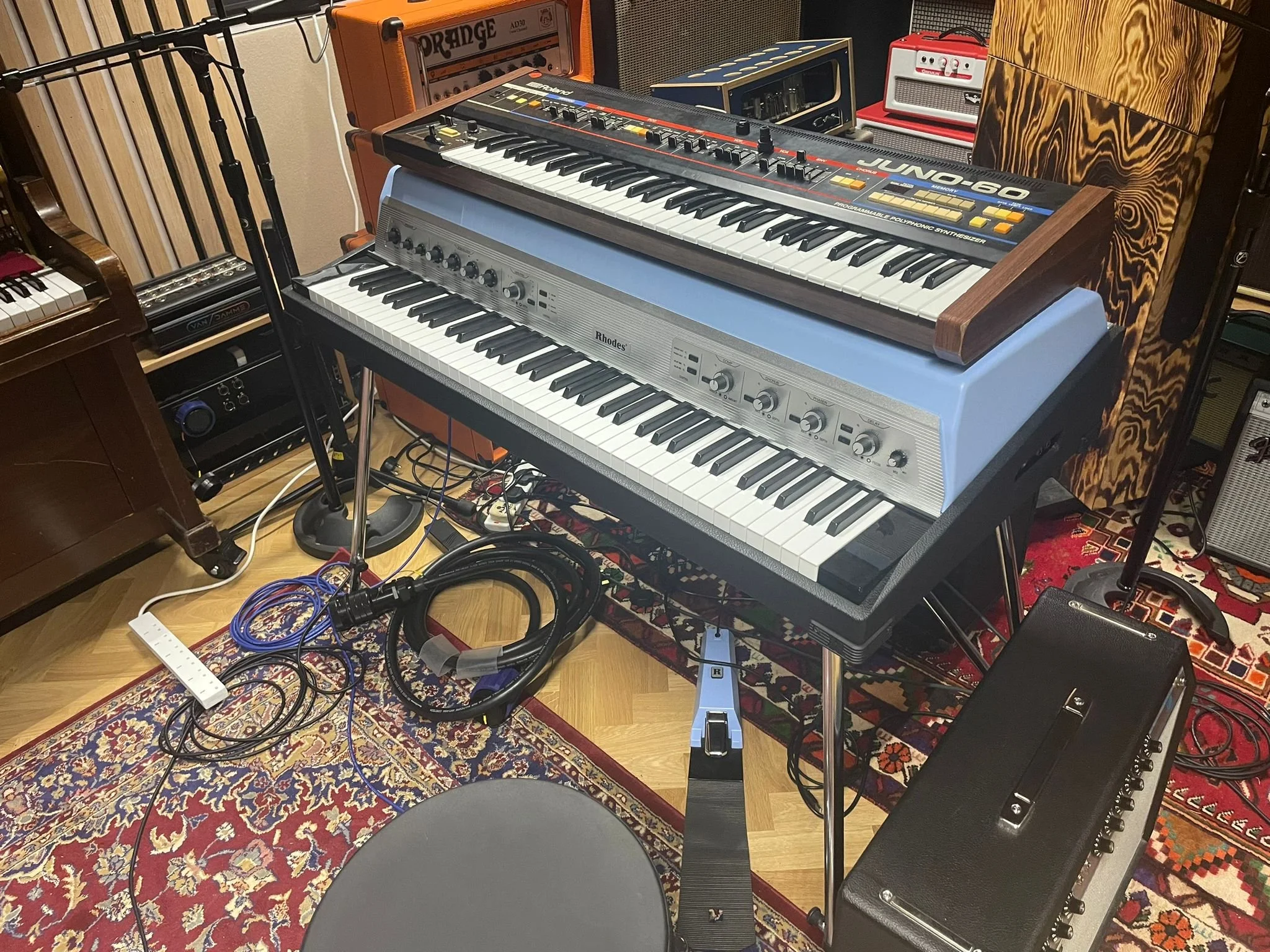
(Rhodes)
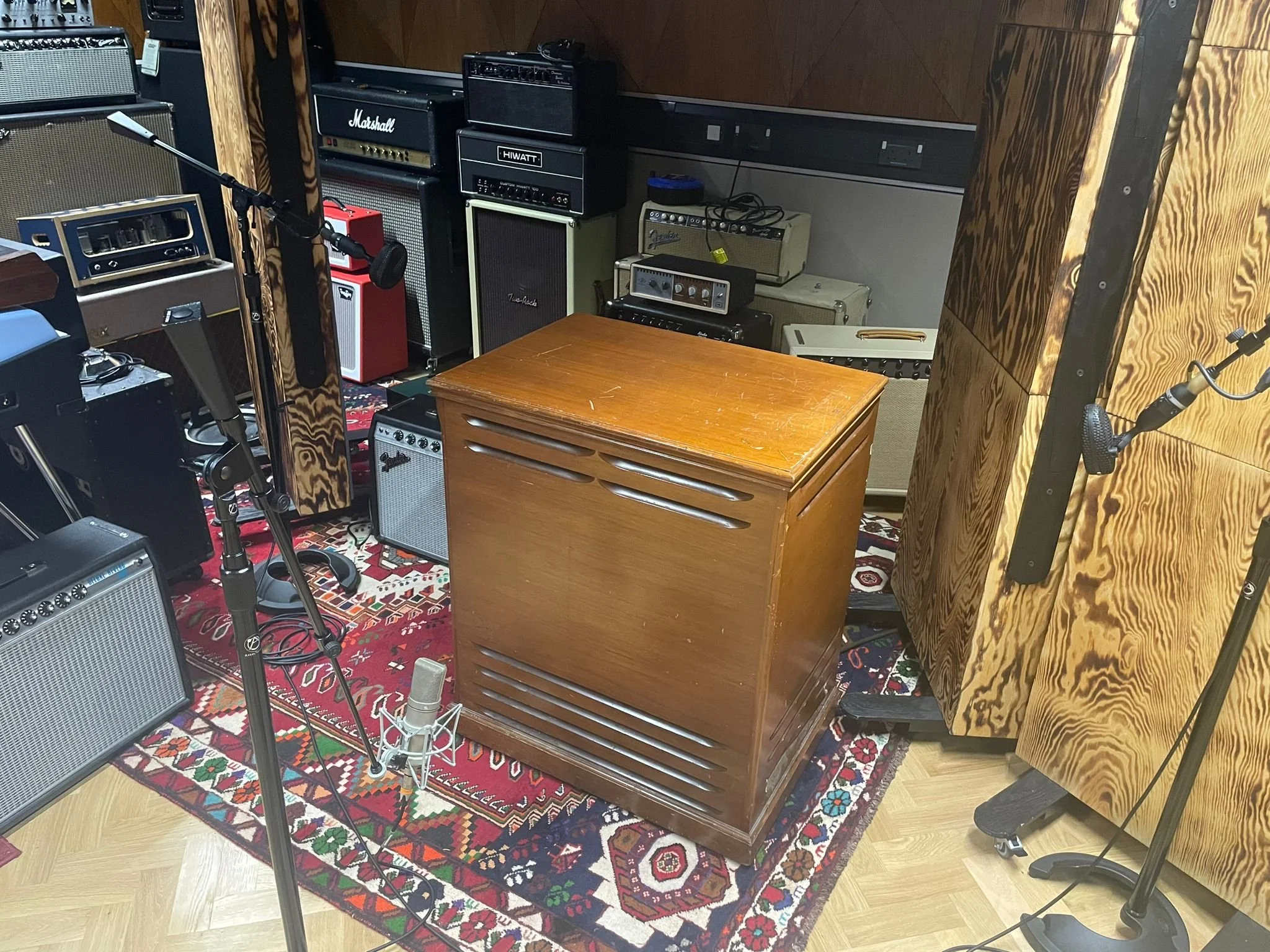
(Lesley speaker cabinet microphone placement)
The recording process with Louie was also pretty unique. During one session, a bottle of wine seemed to magically appear between takes. Louie felt it was essential to the process of getting performances that felt authentic and emotionally genuine. Personally, I am really happy with the lead vocal performances we recorded. However, Louie is quite a perfectionist and often we had to go back to redo sections. Sometimes it was just singular phrases, and he would repeat them over and over until he was satisfied they were completely perfect. This did create a lot of extra work, especially in post, as not every vocal in a song then matched up due to differences in recording setups etc. I had to go through and manually gain each vocal and EQ catch to get the consistency as best as I could.
Whether they will ever truly feel perfect, I do not know, as that is often the issue with perfectionism. I did occasionally manage to convince Louie that the vocals sounded great and when to stop redoing them. I initially struggled with making these calls, on when something was finished, but during the making of the album I improved with confidence. Louie also learnt to trust my judgment more.
(Snare EQ)
(Audio Kitchen Big Trees)
(SSL G Bus on drum group)
(Lily vocal recording)
(The choir)
(Neumann U87)
(Snare saturation)
(Overhead EQ)
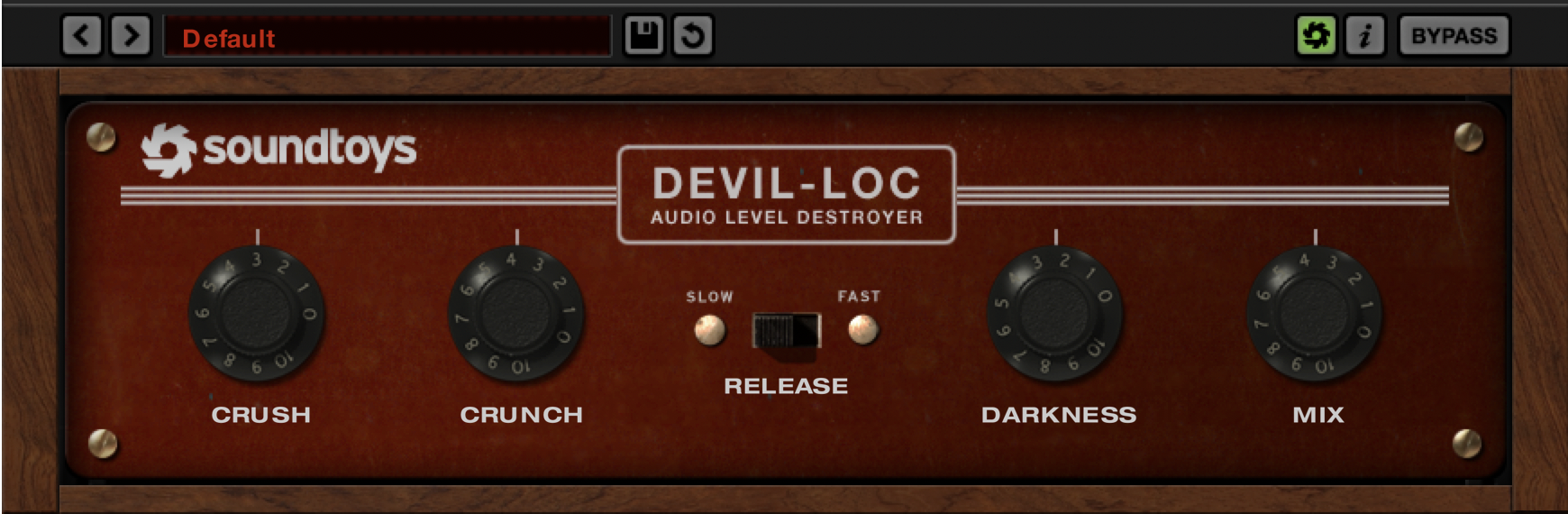
(Parallel Devil-Loc bus)
(Parallel compression bus)
(Tremelo on drum room mic)
(Bass DI low-pass filter)
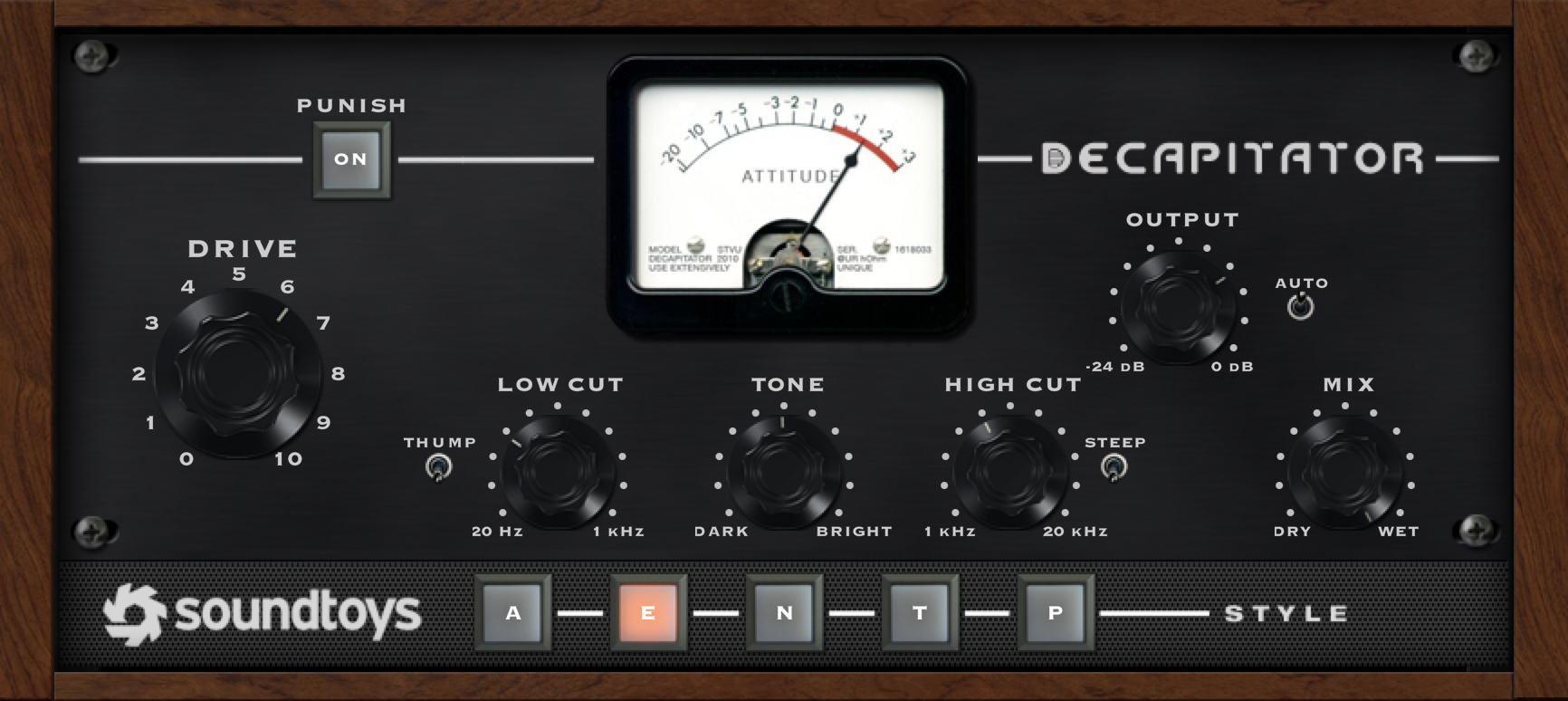
(Bass Decapitator)
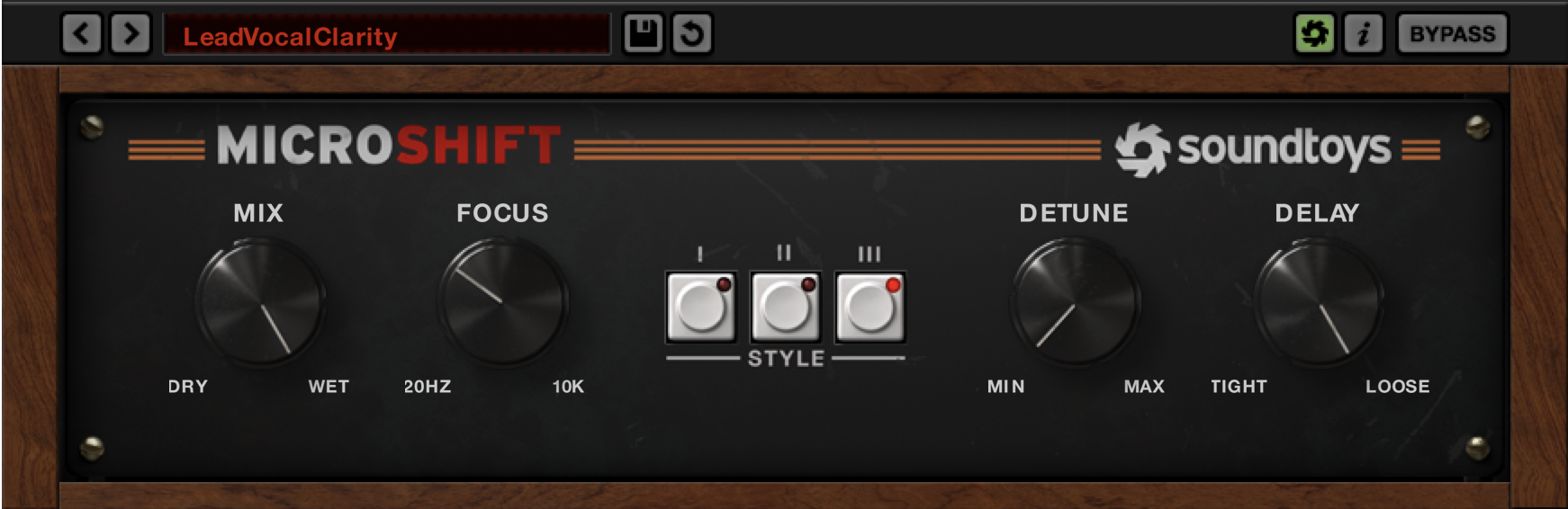
(Acoustic guitar Microshift for chorus effect)
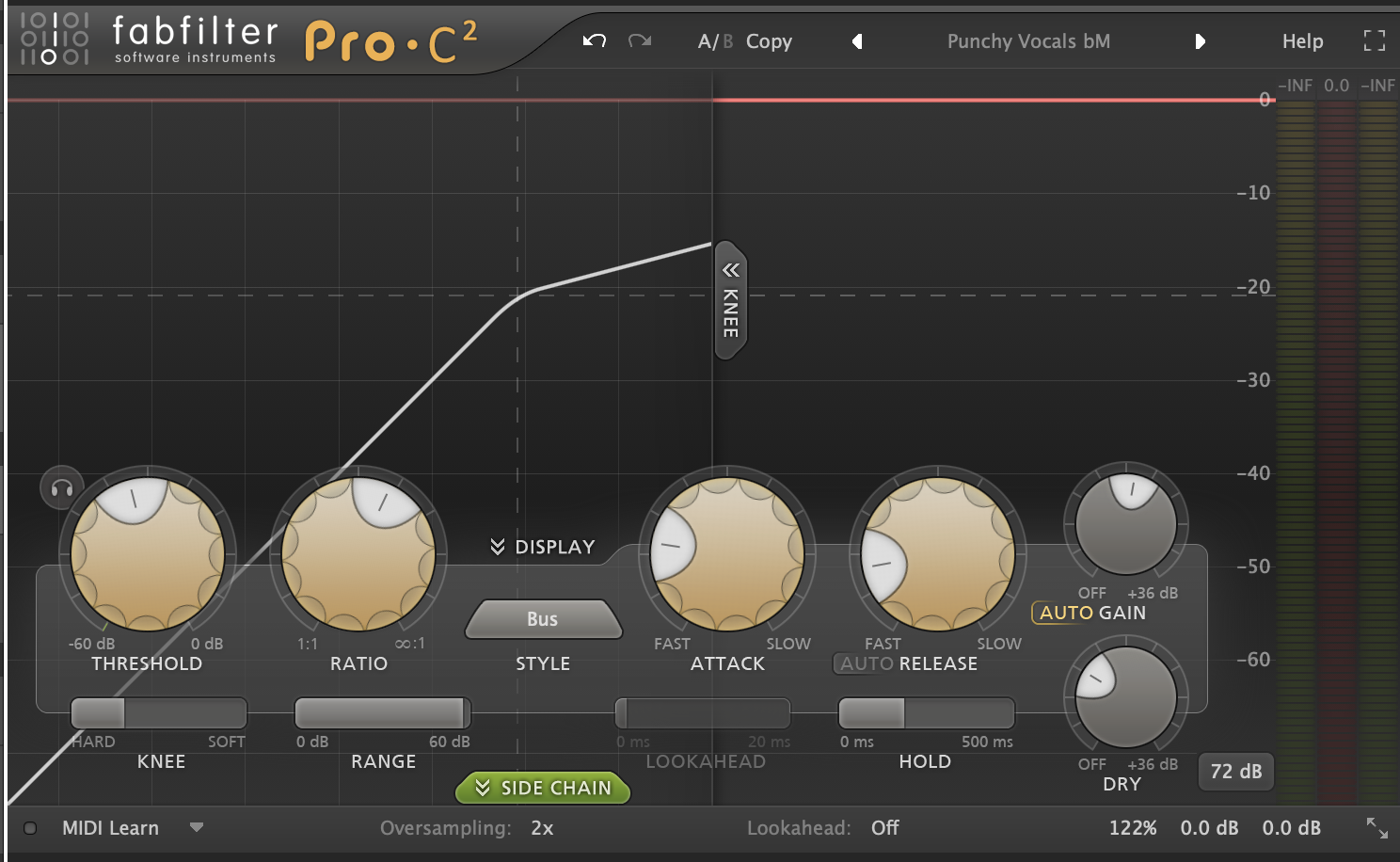
(Lead vocal compression)
(Bass DI compression using LA-2A)
(Bass group dynamic EQ)
(Acoustic guitar EQ)
(Lead vocal dynamic EQ)
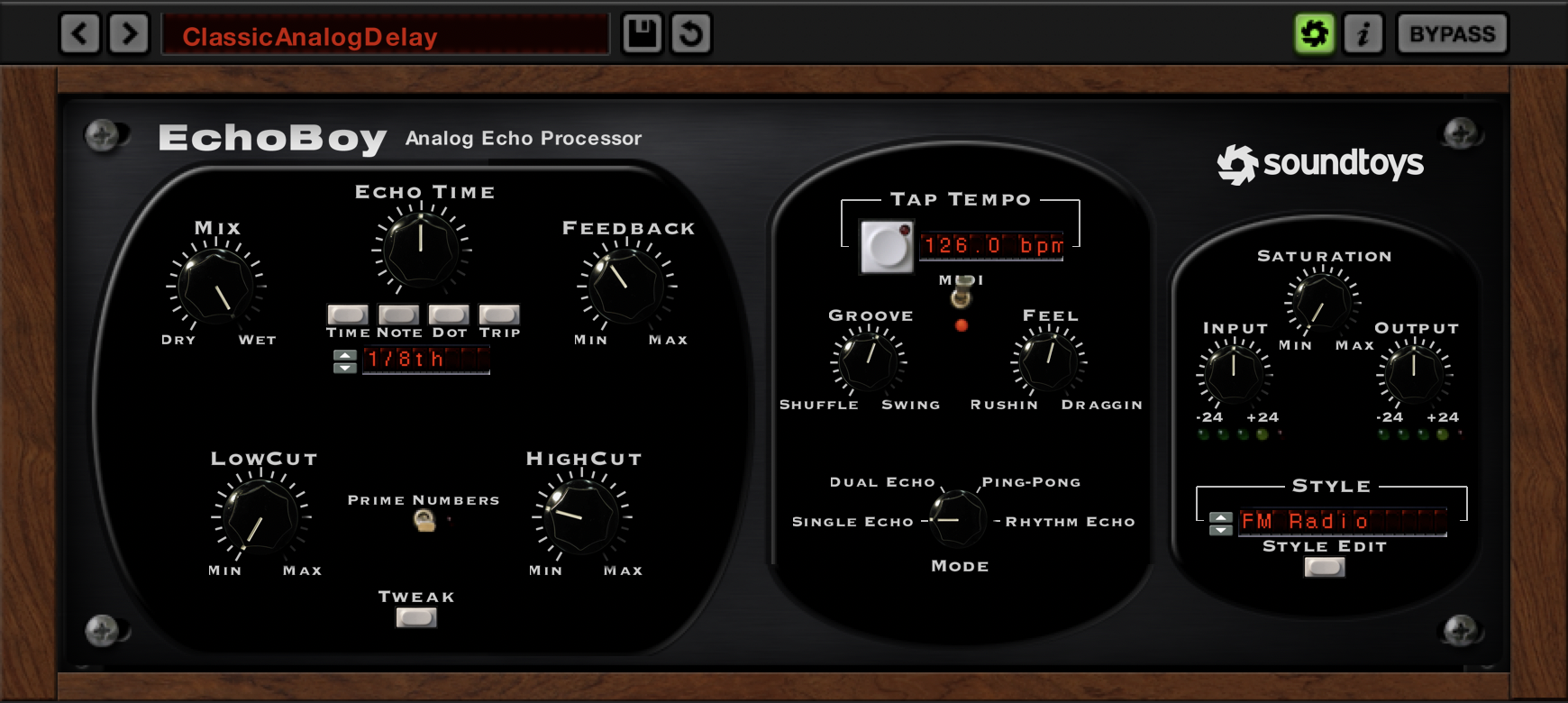
(Lead vocal delay)
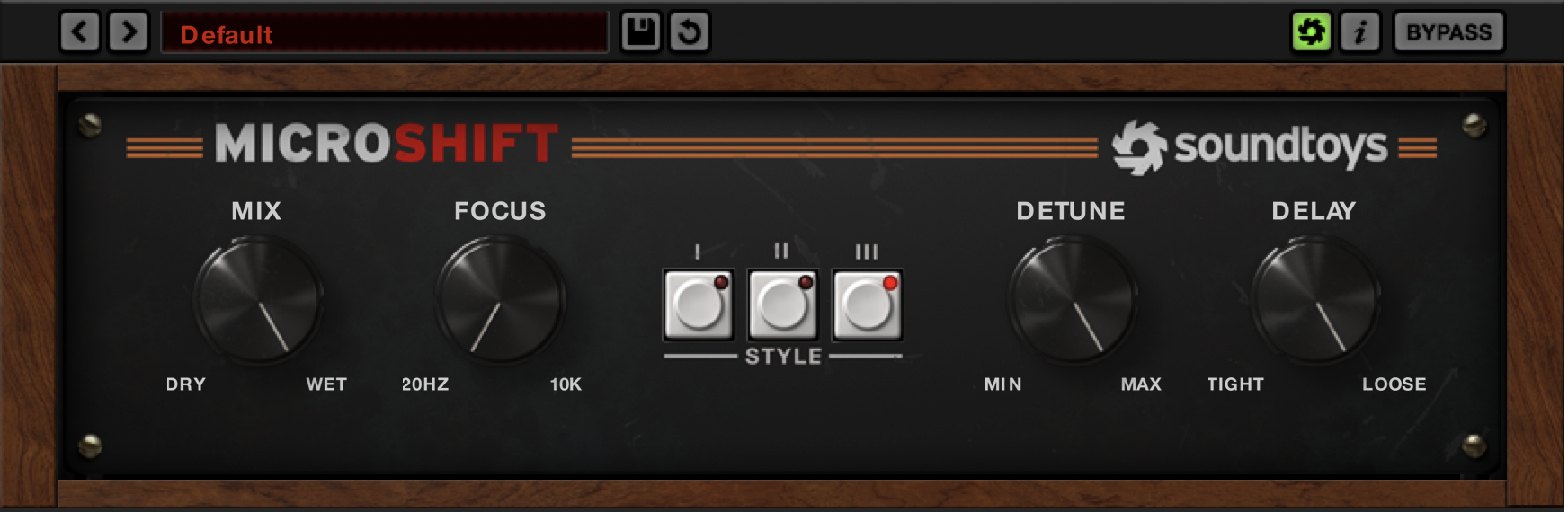
There were places where we felt the lead vocals required doubling, but we hadn't recorded one in the studio. Instead, we used a technique commonly used by The Beatles. Using a tape delay on a copied track of the lead vocal, I set the mix to 100% wet and the delay time very fast (between 30-50ms). The modulation in the tape effect would create variation in this copied vocal, simulating the same effect as a performed vocal double. I also discovered that Soundtoys Microshift gives this same effect, but often with a different flavour.
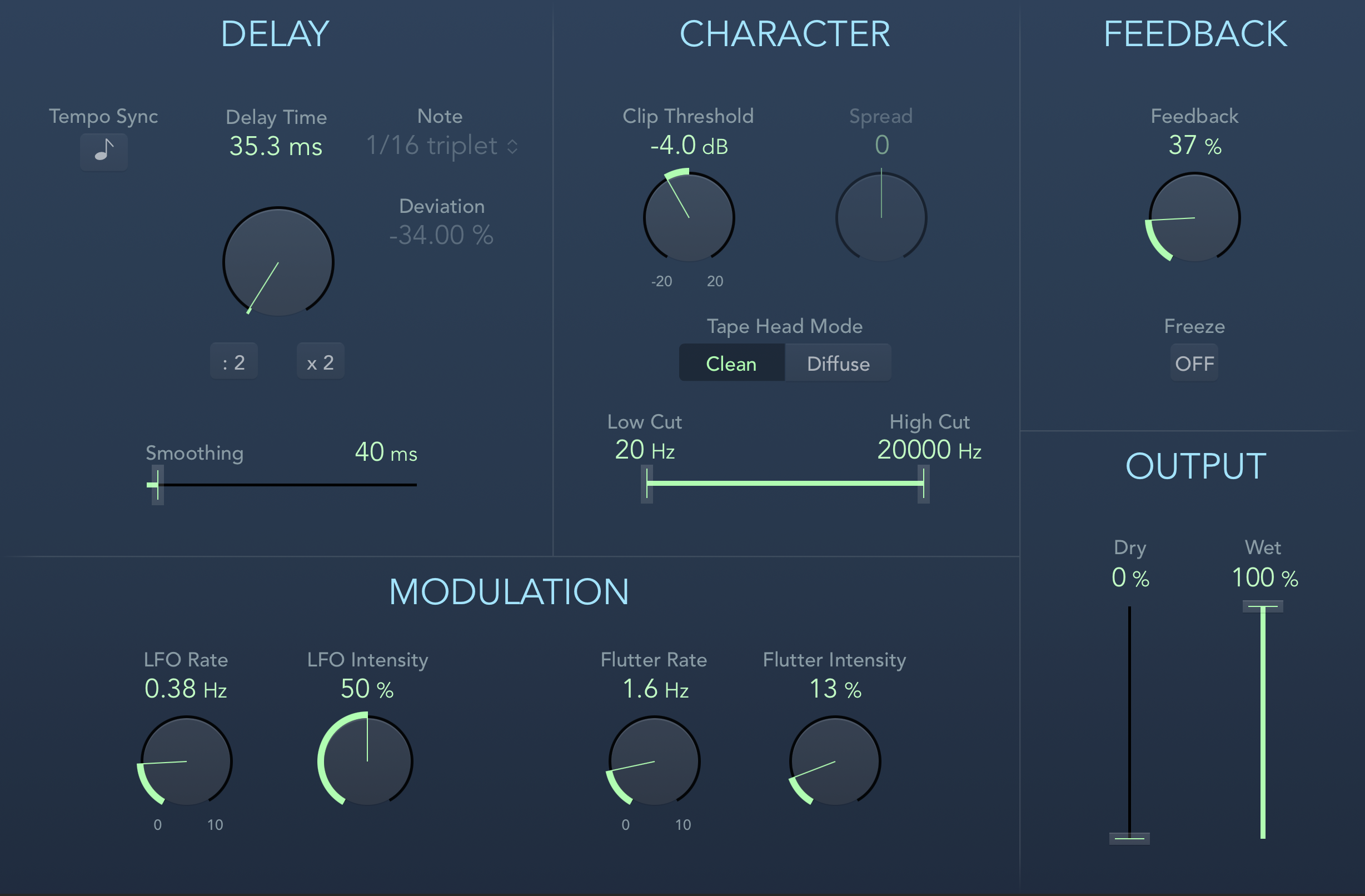
(Tape delay double settings)
(Fender Bassman with OC818 and MD421 microphones)
(Lily’s bass and pedals)
(Jack’s dual amp setup)
(Guitar cab microphone positioning)
(Vocal Chromaglow)
(Drum sound checking)
(Microshift double settings)
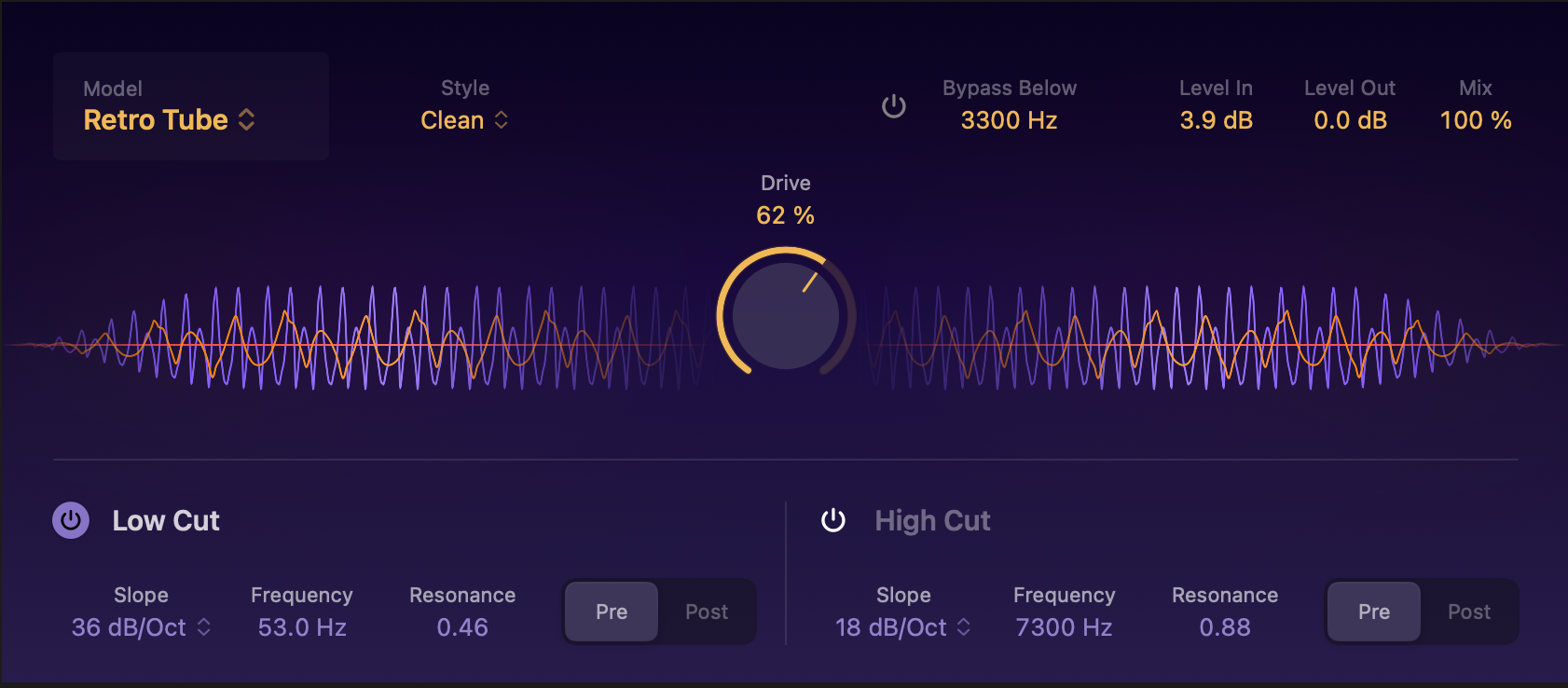
(Vocal Soundtoys Decapitator)
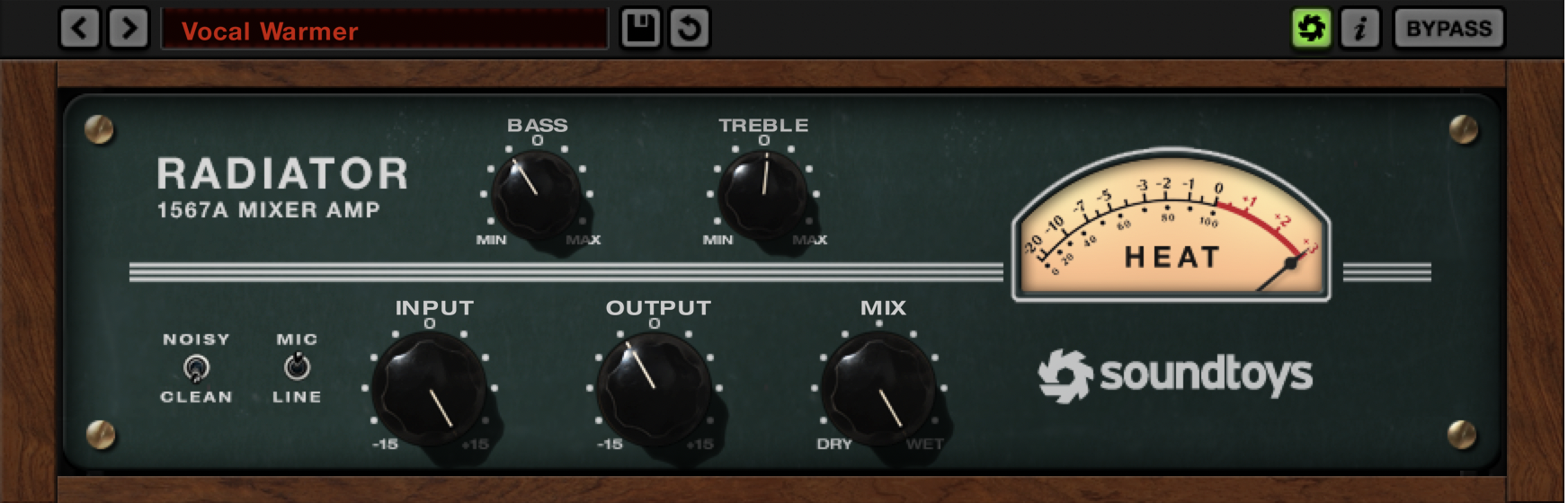
(Vocal Soundtoys Radiator)
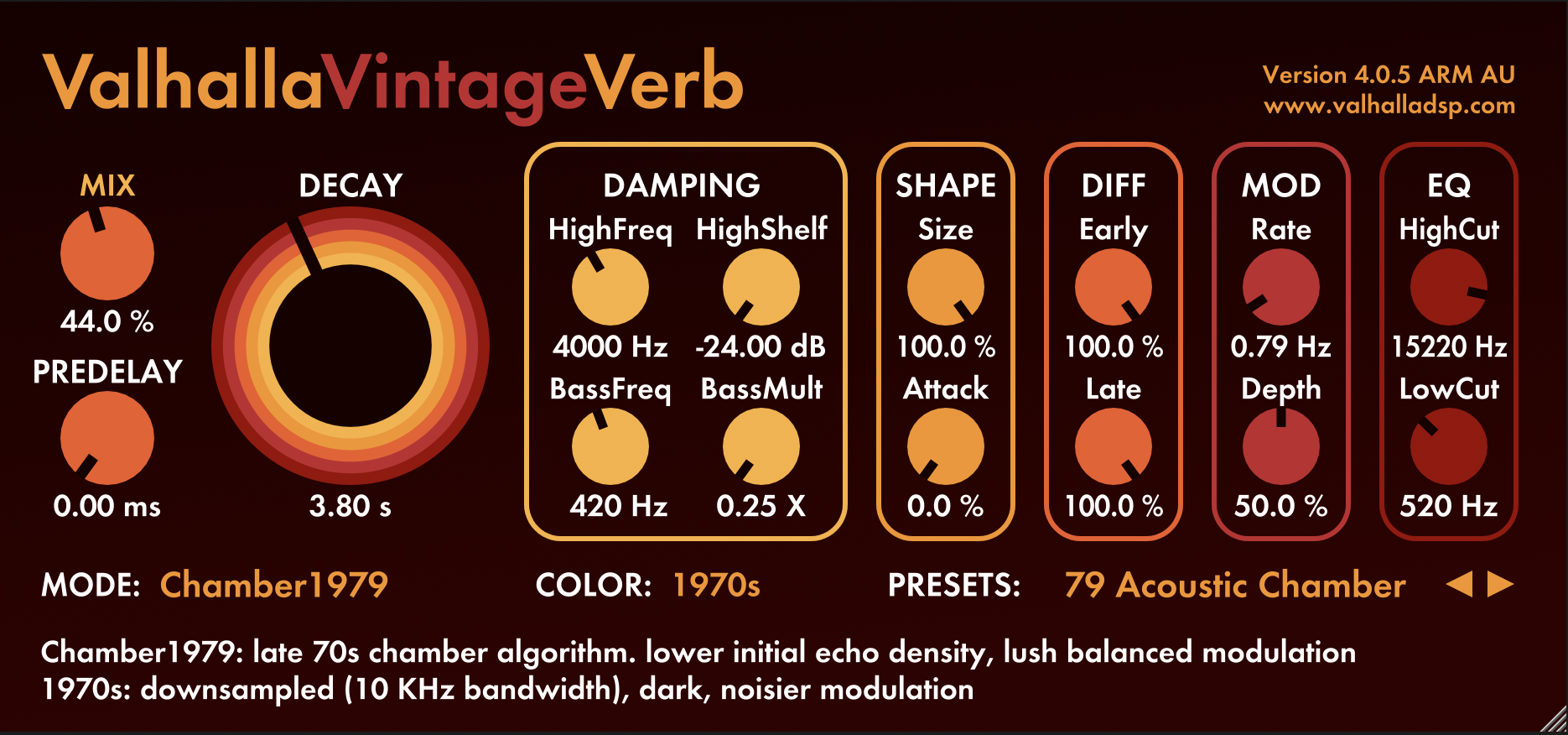
(Choir reverb)
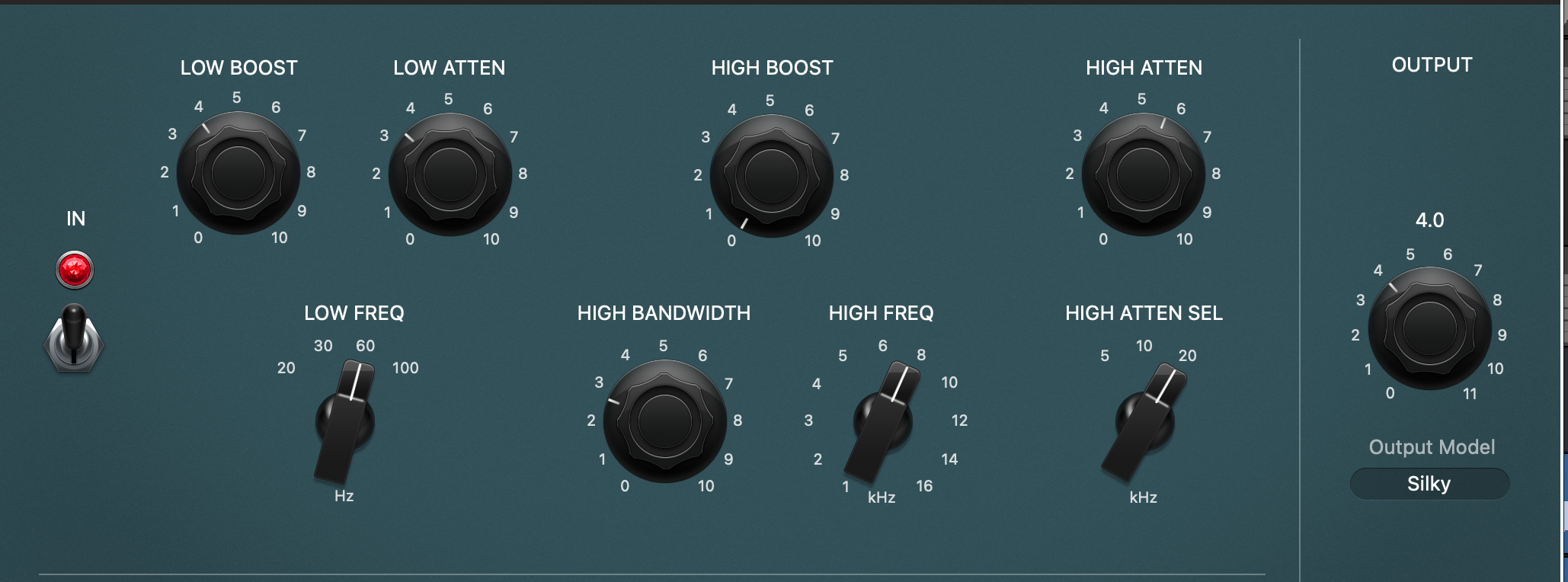
(Pultec style EQ on organ)
(Organ saturation using Soundtoys Devil-Loc)
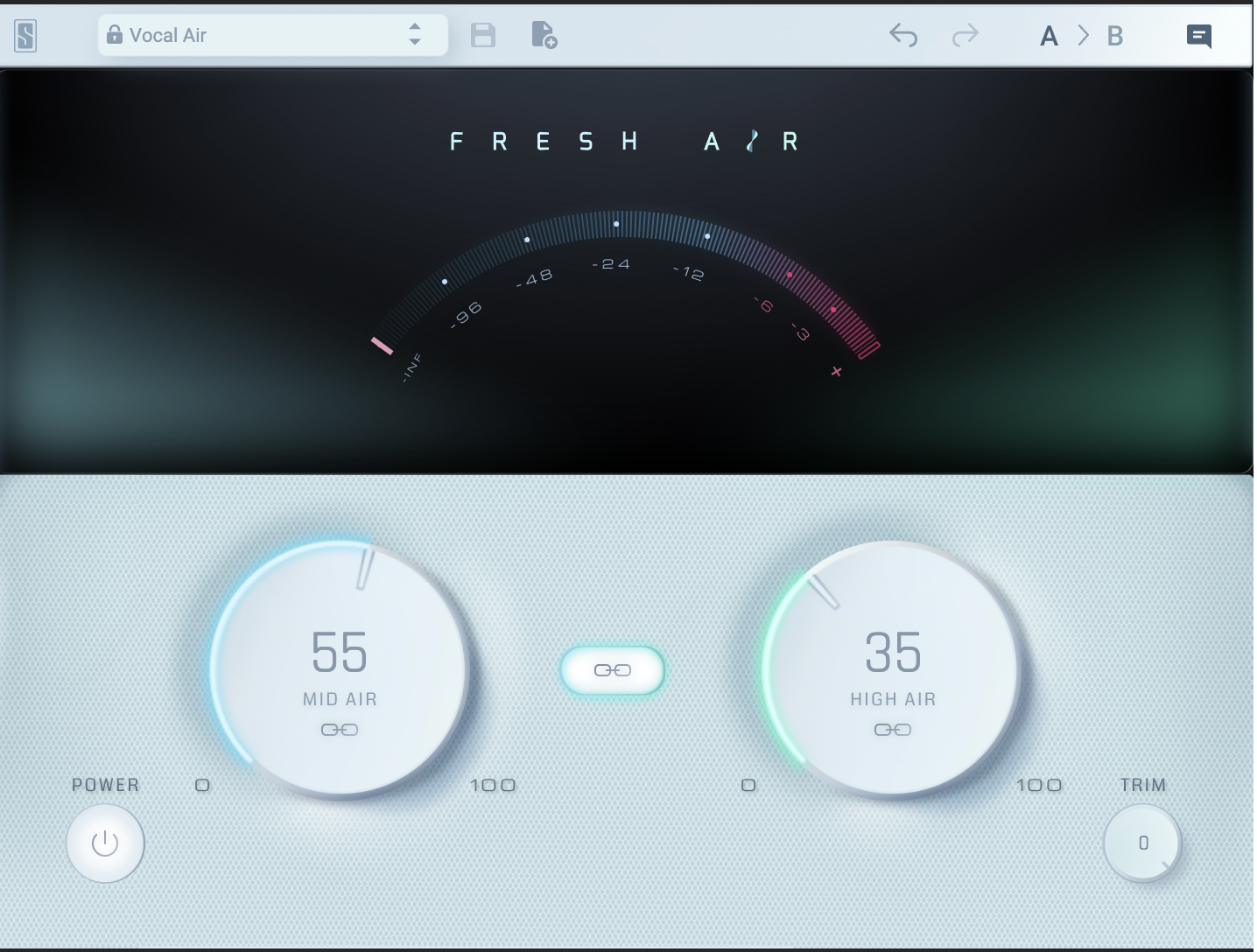
(Fresh-Air for added lighter sound)
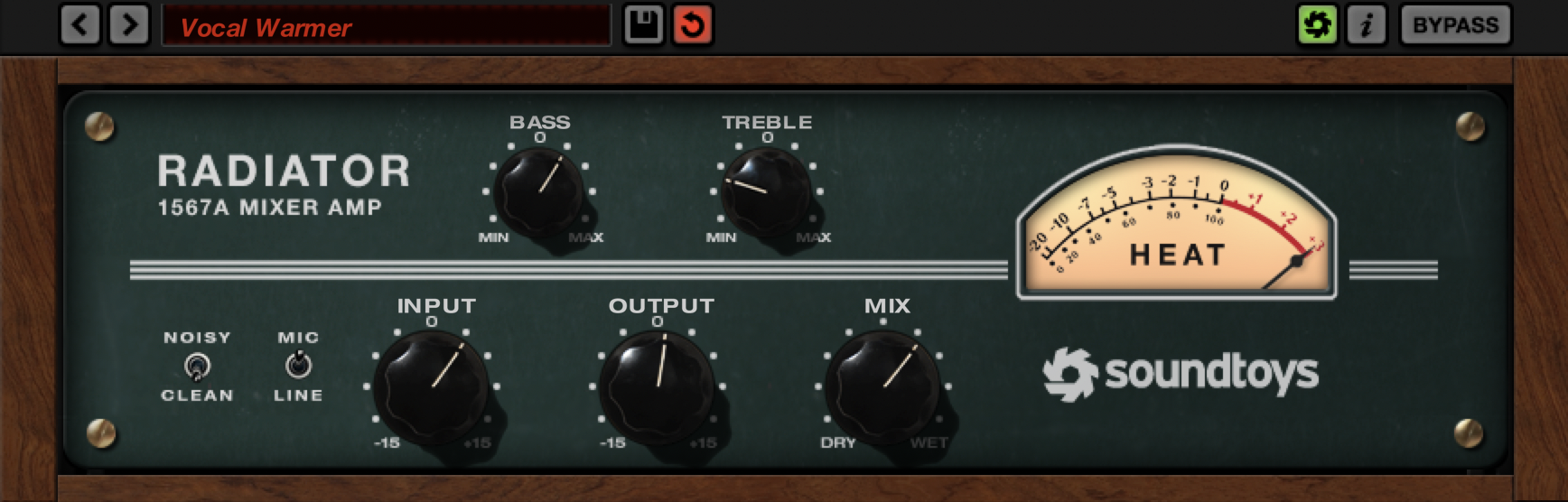
(Soundtoys Radiator on violins)
With vocals from Louie, Lily, Jack and a choir, there were a lot of layers. So, I had to pay particular attention to removing the breath noises and some timing editing was required.
For vocal saturation I stacked different plug-ins. Logic’s Chromaglow and Soundtoys Radiator created a warmer driven sound. The abrasiveness of Soundtoys Decapitator was used for more extreme saturation, such as in ‘Feel It’.
I did tune some parts of the vocals, particularly where multiple vocalists would sing together and there was some variation in pitch and consistency. Louie was very opposed to his vocals being tuned. There were, however, a couple of places where I felt it had to be done for the benefit of the song. I did it secretly, and the end result still sounded so natural that nobody needs to know!
I have encountered this ‘opposition’ with regards to a singer's vocals, several times throughout the major projects. I am still figuring out how to best navigate it.
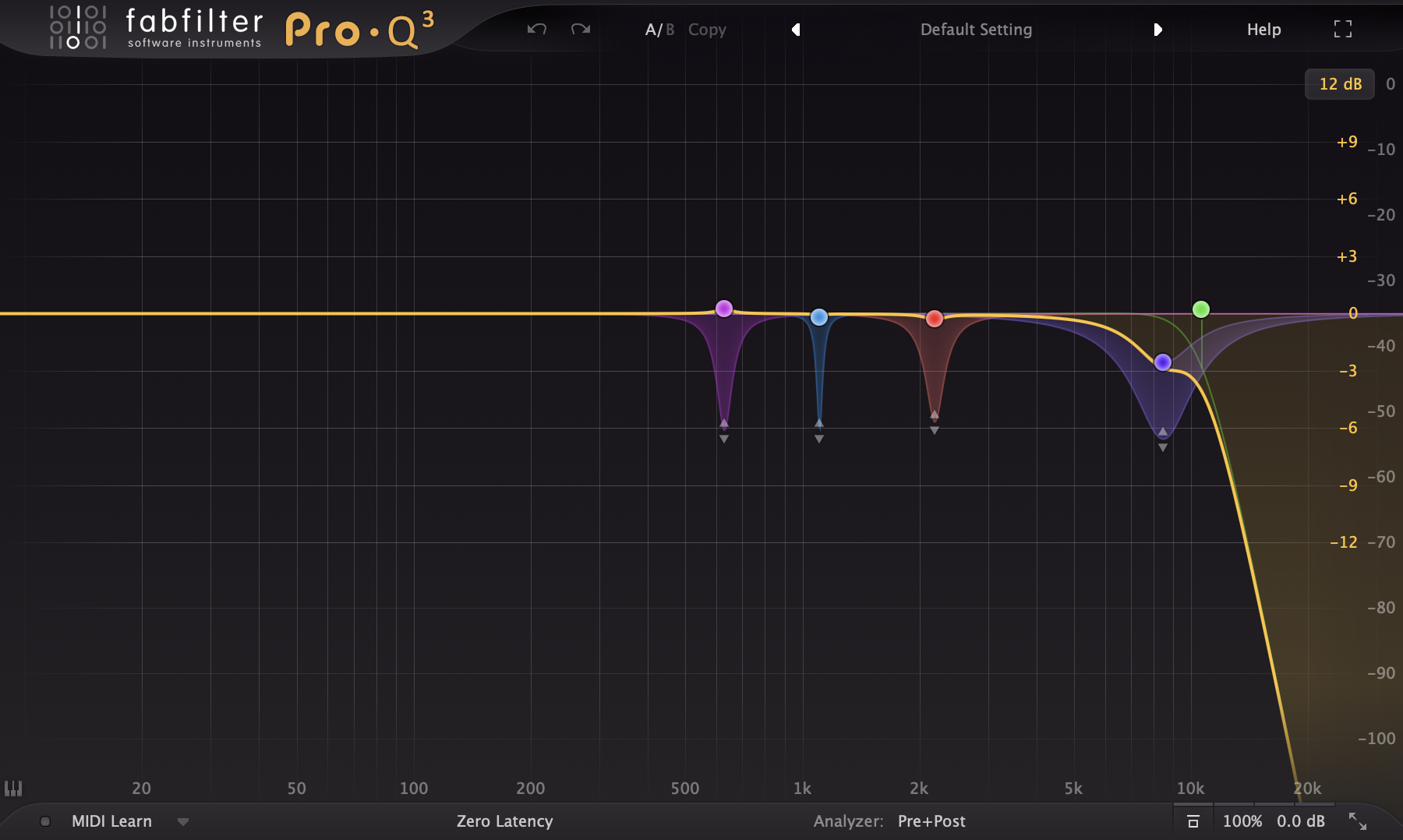
For the choir vocals, I experimentally low-passed on the entire group. I wasn’t expecting it to work well for the track, but it actually made the choir sit much nicer within the mix. They still filled out the vocal part of the arrangement, but stood out less. I also compressed further with Pro-C, to add more weight and even out the difference in dynamics between individual performers. I added reverb if I wanted a bigger and more elevated sounding group, like in ‘Can I stop The Rain’.
Keys
For the Mellotron I cut lows and removed mud. It needed to fill out the arrangement but not take up space in the low-end.
The Hammond organ contained a lot of resonant whistling frequencies, and they stuck out in the mix. I used dynamic EQ to target these. I used a Pultec style EQ to reduce high-end and increase warmth, then added Devil-Loc to the grouped microphones and saturated. This made the organ sound more powerful.
I only made gentle low-end cuts for the Yamaha CP80, where there were some unneeded sub frequencies.
I removed low-end from the Upright piano recordings, as well as some boomy frequencies that emphasised the ‘clunk’ of the sustain pedal. I used Fresh-Air for songs like ‘Please Don’t Be Long’, where I wanted a lighter, more delicate piano sound.
The Rhodes was pretty much left as it sounded at source, as I was really happy with the tones we had captured. There was some electric buzz from the Rhodes during the ending of ‘We Remain In Love’ and I removed it as best as I could using Izotope Rx. I have been assured by others that there is no buzz left, but I am convinced there is still a small amount there that I could not remove.
Violins
The strength of the playing varied a lot, so I had to compress them heavily to sit well with the digital Mellotron. I decided to only use the contact mic recording, as it had captured a fuller, and more constant, sound than the OC818. It didn’t really matter much in the end though as the violins would be buried within the Mellotron parts. I added Soundtoys Radiator to add some more warmth and drive while also reducing the treble.
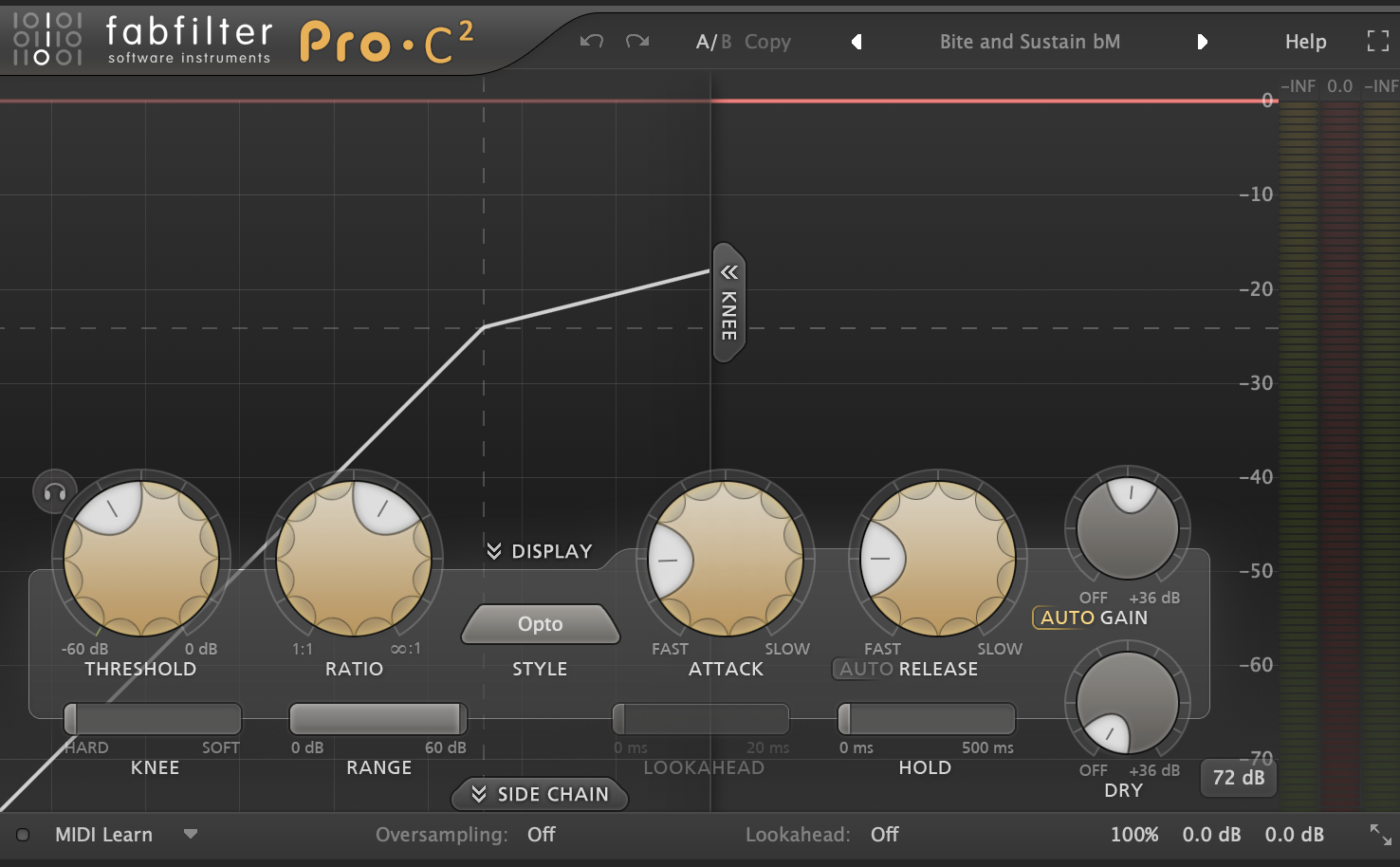
(Violin compression)
Mastering
Before exporting each song for mastering I ensured that there was a fairly similar balance of low and high-end across every song. This would save me having to make large EQ moves during the mastering. I also ensured that each track sat round -12dB on the master bus before exporting. This would leave me enough headroom while mastering and allow me to easily reach the desired loudness.
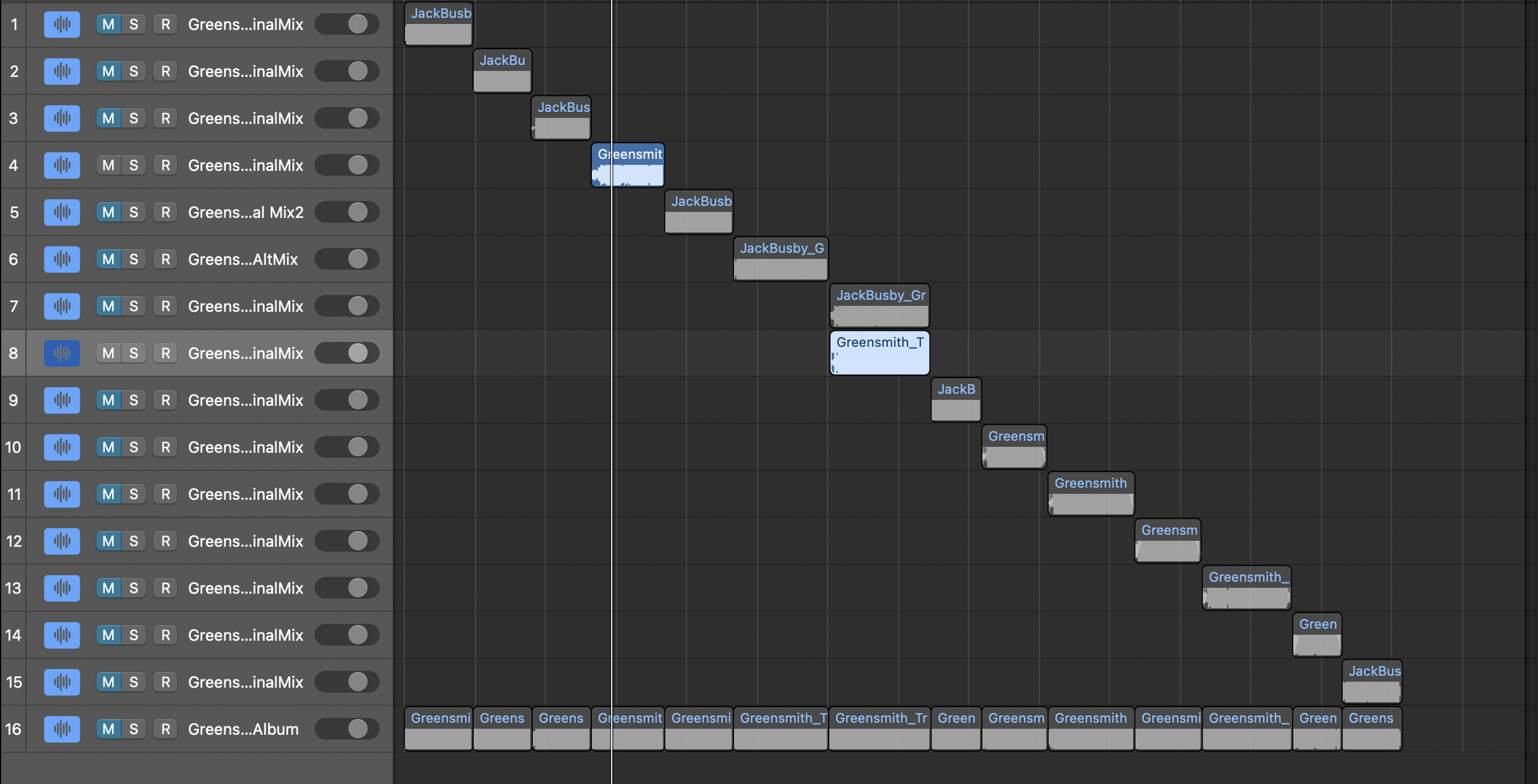
(Mastering session)
Pultec Style EQ
I like to use Logic's Pultec style Vintage Tube EQ, to make broader boosts and cut on the overall mix. This allows me to match the EQ across the album, for cohesion.
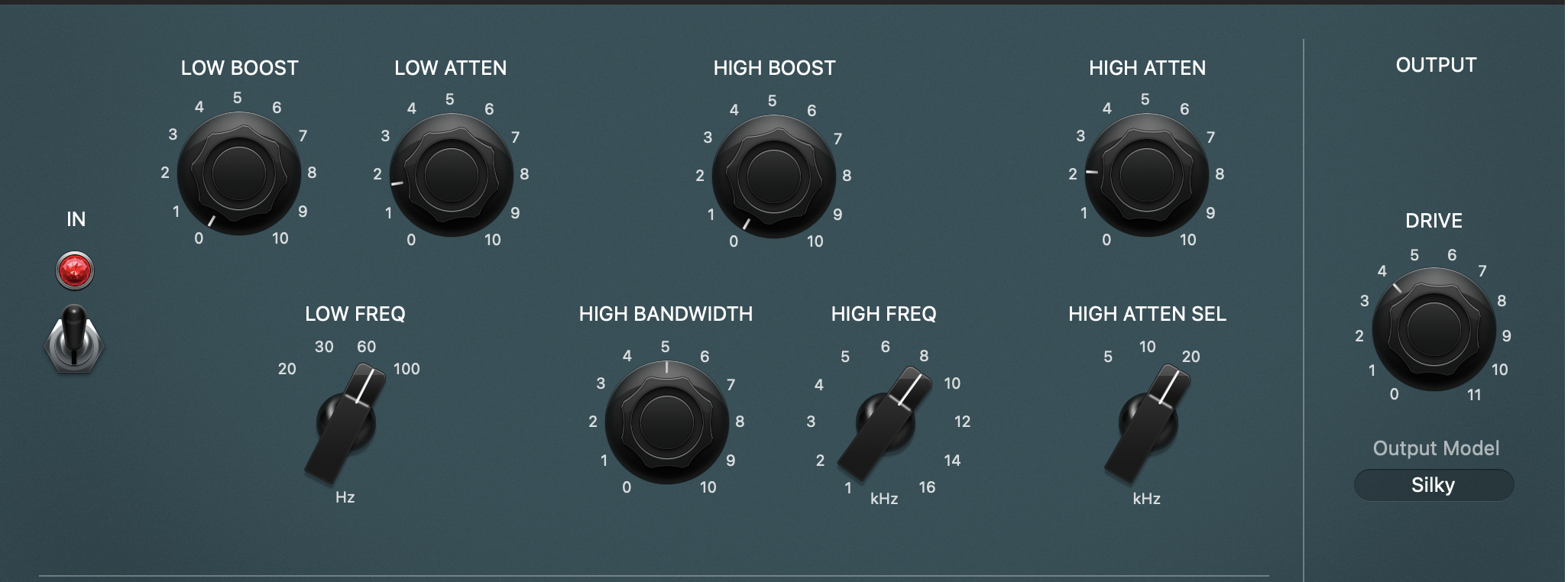
(Logic Vintage Tube EQ)
UAD Capitol Mastering Compressor
This compressor enhances the energy of the tracks and adds the final glue to the mix. It instantly made the songs sound better and more professional. This plug-in also allowed me to add saturation, colouring the mixes nicely and filling them out more. I was also able to mono fold to 150Hz, creating a strong and centred low-end. This freed up the sides, creating a wider stereo image, and I felt that it elevated the tracks.
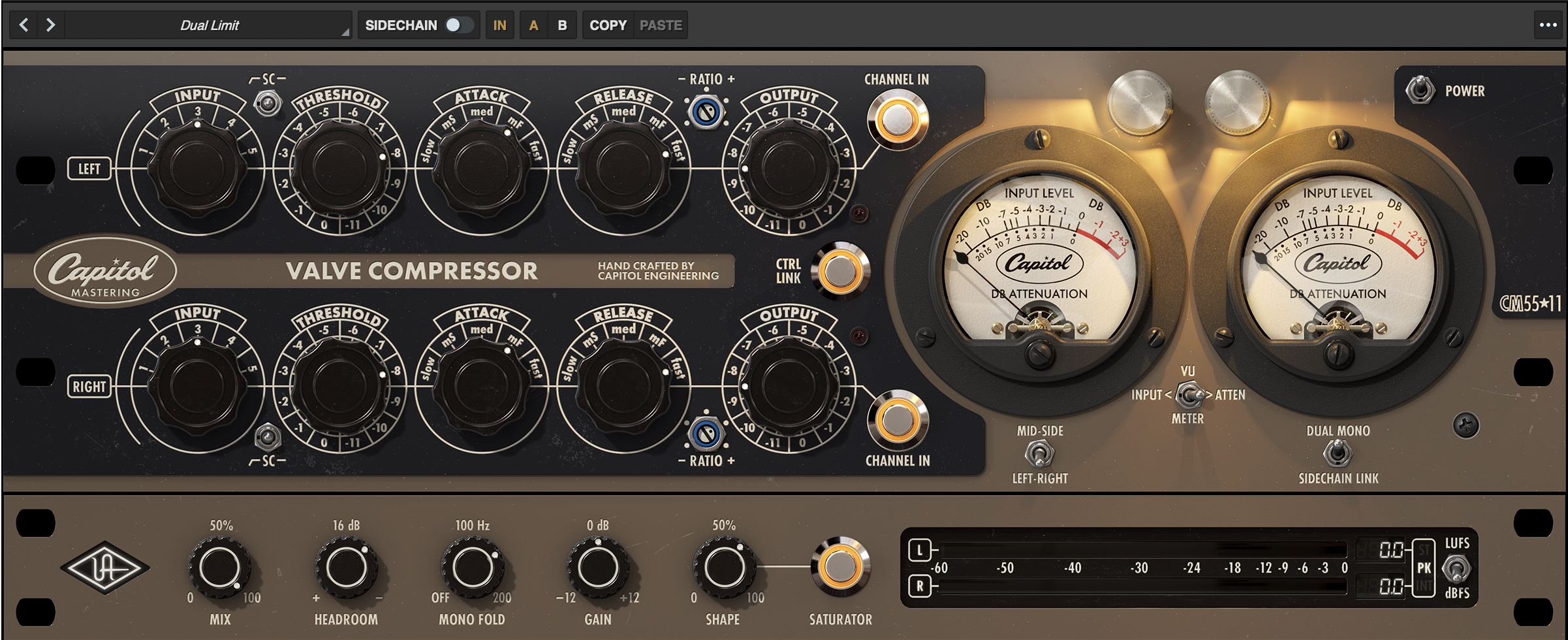
(AUD Capitol Mastering Compressor)
UAD Oxide Tape Recorder
This added a nice colour to the songs, and I also found that it added punch to the low-end. I drove the input on the heavier songs, to saturate the mix more and add more of an edge.
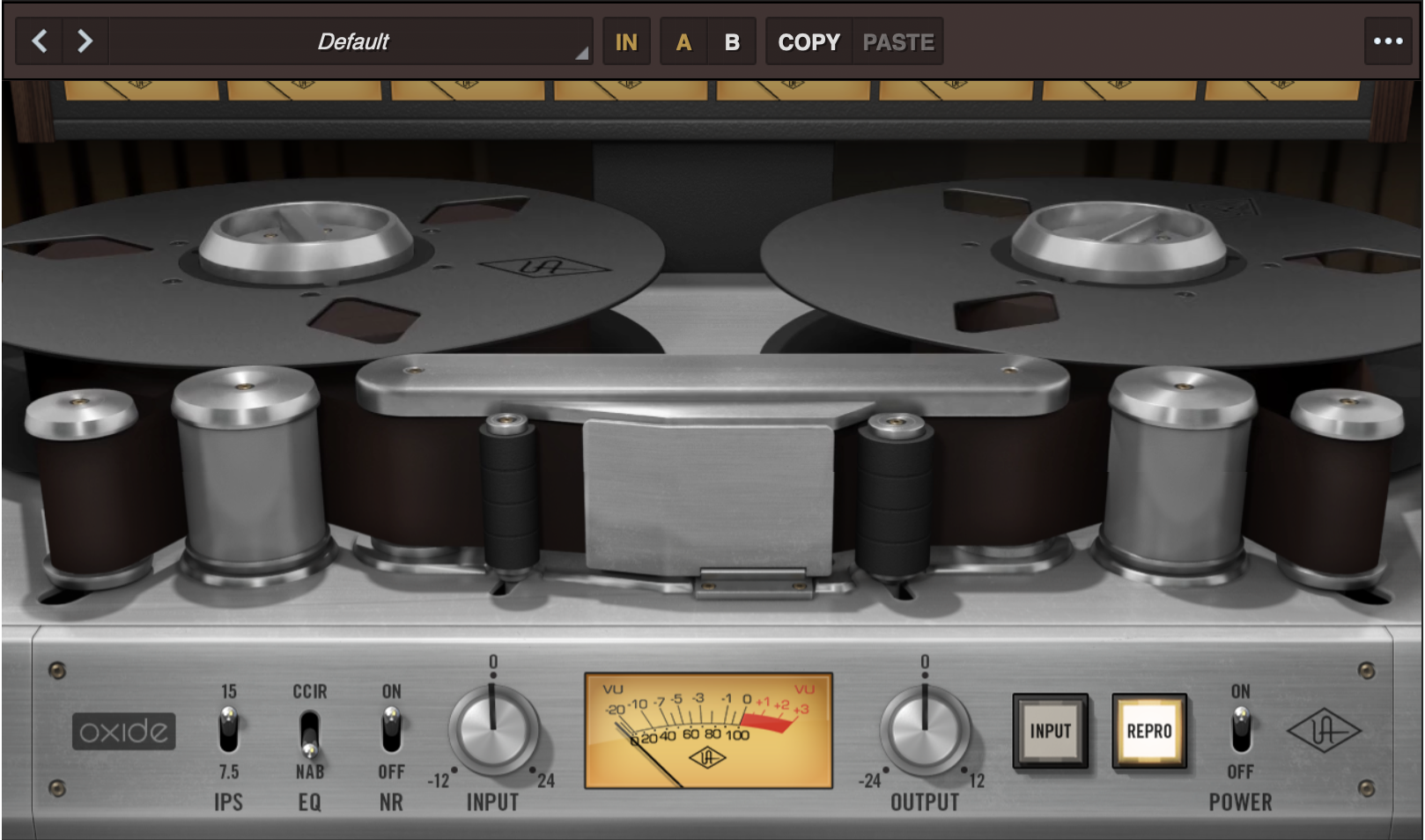
(AUD Oxide Tape Recorder)
Soothe 2
Soothe 2 focused on reducing harshness and resonant frequencies. It creates a nicer mix and listening experience. I was careful with using this plug-in though, as too much can make the mixes become flat or dull.
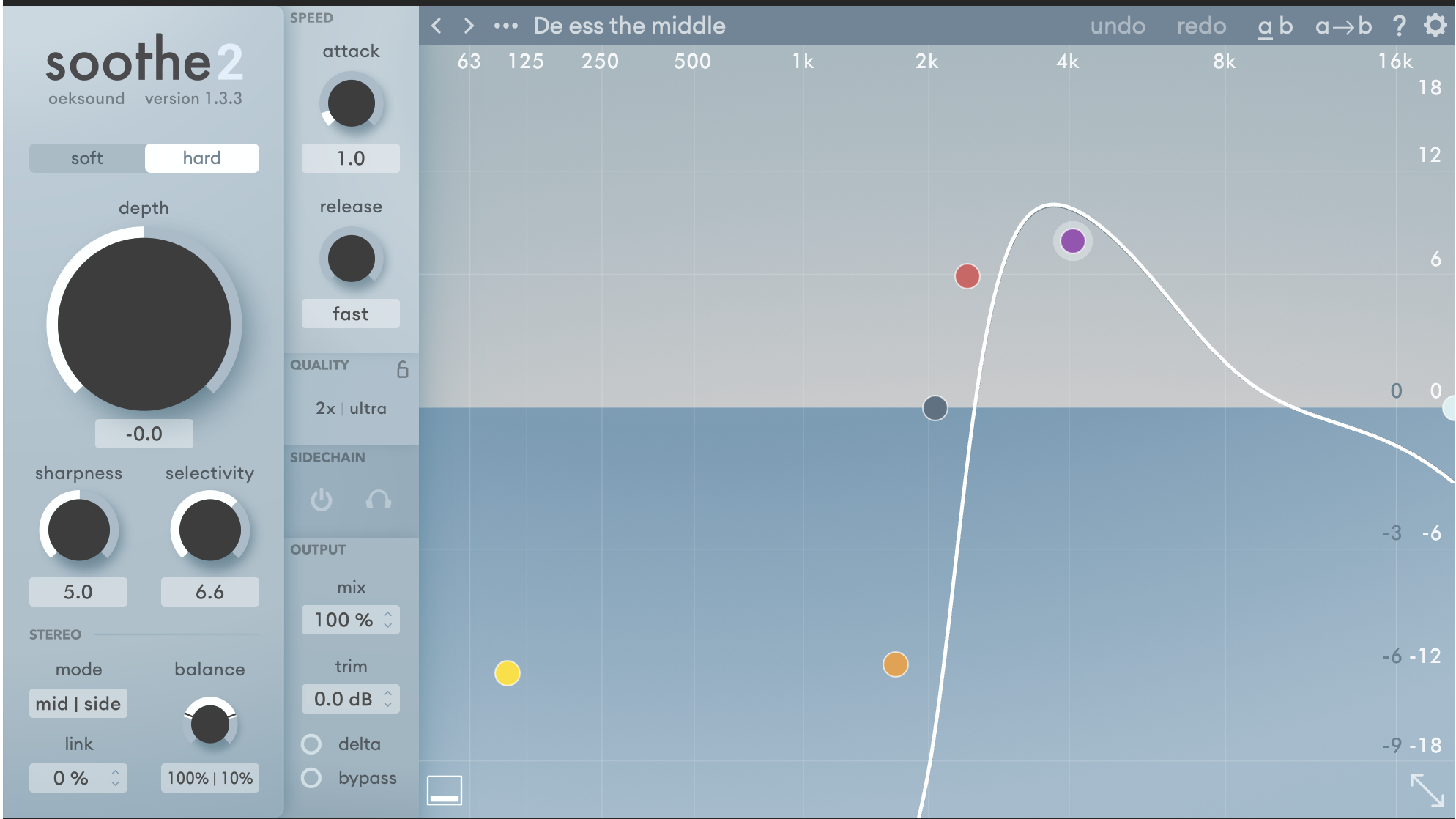
(Soothe 2)
Limiter
I'd used Fabfilter’s Pro-L on previous projects. Logic’s Adaptive Limiter better suited the style of music of this album. It sounded more transparent and natural. I aimed for the loudest moments in the album to reach -14LUFS. Some of the tracks sit below this, but, in the context of the album, it served the progression well. The album is intended to be listened to as one body of work.
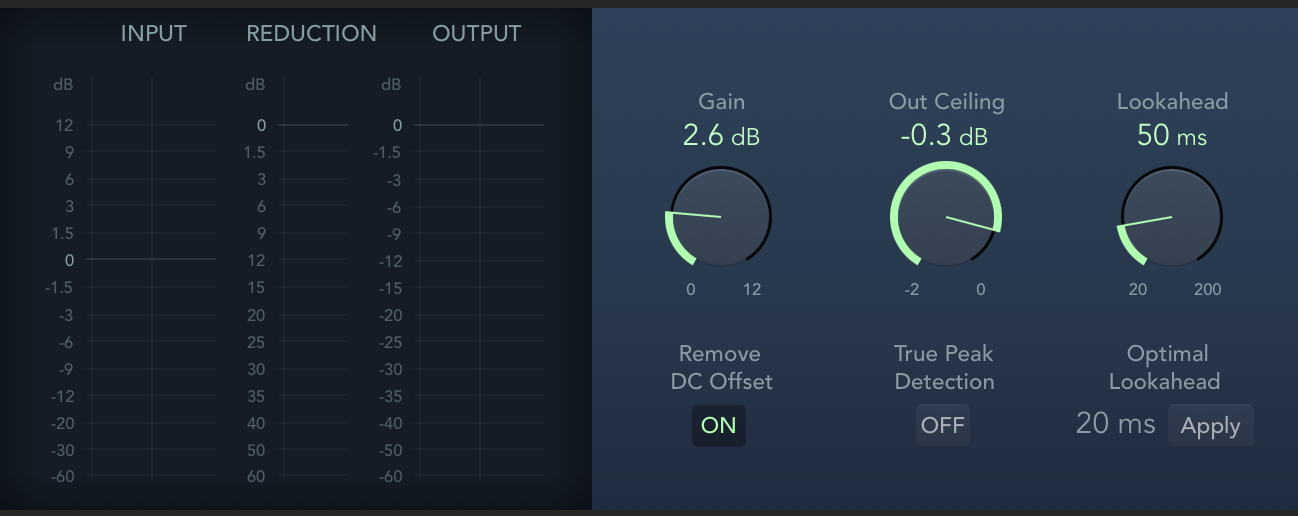
(Adaptive Limiter)
CRITICAL REFLECTION
This album was the largest musical project I have been a part of, to date. It had the highest workload of my major project and much of my time spent in the studios at university this year was spent working on it. The opportunity to produce, engineer, mix and master the entire album allowed me to use all of the skills I have developed during other projects and was, in some respects, the culmination of what I have learnt in four years of CM study. I still learnt many lessons in the process though, as there were several production management hurdles -
The album took seven months to complete, from the first recording session to sending off the masters. It didn’t need to take this long. I was probably too relaxed with the recording session frequency in the early stages. Looking back, with all the other shorter projects I was also doing at the time, it was probably easier to concentrate on them rather than the daunting task of a full album. I was also struggling, in the earlier stages, with vague and random feedback from Louie and the other band members. Feedback like ‘something feels off’ just wasn’t helpful. Progress was slow and I began to lose motivation. After discussions with the band, we turned this around though. The decision to approach the album in smaller chunks at a time helped massively, as did getting the band to clearly identify problems and improvements, and make lists of them to refer and work to. If I have the opportunity to do an album again, I will record on consecutive days as much as possible. It was when we seemed to be most creative and productive, and achieved the best results.
Our lead guitarist, Jack, getting a fulltime job and becoming hard to contact was a test of patience and perseverance. It created a lot of stress, and I worried at times that the project would never get completed. I didn't want to nag him too much, or just coldly replace him, but the project was the priority. I had to dig deep into my interpersonal skills, with Louie's help, and we eventually came to a very workable compromise. Getting Finn to session for the remaining songs was probably one of the best decisions we made for the album.
Louie moving to Liverpool before the album was finished was another unexpected bombshell, and compounded the stress and worry even more. Especially as we hadn't even recorded Louie's vocals yet. We got them done, relatively last minute, but I can definitely say I now have some experience of working under pressure. Not having Louie closer also meant I had to make some creative decisions without his guidance. I felt uncomfortable with this, without his collaborative second opinion, but Louie trusted my judgment. If anything, it gave me more confidence in trusting my own judgment too.
Overall, I think I successfully managed the multiple musicians involved in this project. It was a challenge though. Recording this album has shown me that I didn't fully appreciate how much work and time would be involved, on a technical and interpersonal level. I now know that for future large projects, clear planning, communication and efficiency are key in order to relieve the pressure and allow the creative aspects of recording to be put first.
Recording the keys with Evelyn and Louie was a highlight for me. Having everything set up, to play and record ideas instantly, felt like one of the most creative and collaborative moments of the album.
I was particularly pleased with the vocal results. I think the vocals we have recorded are really strong and fit the vibe we wanted. They aren't over-produced, and are raw, authentic and natural. I have always struggled to communicate feedback on vocal performances, as I'm not a singer. Working with Louie made this much easier, as we are friends and can be more frank and honest with each other without being offended. This more open experience has taught me a lot with regards recording and mixing vocals though, which I can take to future projects with other artists.
On a personal note, I also really enjoyed both playing on, and producing, this album. I feel I've played a larger role in the band than I have previously, just being the drummer. I’ve been able to combine my own visions with Louie's, and progress the band’s sound into a new era.
I am very happy with the finished album, and I’m proud of what we’ve achieved. I feel that I managed to create and deliver a record with Greensmith that represents the band's sound and different influences well, achieving my goal of elevating the quality of production from Louie’s previous releases but maintaining Louie’s roots and distinct sound. This album feels like the band at its fullest form and it has been appropriately self-titled Greensmith.
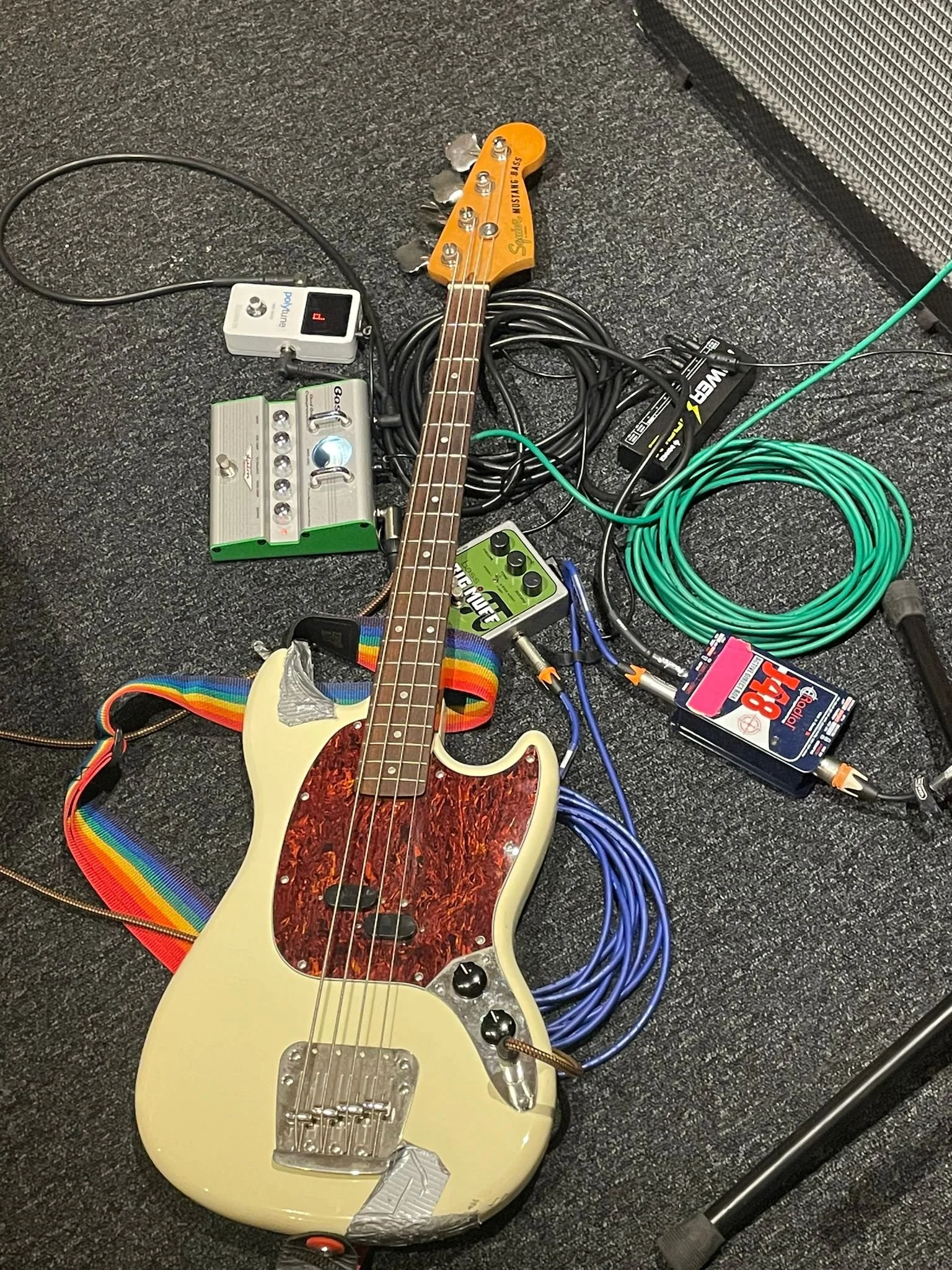
On ‘Have You Ever’ and ‘Watch Me As I Fall’, Louie added additional bass layers using a Rickenbacker recorded using just a DI. I high-passed this Bass using the desks EQ and also boosted the midrange. I then compressed heavily using a D-Comp Limiter. This gave a really honky squished tone. Louie’s idea behind these was to act more as a guitar, referencing the tones from a Bass VI used by The Beatles. These Rickenbacker parts are a highlight on both of these tracks for me.
Guitars
We wanted Louie and Jack to go through separate amp setups. The idea behind this was that each guitarist would have their own signature sound which would create distinct differences between their parts on the record, but at the same time sound like a band playing together.
Louie’s rhythm parts would be using his Epiphone Casino, Gibson SG and his Telecaster. The amps would predominantly be a hand wired Vox AC30, or a Fender Deluxe Reverb.
Jack’s lead would be a Gibson 355, also using the Vox AC30 but with a Marshall JCM too.
For Louie’s main rhythm, we had the AC30 quite driven on the gain to create a crunchy and flattened sound. I began by placing an M160 ribbon microphone quite close to the speaker. However, I wanted a more natural guitar sound for the album. So, I started placing microphones much further back from the amps, generally in a position where someone would sit to listen to it. I felt this captured a more natural and realistic image.
(Guitar tracking for Hurricane)
During a lull in recording, Louie discovered a YouTube video about the Audio Kitchen Big Trees preamp pedal. It is a tube amp-style pedal which can be used either as an amp on its own, or as a preamp pedal. By luck, the university studio had one, and I had wanted to try it out for a while after seeing Biffy Clyro use one when I'd seen them live that summer.
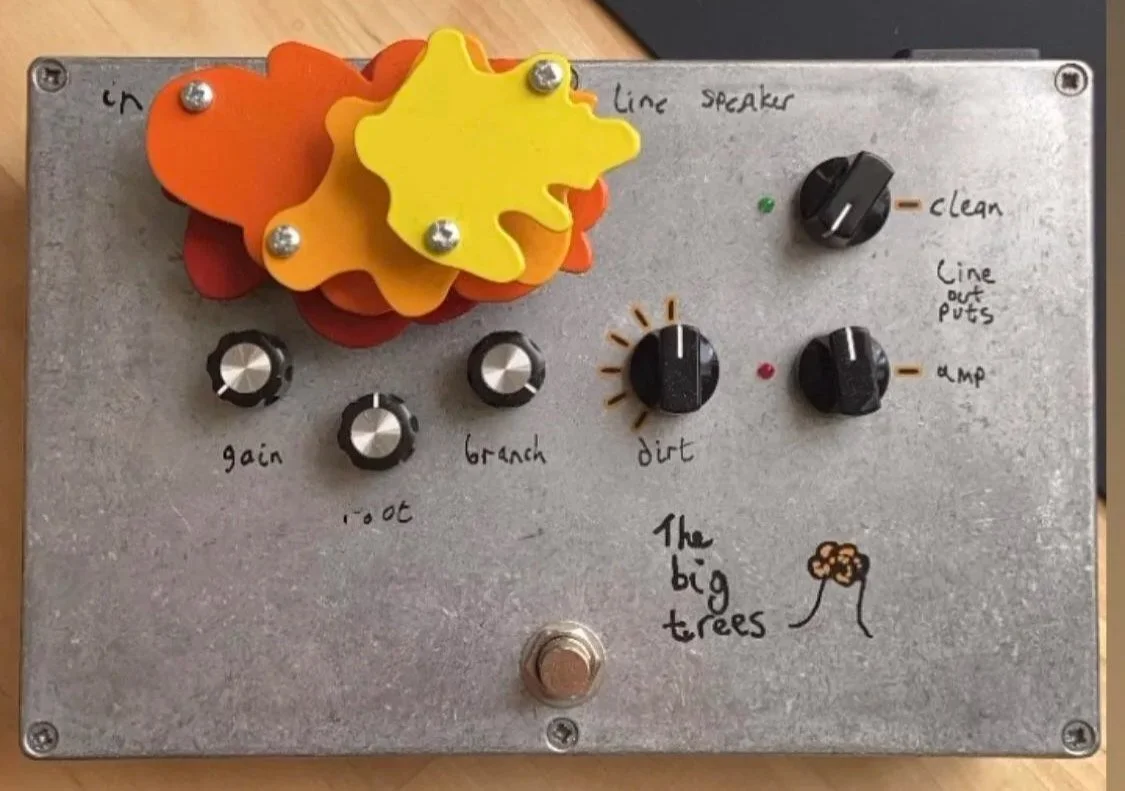
We experimented and found that running the Big Trees directly into a small cabinet gave us the sound we wanted best. It is quite a low watt amplifier, so low volume, but I actually think this helped the sound. It kept the playing more dynamic, rather than sounding pushed all the time. This ended up being the sound we used with the Telecaster.
I actually began choosing smaller recording amps later on in the recording process, as I was finding they gave good tones faster, with a much simpler setup. These amps also worked really well on the more emotional slower songs, giving a more intimate feel than the bigger and louder amps. I mic’d these smaller amps using an OC818 condenser, positioned close to give the smaller, intimate feel. The mic sounded very natural and open on these amps. The Magnatone Starlight and Audio Kitchen Big Trees produced my favourite tones on the album.
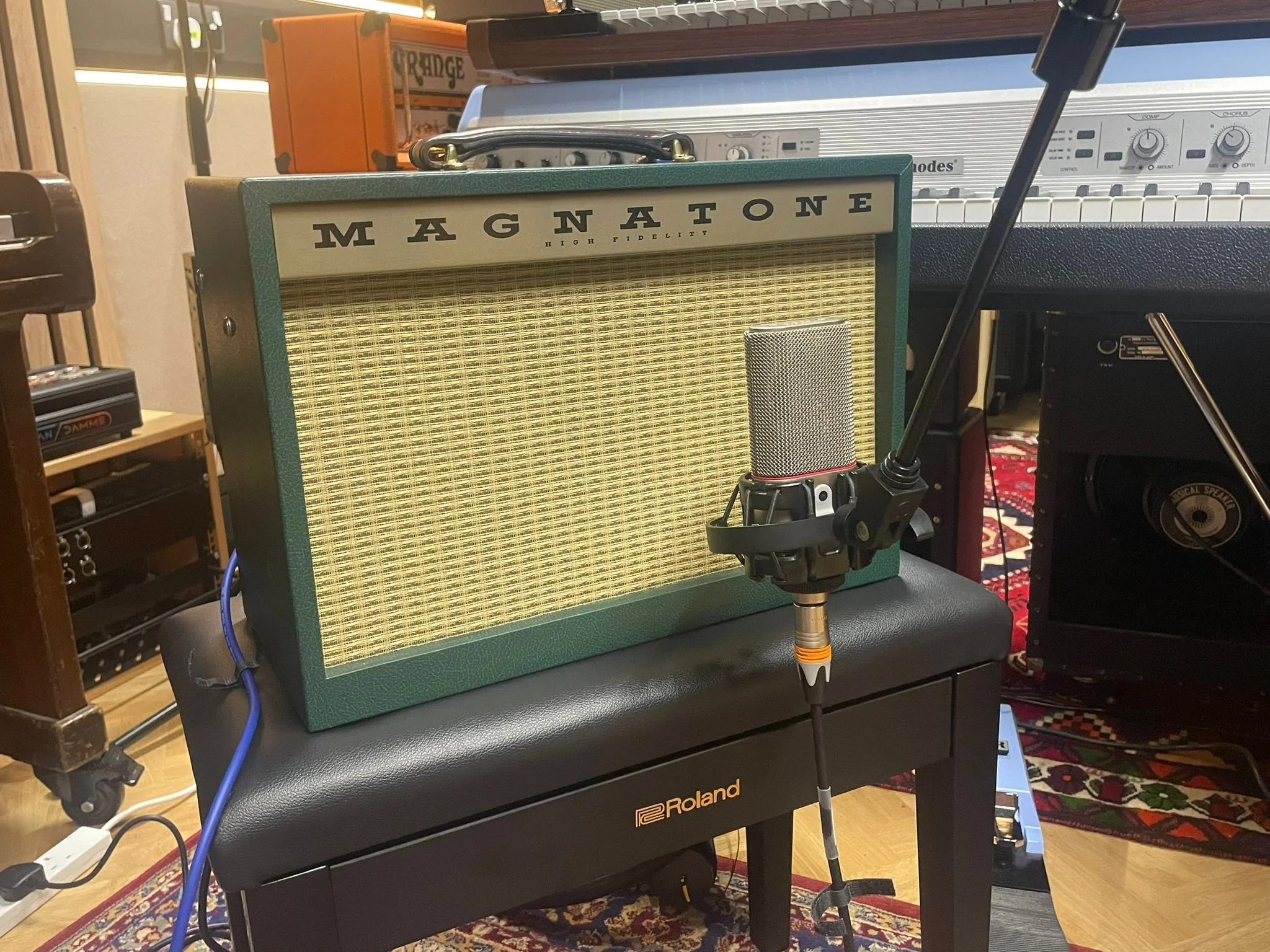
We also experimented with the Tape Echo outboard unit, in The Hive, on ‘Take Me Where You Lay’ and 'Please Don’t Be Long' to create ambience and a more emotional sounding guitar.
Louie used his Telecaster mainly for additional layers, rather than the main rhythm, and it usually consisted of strummed chords and smaller flourishes. We also combined a Holy Stain reverb and fuzz pedal, only using the spring reverb setting for certain sections. A standout use of the Telecaster was in ‘Hurricane’. When played live, the intro of ‘Hurricane’ is usually played with muted chords. I wanted to try something more interesting for the album recording, like an arpeggiated plucked part. Louie really liked this idea, and once we figured out the part together, it enhanced the song and added something much different to what we have when performing it live.
Jack’s guitar leads are often very full on, with a lot happening. In recordings they could sometimes overpower the arrangement. To avoid this, we had a rethink and rearranged some of Jack’s guitar parts, focusing more carefully on exactly what he was playing and where those parts sat within the songs.
Jack started working full time, so it was difficult to arrange studio sessions around his availability. We agreed for him to first record guide tracks at home for me and Louie to use for arranging the guitar parts properly, then we would record the final takes in the studio later. The aim was to make sure the guitar parts fitted the songs in the way we wanted before committing to the final recordings.
I asked Jack to also record DI signals alongside his guitar takes at home. This meant that if any of the performances recorded at home were particularly strong, we could potentially re-amp them later to avoid replaying them in the studio.
When it came to the studio recordings, Jack used a dual-amp set up using a Vox AC30 and a Marshall JCM800. We mic’d both of these with OC818 and M201 combinations, positioned close to the speaker and nearer the centre of the cone for more clarity. Using his ABY pedal, Jack could switch between amps or play through both simultaneously. We also added in the Big Trees pre-amp pedal to Jack's signal chain for an extra gain boost and different colour. The plan was to have different stages in the guitar's tone for different sections of each song, based on the energy and dynamics of that section. This would ensure that Jack’s tone matched the dynamics of the song better, instead of being at 100% all of the time.
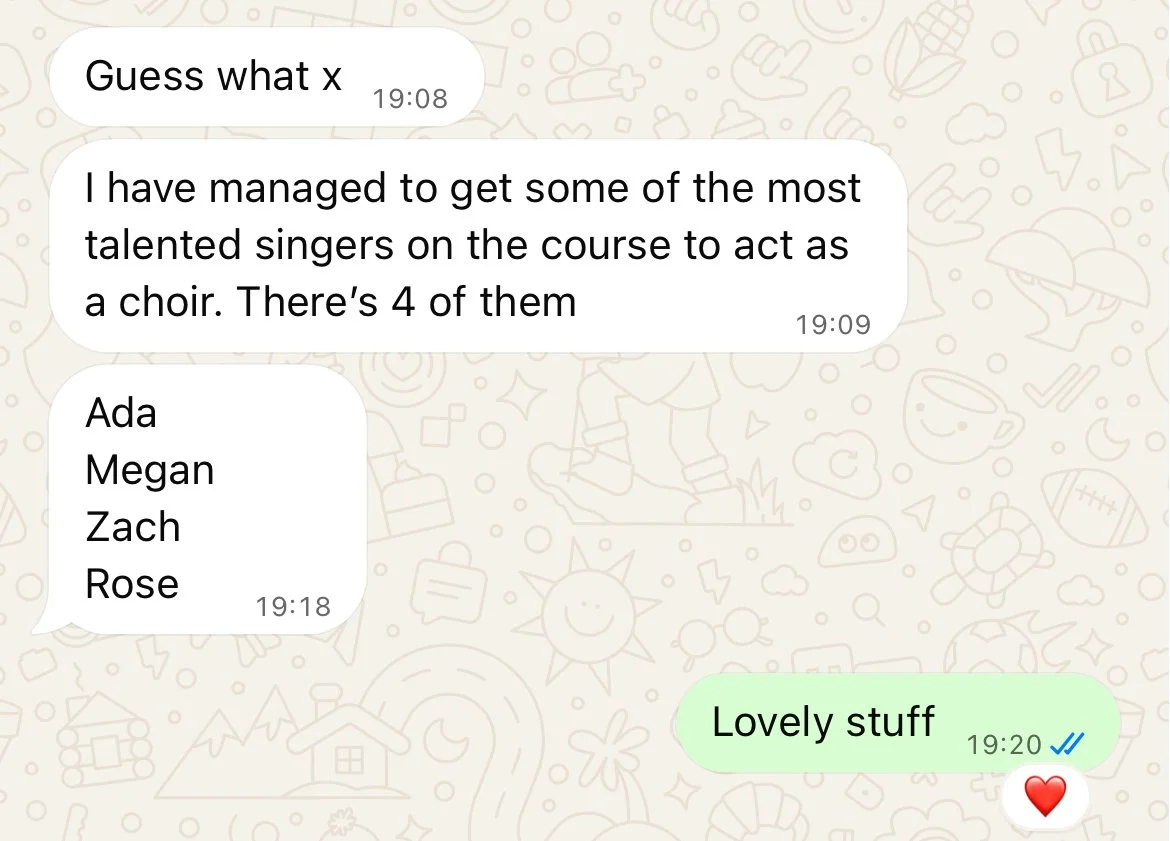
(Choir surprise)
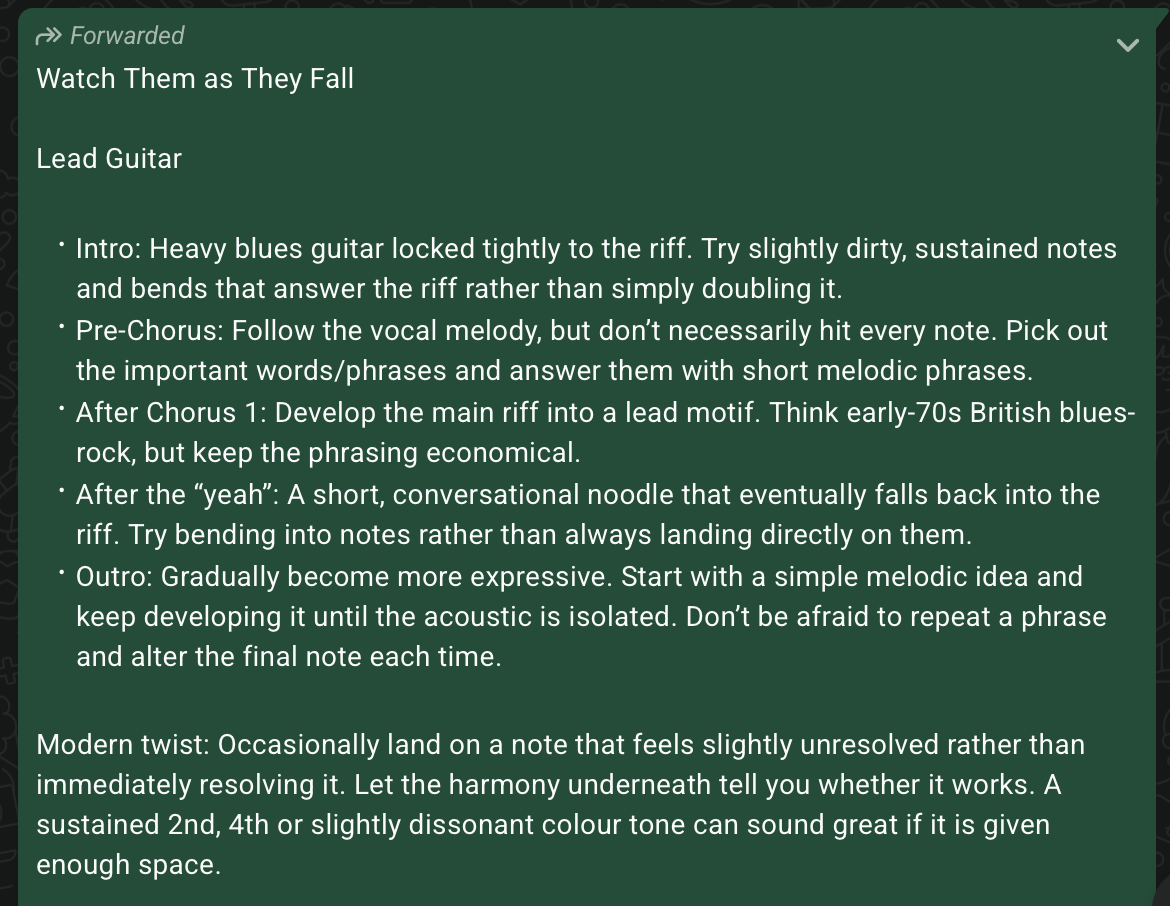
(Detailed instructions from Louie)
Finn’s sessions we recorded in Music Lab’s. We used a Marshall SV20H head with a 2x12 cab and I mic’d using one OC818 condenser positioned close to the speaker and slightly off center from the cone, for a smoother sound.
We set up so that Finn could play from the control room. This was important as I would need to be able to communicate with Finn, as most parts were being written during the session. Finn’s playing suited each song perfectly and I was really happy with his session work.
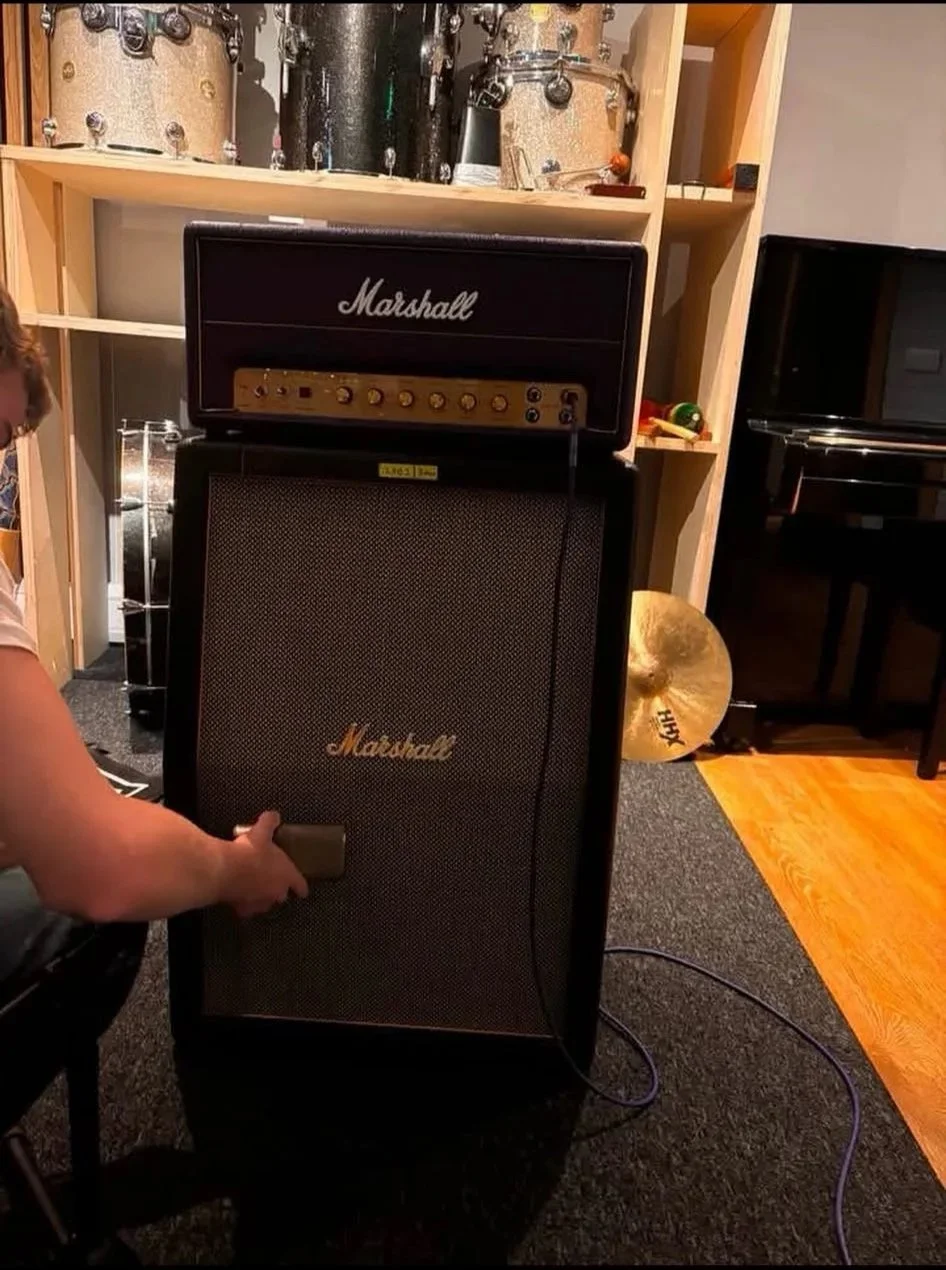
For the acoustic guitars, we wanted to bring back some of the bedroom produced aspects of Louie’s earlier music, and so did some recording outside of the studio. Some tracks were recorded in a small piano practice room, while others were by Louie actually at home. The recordings were a lower audio quality, or course, but I felt this added a lot of character to the tracks. We used the acoustic guitars as an additional layer, and they helped maintain the home produced aspect that is such an important part of Louie’s original sound.
On songs where acoustic guitar was the main focus, we recorded in The Hive. I used a mono Coles 4038 for this, as I felt the acoustic guitars didn’t need to be super wide in the mix. I compressed on the way using a D-Comp limiter. This worked well for some tracks, however on ‘Take Me Where You Lay’, in hindsight, I feel that I overcompressed. This specific track needed to feel more gentle and open, but the guitar became too squashed and intense with the compression. Louie didn’t mind this compressed sound though, so it was kept for the final mixes.
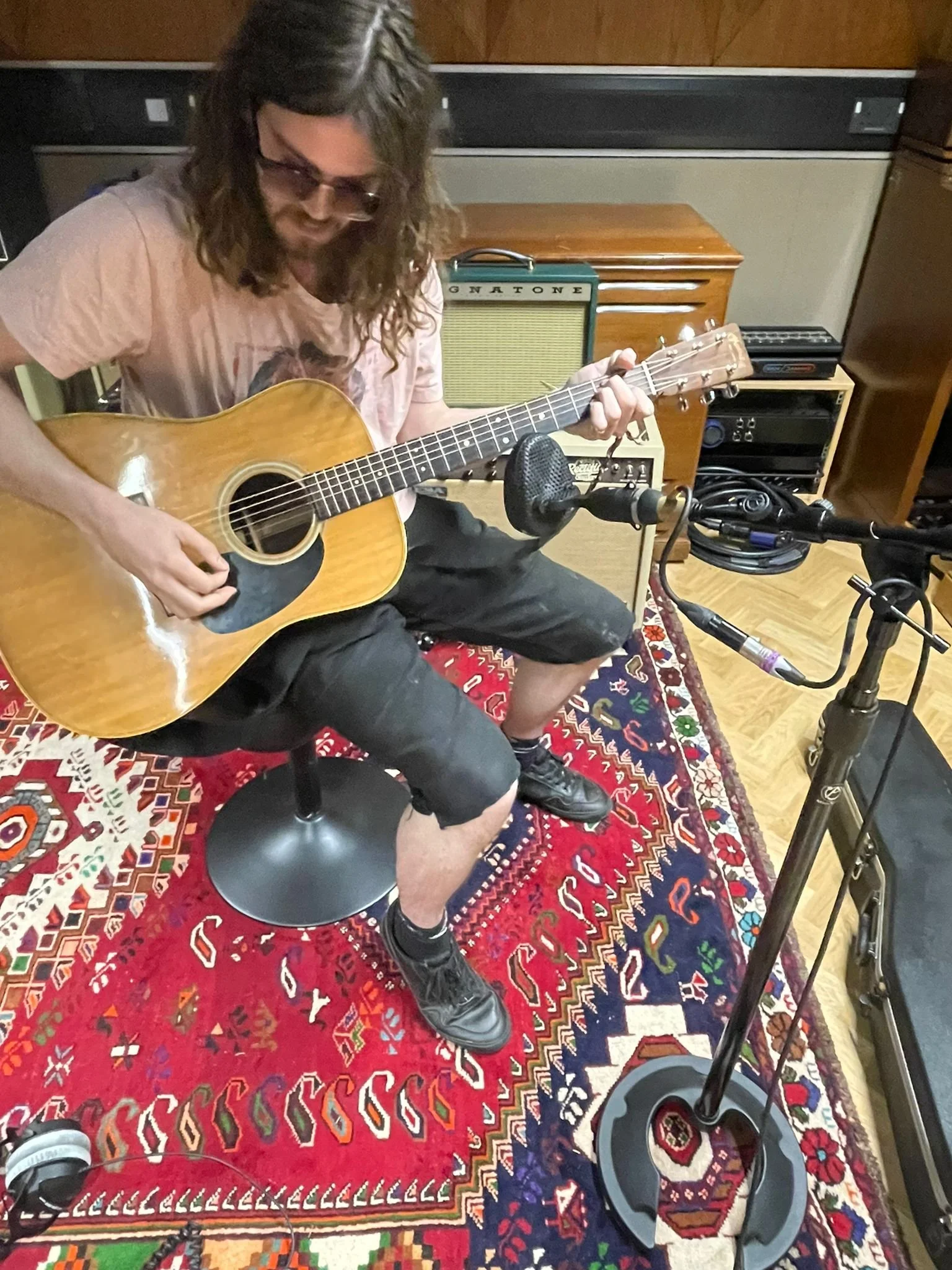
(Acoustic guitar studio recording set up)
Keys
To fill gaps and add extra layers to the arrangements, Louie wanted to include a range of different, vintage and interesting, keyboard sounds. Throughout the album are featured a Hammond Organ, Upright Piano, Yamaha CP80 electric keys, Mellotron and a Rhodes.
To record all of the keys I booked consecutive whole day sessions in The Hive. This meant I could save a lot of time by setting up the entire space with every instrument and microphone, and leave it set up. It also made the space more creative, as Evelyn (keys) could switch between equipment with each idea and instantly start recording something.
The set up was -
Upright piano - Two BM9 ribbon microphones positioned as a spaced pair. These are my favorite microphones to use on piano as they sound warm and really natural. This piano featured on softer tracks such as ‘Please Don’t Be Long’, where a more classic sound suited best.
We had demo’d some of the piano parts during pre-production, in order to have them well planned before the sessions. We used two cheap condensers in a piano practice room. Some of the demo recordings actually made it into the final mixes, as we liked the rougher feel to the recording, calling back to Louie’s bedroom DIY roots.
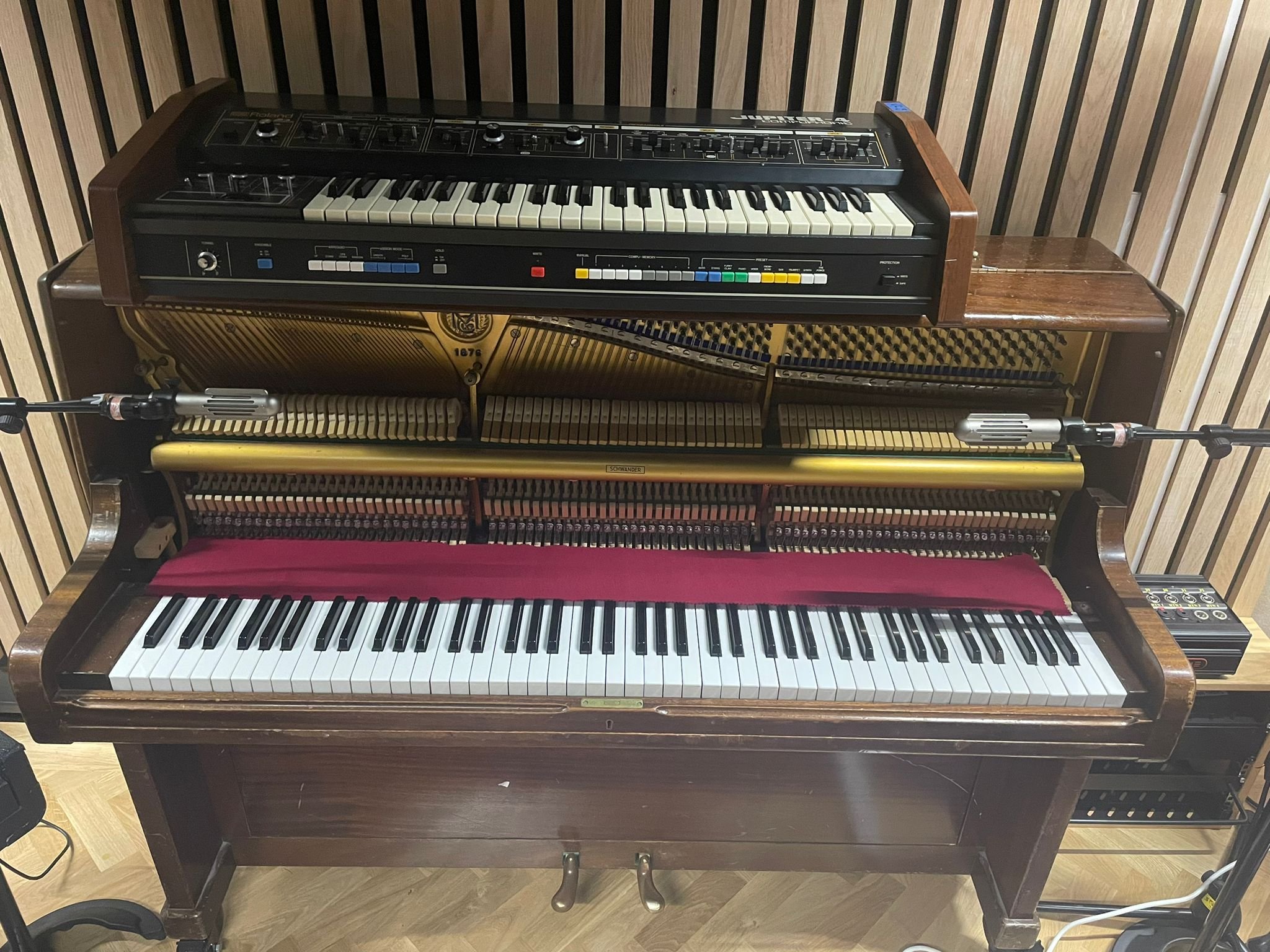
Yamaha CP80 - Two DI boxes for the left and right channel outputs on the CP80. This brighter, punchier electric piano sound featured on most of the higher energy tracks. It cut through well in the mix and also gave a more percussive element than the upright piano. The DI’s were really useful for playing the tracks out loud in the room instead of having to stick to headphones. This encouraged Evelyn to play with more energy, as if playing live at a gig.
(CP80 tracking for Watch Me As I Fall)
Mellotron M400D - This is a modern, digital version of the original tape based Mellotron. It produces the same sounds as the original but without the nightmare of using a tape-based instrument. However, having access to an original would have been an amazing experience to have had.
I used two DI boxes, for the individual A and B channels. The 400D allows mixing between two sounds. Recording these sounds individually gave me control over the blend during the mixing stage of the album. Halfway through Evelyn's sessions the Mellotron began to produce a significant amount of hiss, more than what I would consider reasonable tape emulation. I tried switching XLRs, DI and channels but couldn't fix it. I am unsure if this was a fault with the Mellotron, or just a setting that had accidentally been turned on. I decided to continue to record with the hiss, as I could remove it later using Izotope RX spectral repair and hiss removal.
(Checking Mellotron against acoustic guitar in We Remain In Love)
Rhodes - We used one DI. I really enjoyed the sound of the Rhodes, especially on some of the more relaxed tracks like ‘Have You Ever’. We drove the input of the Rhodes for that track, making each note slightly distorted. I then saturated it further using a Neve Tape Emulator. We then used the Space Echo in The Hive to create a trippy, but also quite dreamy, sound. I enjoyed experimenting with sound design during these keys sessions, using outboard gear like Tape Echo and Rev7 Reverb.
( Rhodes Tape Echo for Have You Ever)
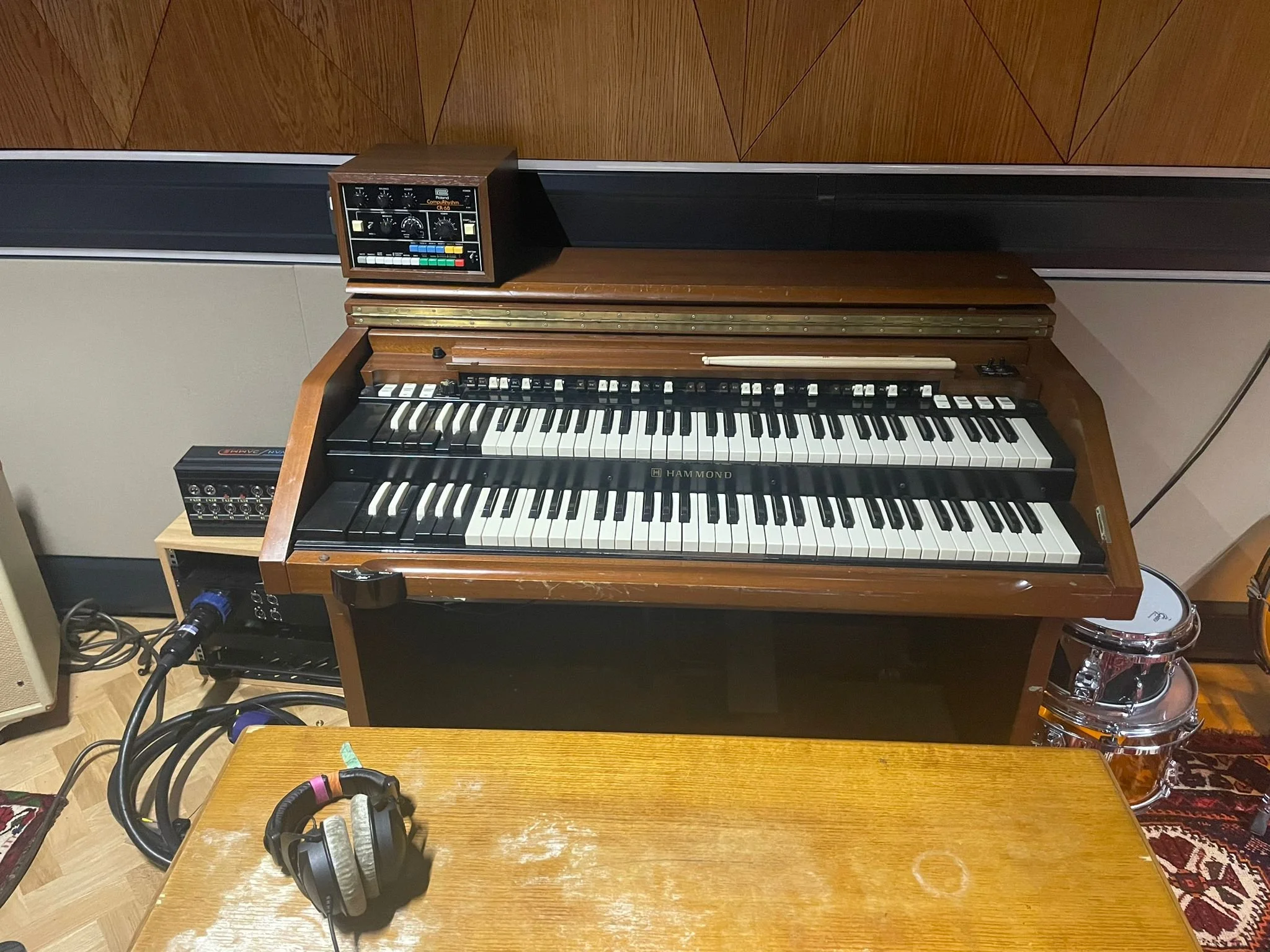
Hammond Organ - To record the Lesley Speaker that the organ plays through I used two Coles 4083 ribbons positioned either side of the top of the cabinet for the high-frequency treble-horn. I then positioned a Neumann U87 at the base of the cabinet to capture the low-end woofer horn. I also used a Coles 4038, as a room mic, on some tracks where the organ didn't need to sound so upfront in the mix. I had never recorded the iconic sounds of a Hammond organ before. It was very exciting.
Vocals
For Louie’s main vocals, we used an Neuman U87 condenser microphone going through a Neve preamp, with a small amount of compression on the way in using an LA-2A compressor. The U87 is a very natural sounding microphone and I felt it captured the rasp, tone, and dynamics in Louie’s voice really well. It captured a very honest recording of Louie’s voice, as it naturally sounds, which is important because Louie’s voice is very unique and a huge part of the overall sound. Louie writes and sings the songs, and the band is very much centred around Louie Greensmith.
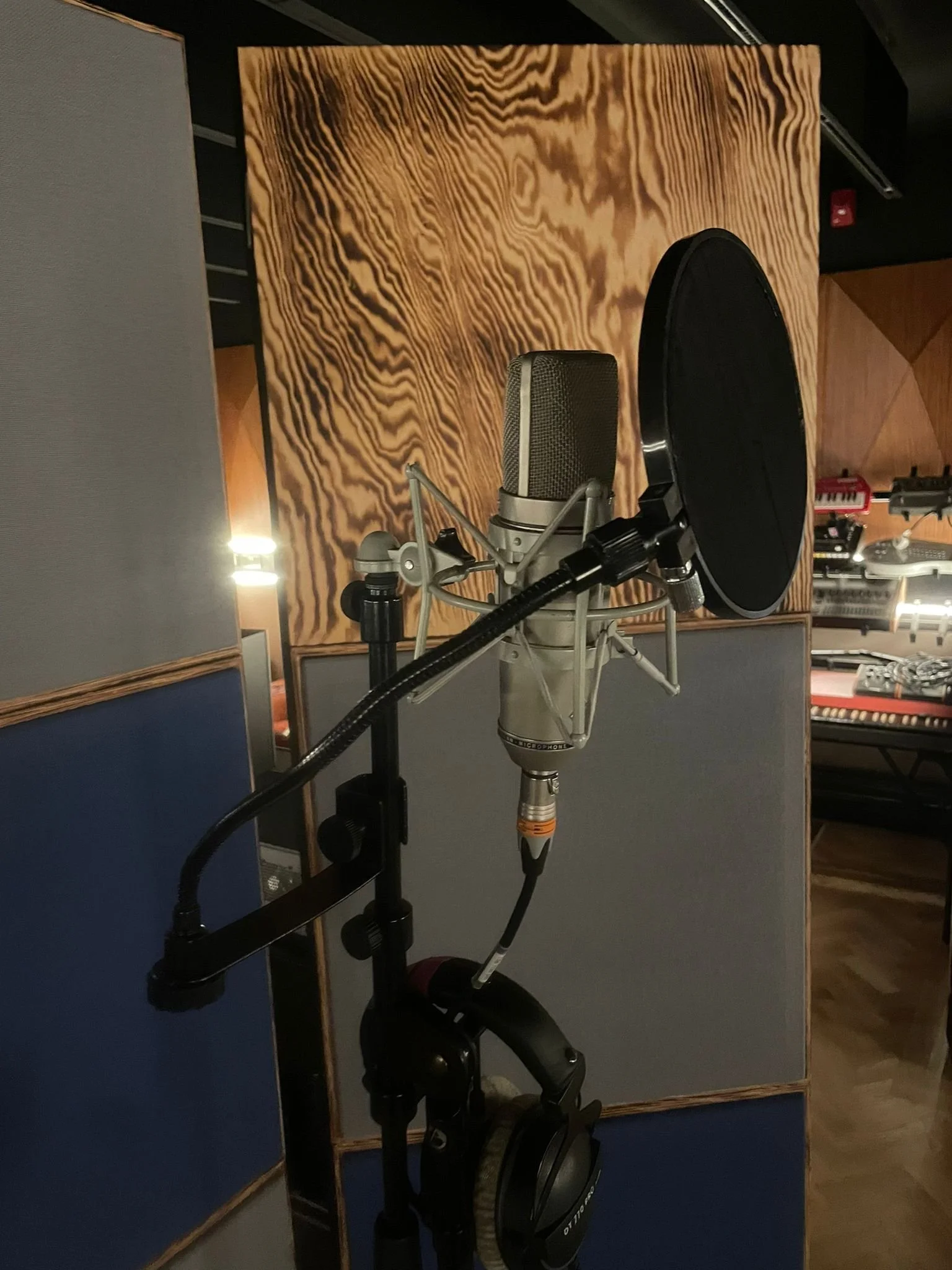
I used a Neumann U87 on Lily's lead vocals as well. Lily’s vocals are quite airy in comparison to Louie. This suited the songs she was singing, as they were more emotional and intimate but, at times, the difference between Louie and Lily’s tones was offsetting. I compressed harder with Lily’s vocal to add weight and make them darker, using the desks EQ.
Violins
Sam came in to play the violin on ‘Hurricane’, ‘Can I Stop The Rain’, ‘Take Me Where You Lay’, ‘Have You Ever’ and ‘Watch Me As I Fall’. He would mainly layer onto the Mellotron parts to add imperfection to the digital string sounds and give a more authentic feel. During the session we also added additional hooks by writing melody parts for Sam to play in some of the choruses.
I had not recorded violin before and was unsure of what method to use. I settled on one U87 positioned in front of Sam, set to an omnidirectional polar pattern. This captured the violin as it sounded in the room. Sam also had a contact mic which he uses live. I recorded this as well to blend in the mix and add better definition where it felt necessary. During the mixing phase I actually found myself using only the contact mic. It had a fuller, warmer tone to the U87, which was weaker and, at points, quite scratchy. The U87 also sounded inconsistent where Sam had moved slightly between takes.
We built up a string arrangement by recording multiple layers of violin. It gave the impression of a group rather than just one violin.
Choir
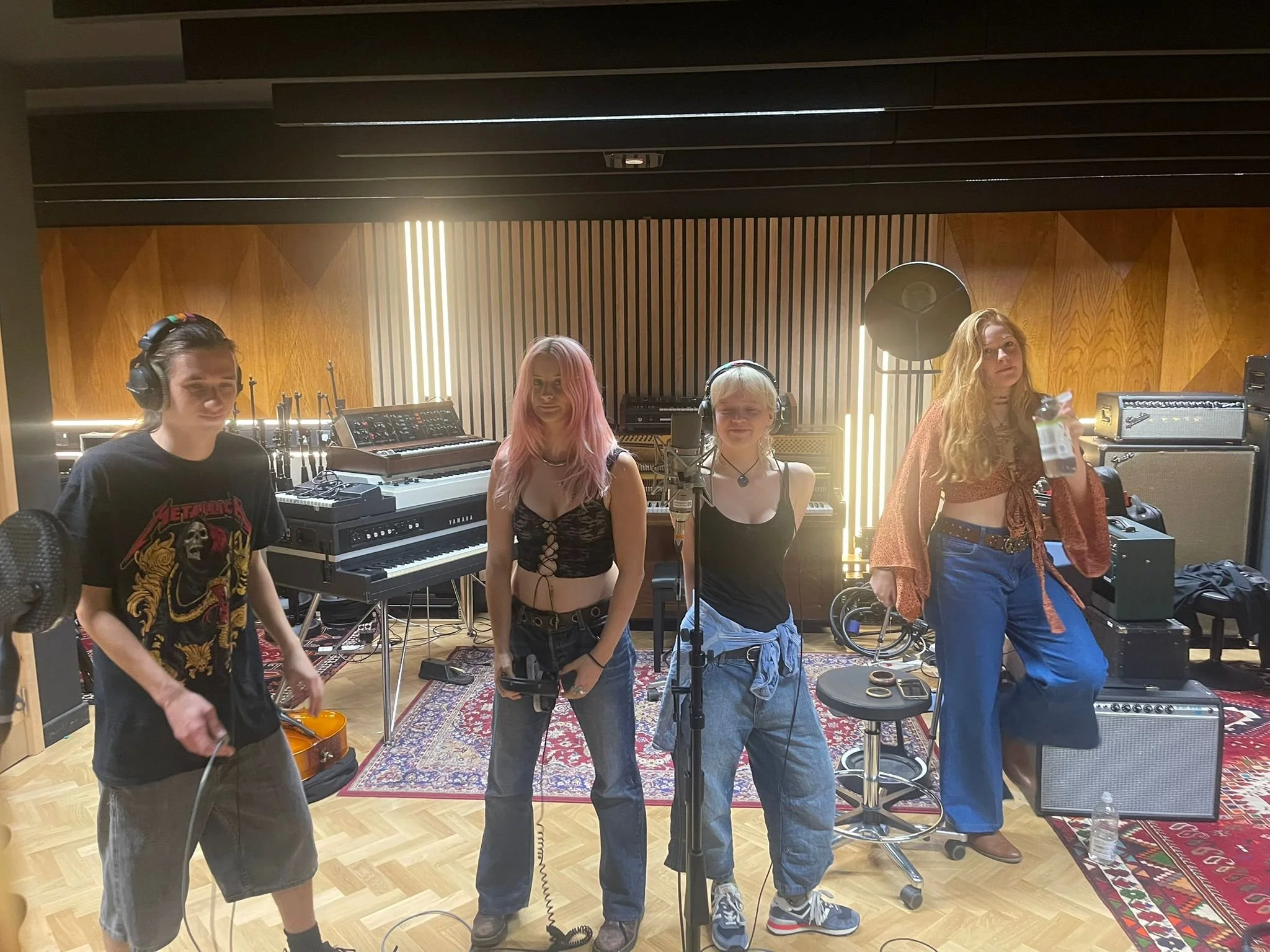
The small choir consisted of Zach, Megan, Rose and Ada. All good CM friends of the band. Louie directed them one-by-one, their individual harmonies building up a complex arrangement of melodies and harmonies within the choir. These choir parts focused mainly on choruses and bridges and elevated these sections well. It also made this album not just about Louie or the band. Bringing in outside collaborators, who were all our friends, made the project feel special and like an important thing to be a part of. It was also very enjoyable having so many people in the studio having a good time together.
I recorded the choir using a Neumann U87 set to omnidirectional, with the group standing surrounding the mic. We got individuals to step closer and further from the mic in order to balance the levels of each singer in the recording.
I also compressed using a Neve diode bridge compressor, as well as using Neve Tape Emulation to add saturation and a warmer smoothed-out tone. This controlled the dynamics of the group, as some singers were still louder than others and would stick out in the recording. We recorded multiple layers of vocals and got the group to switch places in the room after each take, to add in variation. This also gave the impression of a larger group vocal.
Arrangements and Mixing
This is the first album I have ever mixed and mastered, so it was a slow process and took a lot of trial and error to achieve a cohesive sound across all tracks. I certainly learnt a lot during the mixing stage.
Louie had given me a brief, that went something like this-
The overall plan for each mix would be to prioritise the lead vocals as the focal point of the mix. Then build the arrangement around it with rhythm guitar supporting the melody, drums and bass locked together, and then the keys and strings providing width and filling out texture behind everything else.
I Know Who I Am
Opener for the album. This song needed to hit hard and immediately set the tone of the album. This is what the Greensmith sound is!
Feel It
This second song would continue the intensity. Going for the heaviest sound on the album, and relying on saturation and compression for aggression, this mix needed to feel full-on throughout.
Hurricane
Third track and moving into a more chilled vibe, but still keeping with the rock sound in the choruses. This mix would feel more natural, yet closer than the previous songs. Bringing down the energy ready for ‘Faded Signal’.
Faded Signal
The first slower and lower energy song on the album. Aim to create a washy atmosphere, using delays and reverb to create space.
Nowhere To Run
Bringing the intensity back up, but with a more uplifting feel than the beginning tracks. This track is very Blues-Rock influenced and Louie wanted the mix to feel dirtier and more messy.
Take Me Where You Lay
Slows the energy again with some intense emotion.
We ended up with two versions of this song. The first was a fuller version containing choir, lead guitar and acoustic throughout. In the alternate version we cut the acoustic intro, allowing the song to impact straight away. We widened and elevated the chorus by cutting the low-end and doubled the acoustic hard left and right. The choir and lead guitar was removed to make the lead vocals clear and the focus of the song. I prefer the altered version, but the band is still undecided on which to release. Maybe a combination of both?
Watch Me As I Fall
Track 7 and brings the listener back to the opening sound of the album, with a hooky chorus and a big Rock sound.
Louie’s description before mixing this track was “The mix should ultimately feel swampy, raunchy and slightly grimy. Let the guitars have some bite and character and avoid making everything clean or separated. The track should feel like it’s got some dirt under its fingernails”.
We Remain In Love
This song has the most 60’s-70’s aesthetic to me. The mix would be more mid-range focused, and have a lighter feel than some of the more powerful mixes on the album.
Have You Ever
This track and its mix is very 90’s inspired, referencing bands like Radiohead and The Verve. The low-end needed to be tight in the mix, locking the bass and drums together to provide a constant groove. Loops of percussion and Rickenbacker bass would be created from studio recordings to further add to the groove and 90’s feel. We also used reverbs and delays to add a trippy psychedelic element to the mix.
Can I Stop The Rain
Audiences at our gigs know this song well and always sing along. Louie had previously released this song under his solo project, but it has been adapted a lot with the band. This version is elevated, with a big finale feel before the last few acoustic tracks. The main aim for this song was to create a mix that gave the same energy as our live performances.
Please Don’t Be Long
Finishing off the band portion of the album, the dynamics and build through this song were most important. Avoiding overusing compression in the mix would allow the sections to breathe and the changes in dynamics would feel more impactful.
That’s Alright + For You
These final two tracks on the album had originally begun as full band arrangements. During the recording stages though, we began to feel that they didn't sound or sit right within the album. The decision was made to pursue stripped-back acoustic versions instead, with just Louie's vocal and an acoustic guitar. These songs would have a very authentic sound, more like voice notes, and calling back to Louie’s previous solo releases. Very little mixing was done on these songs, maintaining the raw voice note aesthetic. I added plug-ins on the master busses to emulate tape machines and cassette players, to further enhance this desired aesthetic.
Drums
The drums on these tracks needed to be a driving force and support the whole track. Louie wanted them to be clear and defined in the mix, with cutting drum fills and crisp cymbals that weren't harsh or overbearing.
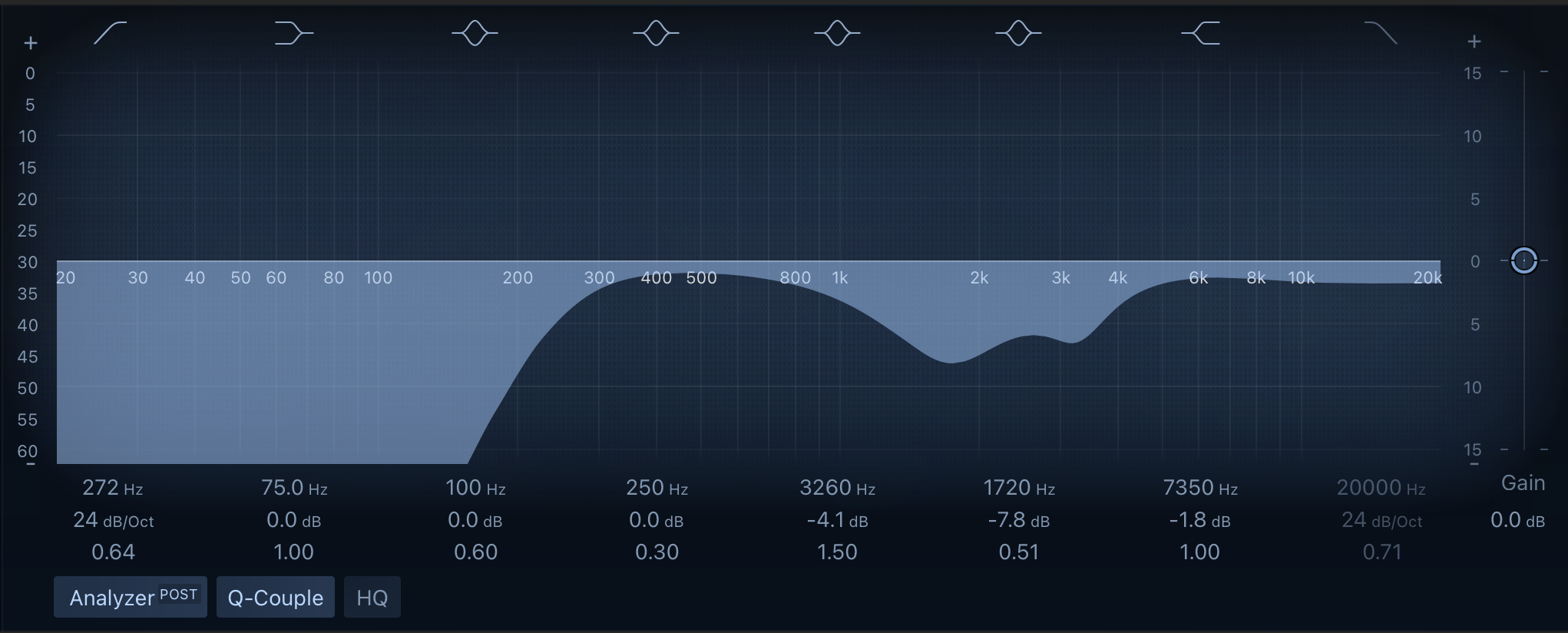
I was already happy with the reductions I had made using EQ on the desk. I cleared up more low-end on the overheads and room mic to allow the kick close mics to really punch through and provide a low-end that locked with the bass guitar.
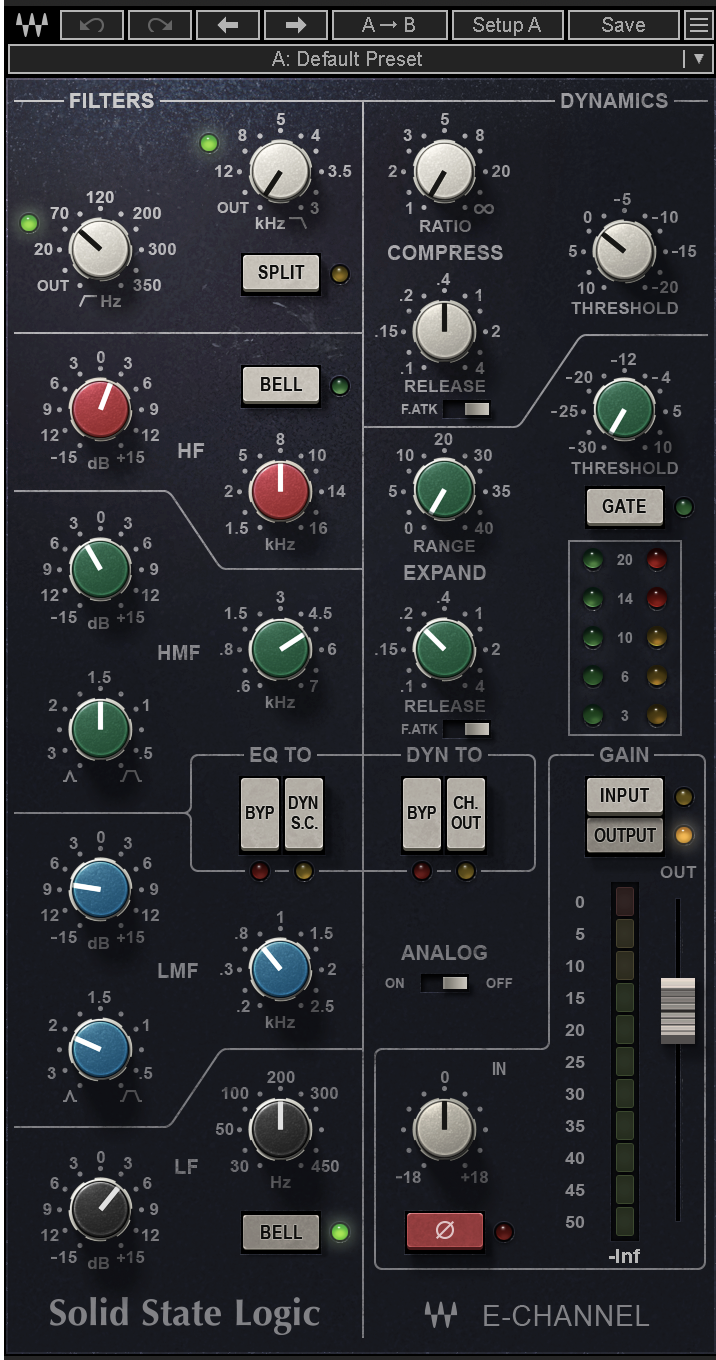
The snare initially sounded dull, so I saturated it and boosted the high-end to allow it to cut through into the mix more.
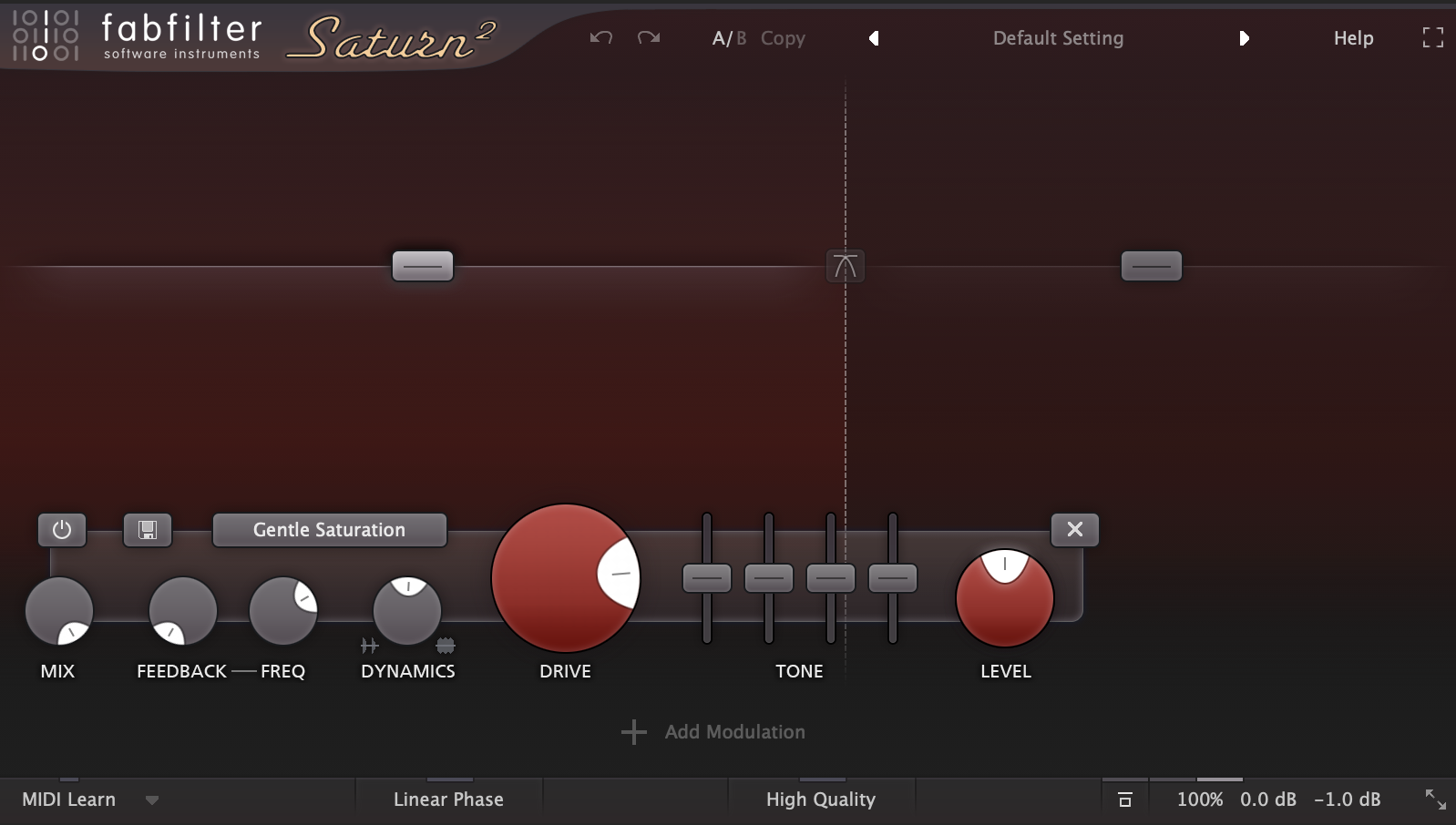
I compressed the mono room mic to bring out more excitement, and boosted the sustain with the SPL Transient designer plug-in for more energy.
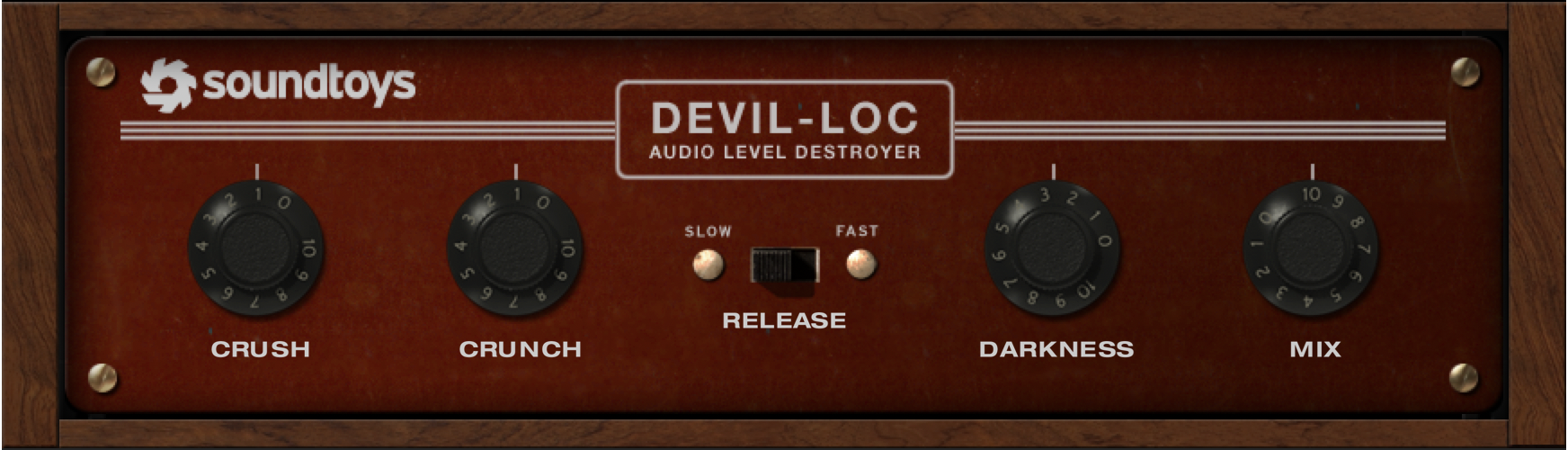
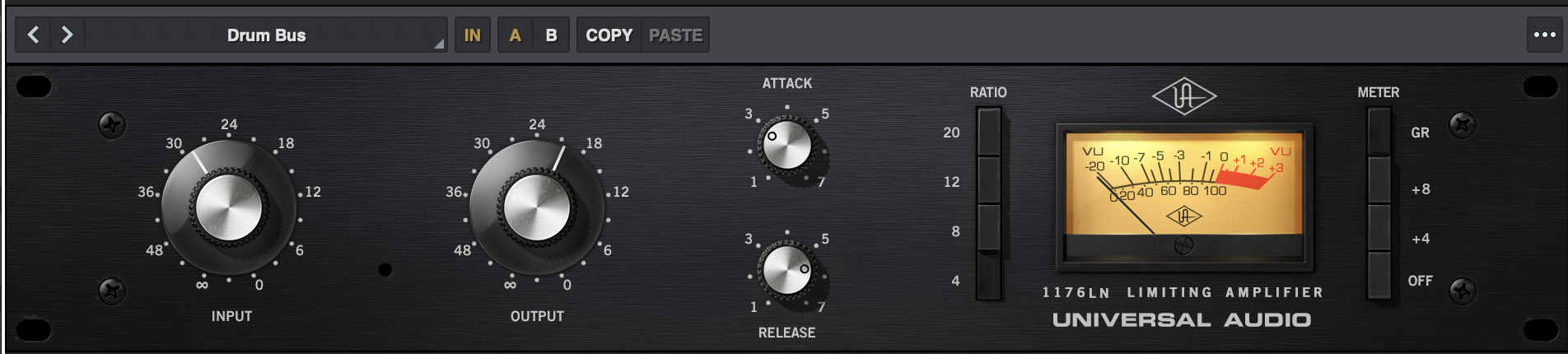
I created two parallel compression buses. The first was for close mic compression. This would add more weight and punch behind the snare and shells of the kit. The second bus was my crush channel. I sent more of the close mics here, as well as the room mic. I used Devil-Loc on this bus for a really aggressive, compressed and distorted sound. I blended this bus in carefully to add more energy to the drum sound.
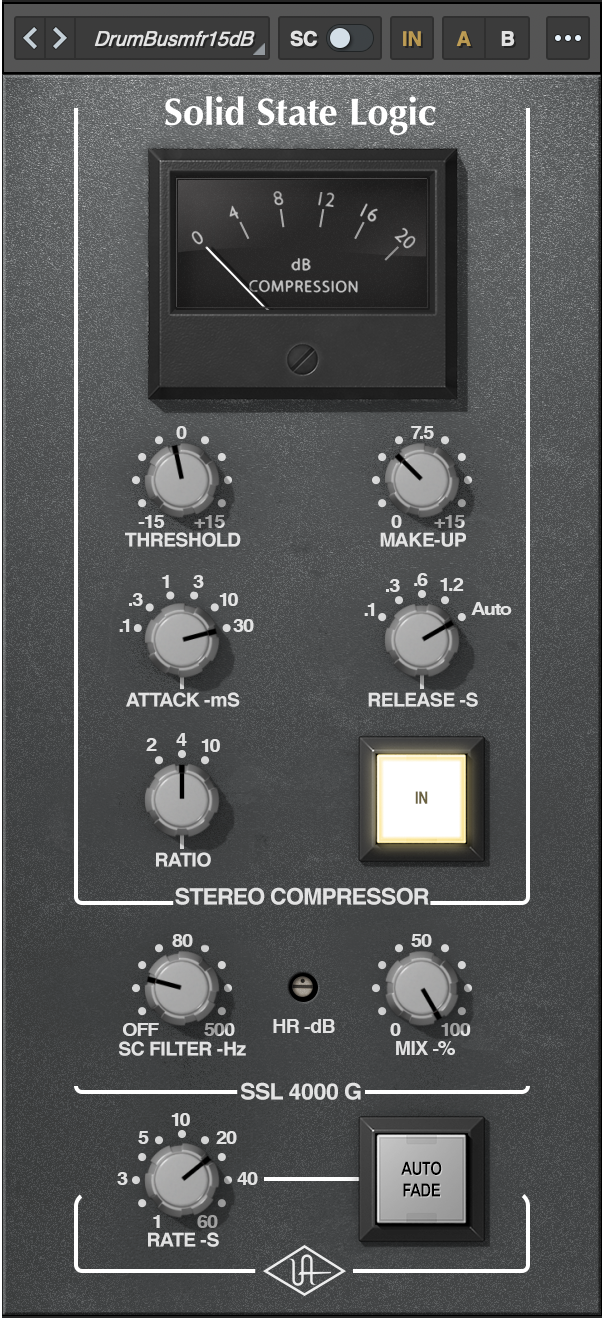
To bring the drums together and make them sit more consistently in the mix, I added a UAD SSL G Bus compressor to the drum group.
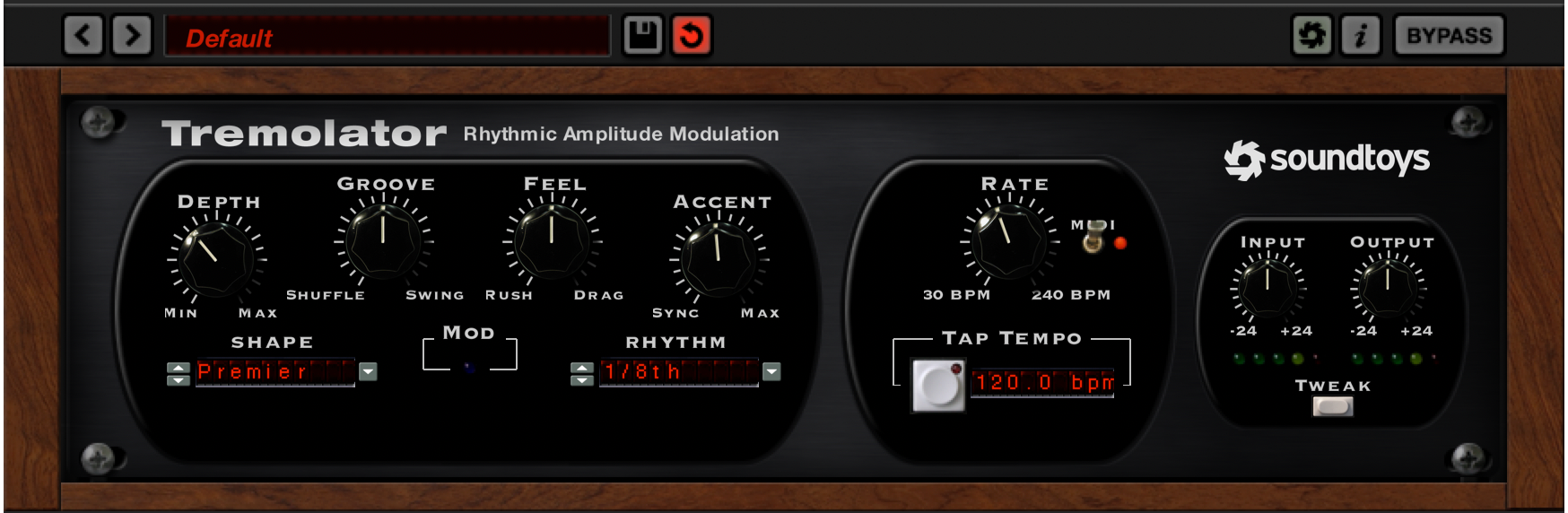
On some songs, such as ‘Feel It’, I added a tremolo to the room mic which was synced with the song's tempo. This created a ducking ‘helicopter’ effect and added more movement to the song.
Most drums on the album were left unedited to create a more natural and authentic feel across all the songs. There were a few places I had to time edit, as the demos weren't originally recorded to a metronome and had a click mapped to them. This didn't create too much work, and I adjusted them by feel rather than use the grid as a guide.
On ‘We Remain in Love’ and ‘Take Me Where You Lay’ I chose to mute the snare top mic, as it gave too much attack. Using just the bottom mic provided a lighter touch. I did the same for the kick on the lighter songs, muting the kick in and just using the kick out mic for a rounder and softer sound.
Bass
The bass needed to lock in with the kick and sit just below the drums in the mix.
For the heavier songs, the bass needed to provide a strong consistent low-end for track foundation, blended with mid-range aggression to cut through and add nicely-paired rhythm with the drums.
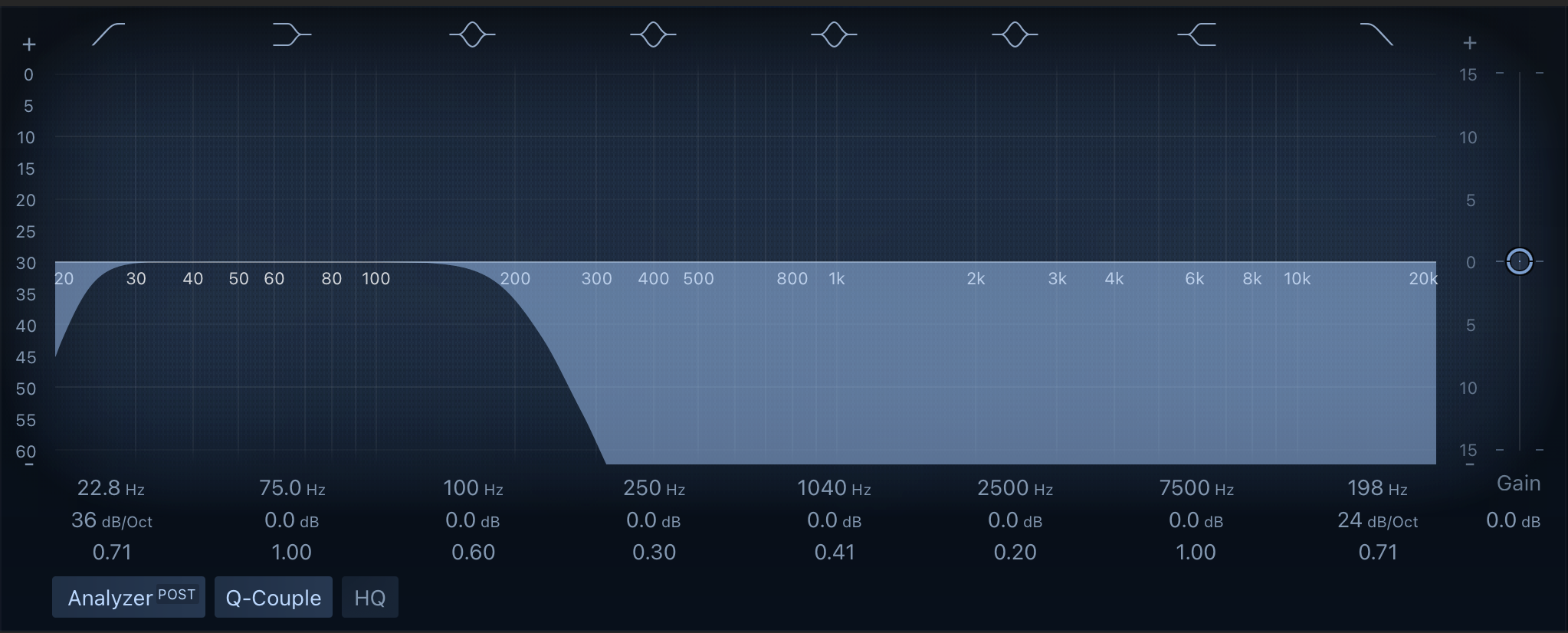
For the strong low-end I low-passed the DI track to 200Hz. I then compressed hard using an LA-2A plug-in set to ‘limit’.
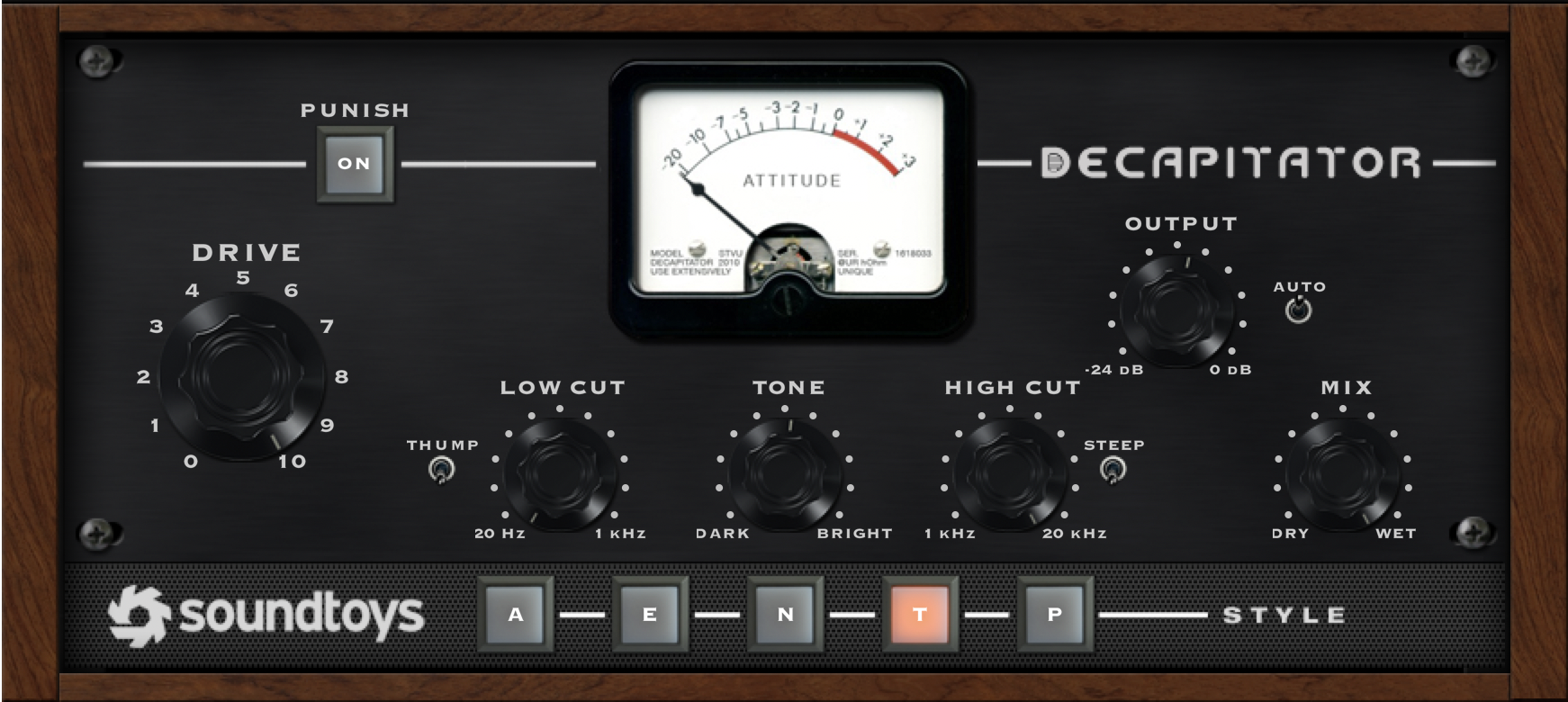
On the mic channels I boosted the mid-range and added Soundtoys Decapitator. This added an edge to the bass and increased the clarity of the tone, especially when Lily activated her muffled and darker sounding fuzz pedal.
I then grouped the two channels and used dynamic EQ to tame any low resonant frequencies that jumped out in the track.
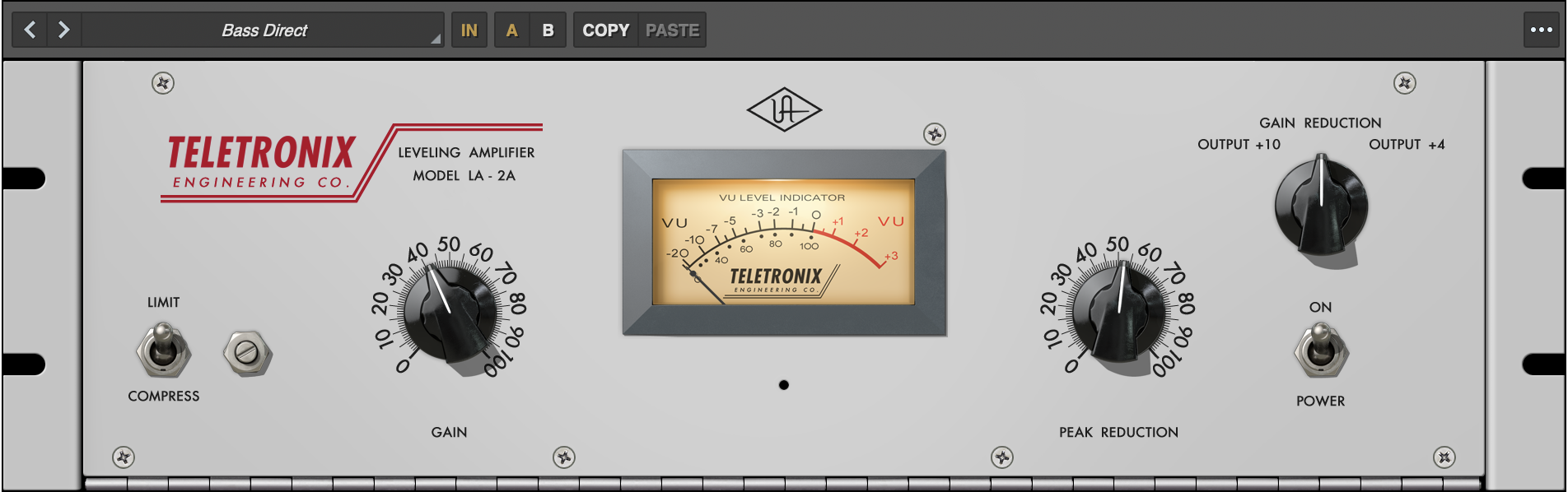
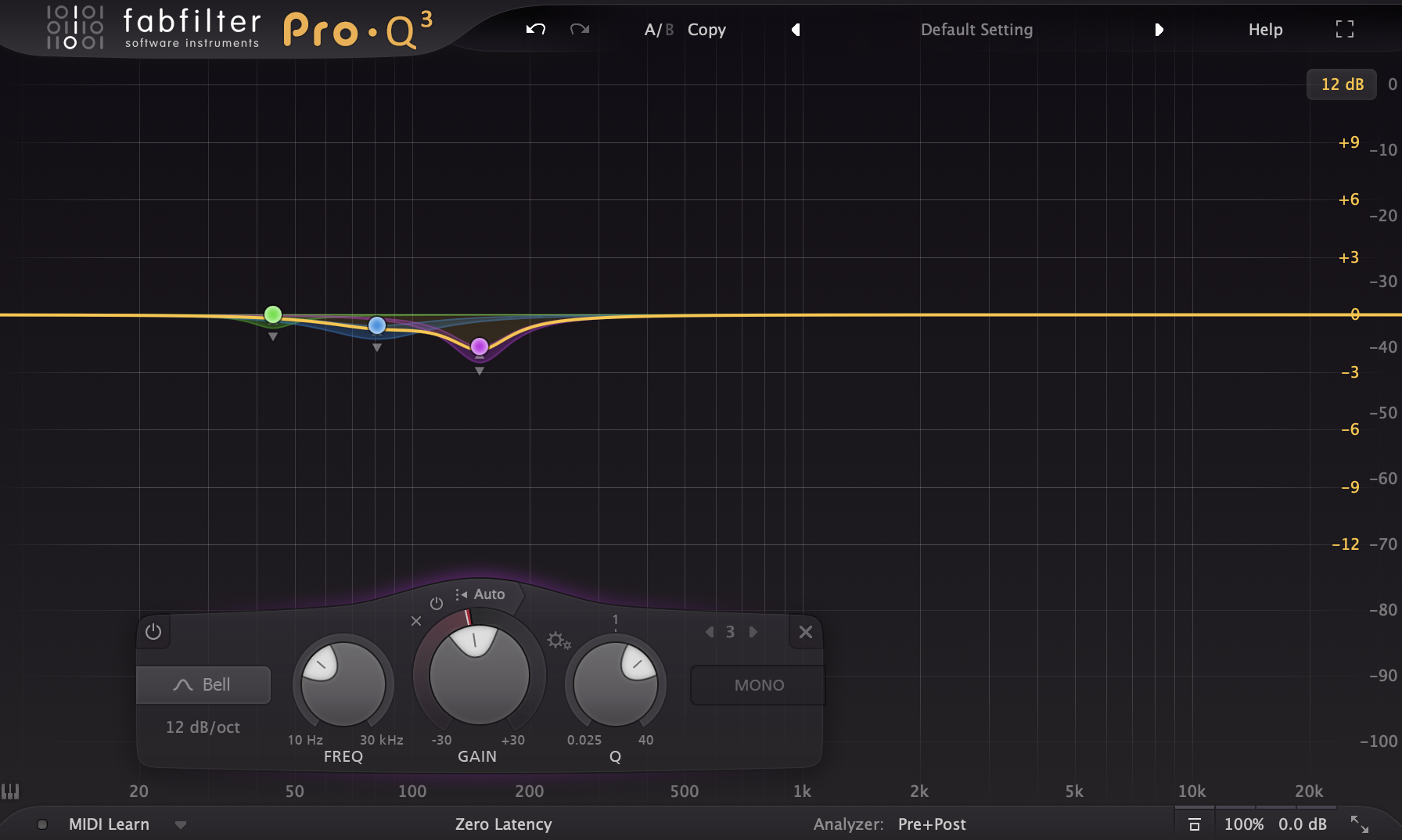
For the lighter feeling or slower emotional songs, the bass was kept cleaner and more natural. It did not necessarily require as much driving low-end and served a more melodic purpose.
I still used compression on the group to glue the mic and DI together, but did not low-pass the DI. This kept the tone coming from Lily’s fingerstyle playing.
Electric Guitar
Rhythm guitar would tuck underneath the vocals stacks to reinforce melody. Louie also wanted them to feel closer and more present in the mix, rather than roomy and distant.
Louie’s guitars contained a lot of upper mid-range frequencies which, at the time of recording, suited the tracks well. However, once vocals were added there was competition for space in the mix and I had to reduce these frequencies in the guitar. It was difficult to monitor some of the louder heavier guitar parts during tracking and listening back. I realised I had made some poor choices in positioning of microphones and desk EQ. For example, much of the VOX AC30 tones sounded quite fizzy and lacked a lot of weight. I did my best to EQ, to bring these elements back in and reduce the bad sounding frequencies.
A similar thing happened with Jack’s guitars. They had good mid-range and high balance, but the lows were too much and made the mix muddy. I just cut the muddy frequencies to solve it.
Finn’s guitars did not have any EQ issues because we were able to properly monitor during the sessions and achieve a tone that naturally fitted in each song, with little processing. I did add Decapitator to some lead parts on ‘We Remain In Love’, as we felt the tone should be more abrasive to contrast the lighter feel of the song.
Acoustic Guitar
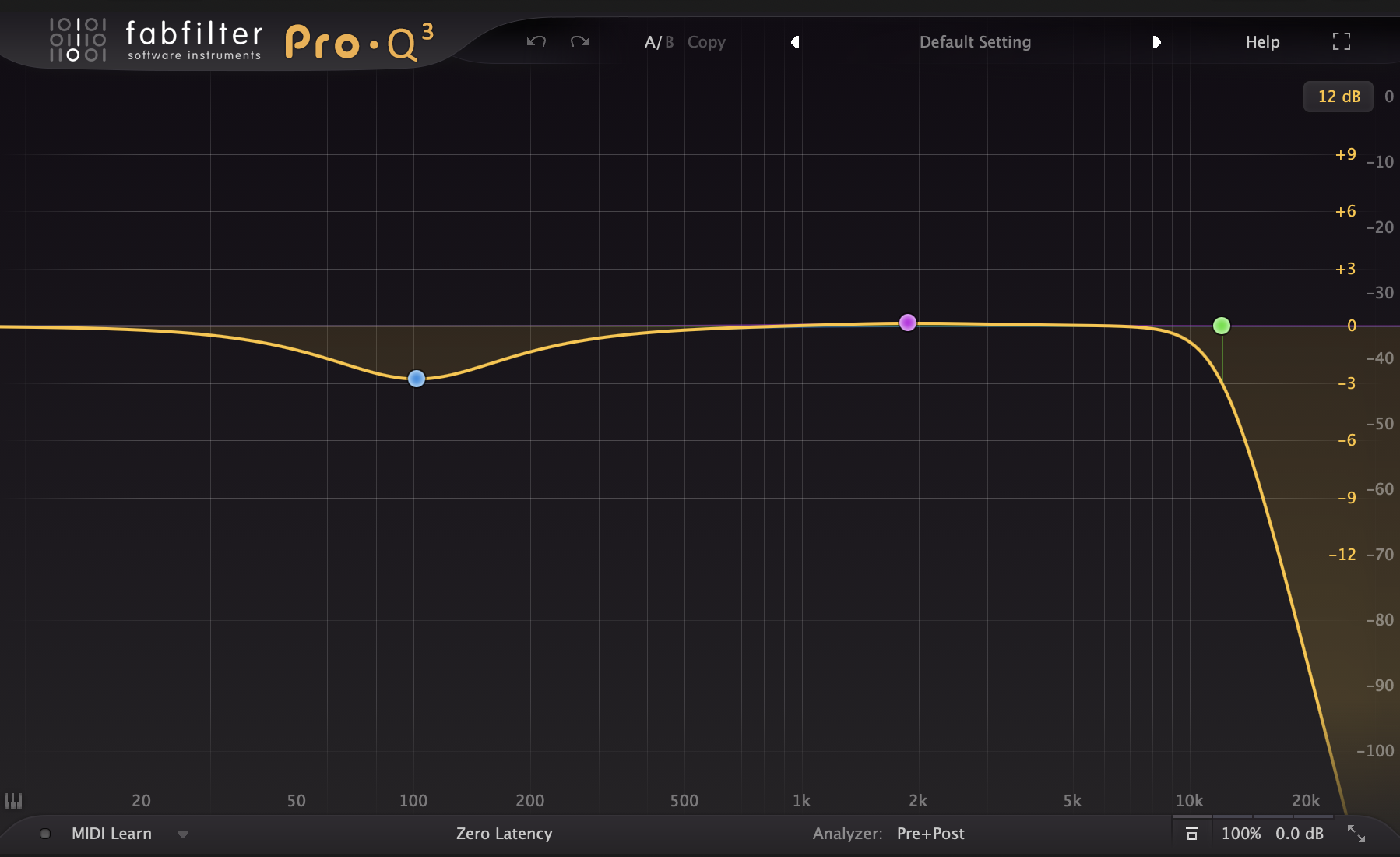
I tended to cut low-end, as the acoustic was a more percussive and rhythm element in the songs. The low and low-mids of the guitar also competed with the bass guitar and muddied the mix. I panned the acoustic intentionally within the mix, using wide doubles, to add width to choruses. I also used Soundtoys Microshift for width, and in some places, a chorus effect to give the impression of a 12-string. This created a more interesting tone for the acoustic guitar, especially when playing solo in intros.
Vocals
I tried to mix each song with the lead vocals set at the same level. It anchored the vocals as the focal point in each song and helped cohesion throughout the album.
The vocal style varied a lot between songs, but always needed to be clear, sit on top of the mix and feel like they belonged within the space of the track.
During recording, all vocals were recorded compressing on the way in and EQ’d to reduce bad sounding frequencies. I then EQ’s more surgically to reduce harshness and sibilance. On the heavier songs, I compressed the lead vocals further, and more heavily, to give a punchier sound that could compete within the bigger arrangements.
I used Soundtoys Echo Boys for delays. The ‘dual echo’ setting gave a really cool ‘wide echo’ effect that I really like. I usually set the style to ‘FM’, to give a more Lo-fi radio effect on the delays. It helps to separate from the lead vocals and reduces vocal cluttering.
(Setting mic gain)
(I Know Who I Am drum tracking)
(OC818 microphone on Magnatone amp)
(Upright piano recording session)
(Hammond Organ)